Introduction
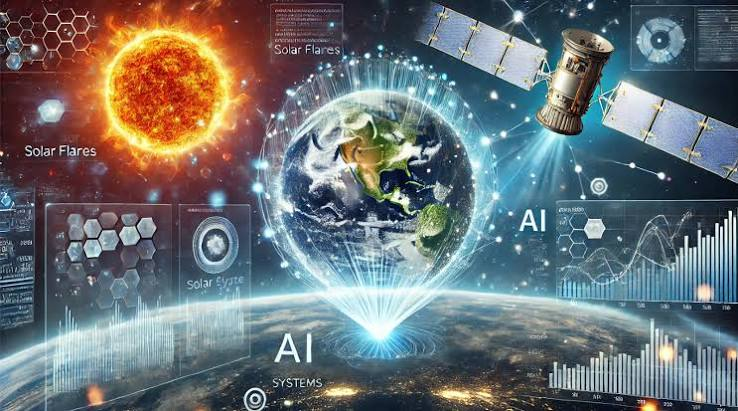
Artificial intelligence (AI) is transforming the way satellites operate in space. Modern satellites generate enormous amounts of information every second, from images of Earth and weather data to communication signals and system diagnostics. Managing this information efficiently requires advanced computing capabilities, and AI has become one of the most powerful tools available.
Today, artificial intelligence helps satellites avoid collisions, monitor their health, detect equipment failures, optimize communication, analyze scientific data, and support mission planning. As the number of satellites in orbit continues to grow, AI is becoming essential for ensuring safer, smarter, and more reliable space operations.
Why Satellites Need Artificial Intelligence
Traditional satellite operations rely heavily on human operators who monitor spacecraft from ground control stations. However, with thousands of satellites now orbiting Earth, manually managing every spacecraft has become increasingly difficult.
Artificial intelligence allows satellites to process information independently, make rapid decisions, and respond to changing conditions without waiting for instructions from Earth. This capability improves operational efficiency while reducing delays and human workload.
Collision Detection and Avoidance
One of AI’s most important responsibilities is protecting satellites from collisions.
Every day, satellites pass near other satellites and pieces of space debris. AI systems continuously analyze orbital data and calculate possible collision risks.
When a potential threat is identified, AI can:
- Predict the closest point of approach.
- Assess the level of danger.
- Recommend the safest orbital adjustment.
- Reduce unnecessary avoidance maneuvers.
- Help preserve satellite fuel.
These capabilities improve satellite safety while extending mission lifetimes.
Monitoring Satellite Health
Artificial intelligence continuously monitors onboard systems, including:
- Power generation
- Battery performance
- Temperature control
- Communication equipment
- Navigation systems
- Fuel consumption
By identifying unusual patterns early, AI can detect developing problems before they become serious failures.
This predictive maintenance helps operators repair or adjust systems before expensive damage occurs.
Improving Earth Observation
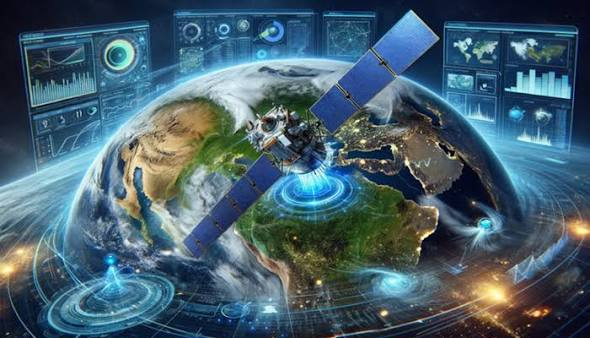
Earth observation satellites collect enormous volumes of images every day.
Artificial intelligence helps analyze this information much faster than traditional methods by identifying:
- Wildfires
- Floods
- Deforestation
- Urban expansion
- Agricultural conditions
- Oil spills
- Glacier changes
- Air pollution
Rapid analysis enables governments and emergency responders to react more quickly during natural disasters and environmental emergencies.
Smarter Communication Networks
Communication satellites depend on efficient signal management to provide reliable services.
AI improves satellite communications by:
- Optimizing signal routing.
- Reducing network congestion.
- Managing bandwidth automatically.
- Detecting communication interference.
- Improving internet performance.
These improvements help deliver faster and more reliable connections to users around the world.
Autonomous Spacecraft Operations
Future satellites will increasingly operate with minimal human intervention.
Artificial intelligence enables spacecraft to:
- Adjust their orientation.
- Manage onboard resources.
- Schedule scientific observations.
- Prioritize important data transmissions.
- Respond to unexpected conditions.
Autonomous operations are especially valuable for deep-space missions, where communication delays make immediate human control impossible.
AI and Space Debris Monitoring
Millions of pieces of orbital debris pose risks to active satellites.
Artificial intelligence processes tracking information from radar systems and telescopes to:
- Predict debris movement.
- Identify dangerous trajectories.
- Improve collision forecasting.
- Recommend avoidance strategies.
These capabilities contribute to safer and more sustainable use of Earth’s orbital environment.
Challenges of Using AI in Space
Although AI offers tremendous benefits, several challenges remain.
These include:
- Limited onboard computing power
- Protection against cyber threats
- Verification of autonomous decisions
- High reliability requirements
- Ethical considerations regarding autonomous systems
Engineers continue developing more secure and dependable AI technologies for future space missions.
The Future of AI in Satellite Technology
Artificial intelligence will become even more important as satellite constellations expand and deep-space exploration advances.
Future AI-powered satellites may:
- Coordinate directly with neighboring satellites.
- Repair software problems automatically.
- Optimize energy usage.
- Improve scientific discoveries through real-time analysis.
- Support lunar and Mars communication networks.
- Manage large satellite constellations with minimal human supervision.
These innovations will create more intelligent, efficient, and resilient space systems.
Conclusion
Artificial intelligence is revolutionizing satellite operations by improving safety, efficiency, and reliability. From preventing collisions and monitoring spacecraft health to analyzing Earth observation data and optimizing communications, AI has become an indispensable partner in modern space exploration.
As technology continues to evolve, AI will play an even greater role in protecting satellites, supporting scientific discoveries, and enabling humanity’s future beyond Earth. The combination of intelligent software and advanced spacecraft is opening a new chapter in the exploration and sustainable use of space.