Quantum physics is one of the most revolutionary branches of science. It describes the behavior of matter and energy at the smallest scales, where atoms, electrons, and other tiny particles follow rules that often seem strange and counterintuitive. Despite its complexity, quantum physics plays a crucial role in explaining how the universe works—from the smallest particles to the largest cosmic structures.
What Is Quantum Physics?
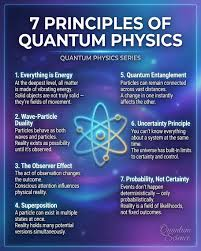
Quantum physics studies the behavior of particles that are far smaller than anything we can see with the naked eye. Unlike everyday objects, quantum particles can behave like both particles and waves, and their properties are governed by probabilities rather than certainties.
These unusual behaviors form the foundation of modern physics and many technologies used today.
The Quantum World
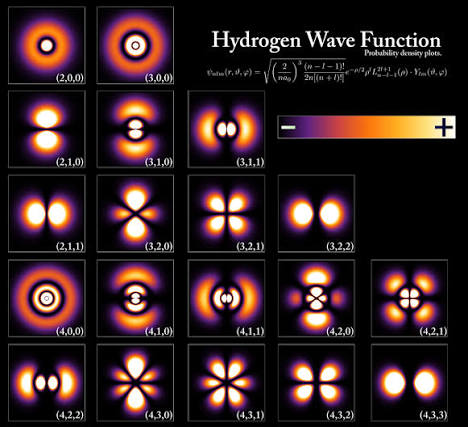
At the quantum level, particles do not always have definite positions or speeds until they are measured. Instead, scientists describe them using mathematical models that predict the likelihood of different outcomes.
This probabilistic nature makes quantum physics very different from classical physics, which accurately describes the motion of larger objects such as planets and spacecraft.
Explaining the Early Universe
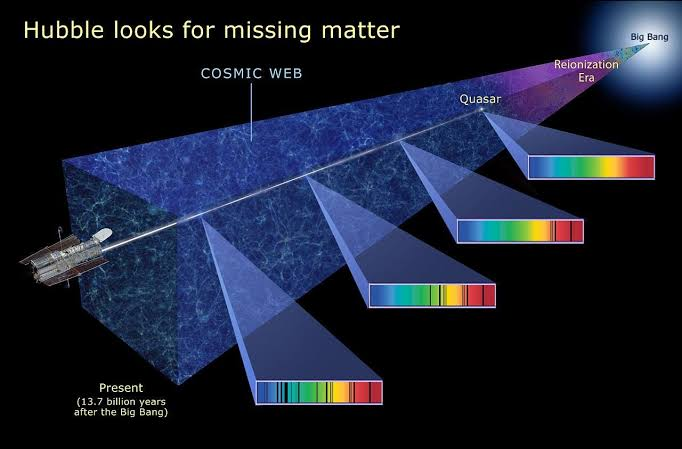
Soon after the Big Bang, the universe was incredibly hot and dense. Under these extreme conditions, quantum effects played a major role in shaping the distribution of matter and energy.
Tiny quantum fluctuations in the early universe eventually grew into the galaxies and galaxy clusters we observe today.
Black Holes and Quantum Physics
Black holes are one of the greatest challenges in modern science because they combine gravity with quantum physics.
Researchers believe that understanding quantum effects near black holes could help unify two major theories: quantum mechanics and Einstein’s theory of general relativity. Achieving this goal would represent a major breakthrough in physics.
Quantum Particles Build Everything
Everything in the universe—including stars, planets, living organisms, and even our own bodies—is made from tiny quantum particles.
The interactions among these particles determine the properties of matter, chemical reactions, and the energy produced inside stars.
Quantum Technology
Research in quantum physics has led to many practical innovations, including:
- Quantum computers
- Ultra-secure quantum communication
- Precision atomic clocks
- Medical imaging technologies
- Advanced scientific instruments
Future discoveries may transform computing, medicine, and space exploration even further.
Unanswered Questions
Despite its success, quantum physics still leaves many mysteries unanswered.
Scientists continue searching for a theory that combines quantum mechanics with gravity. They also hope to understand dark matter, dark energy, and the true nature of space and time.
These unanswered questions make quantum physics one of the most exciting fields of scientific research.
Conclusion
Quantum physics reveals a universe that is far stranger and more fascinating than everyday experience suggests. By explaining the behavior of the smallest particles, it helps scientists understand the birth of the universe, the nature of matter, and the evolution of galaxies. As research continues, quantum physics will remain at the heart of humanity’s quest to uncover the deepest secrets of the cosmos.