Introduction
As the number of connected devices continues to grow, the demand for faster and more efficient data processing has reached unprecedented levels. From smart homes and autonomous vehicles to industrial automation and healthcare, modern technologies rely on real-time data to make instant decisions. Edge computing has emerged as a groundbreaking solution by processing data closer to where it is generated rather than relying solely on distant cloud servers. In 2024, edge computing experienced remarkable growth, transforming industries and enabling faster, more reliable digital services.
What Is Edge Computing?
Edge computing is a distributed computing model that processes data at or near the source of data generation, such as sensors, smartphones, cameras, or local servers. Instead of sending all information to centralized data centers, edge devices analyze and respond to data locally, reducing delays and improving efficiency.
For example, a self-driving car cannot afford to wait for a cloud server to process information about a pedestrian crossing the road. Edge computing enables the vehicle to make immediate decisions, ensuring safety and faster response times.
Why Edge Computing Is Growing
Several technological trends have accelerated the adoption of edge computing:
- The rapid expansion of Internet of Things (IoT) devices.
- Increased demand for real-time applications.
- Growth of 5G networks providing high-speed connectivity.
- Rising concerns about data privacy and security.
- Need to reduce cloud computing costs and network congestion.
As billions of devices become connected, processing everything in centralized cloud servers is no longer practical.
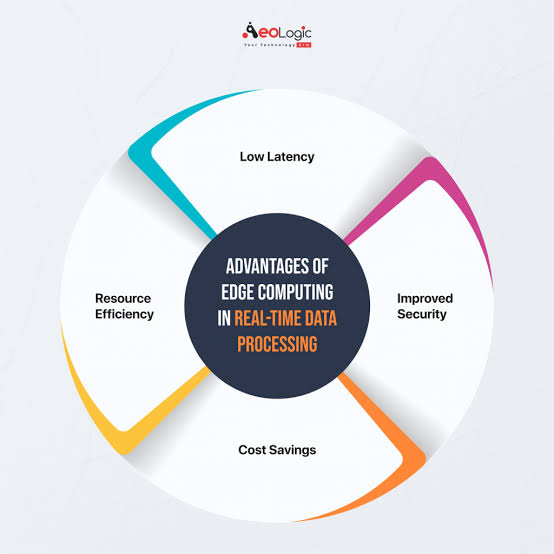
Benefits of Edge Computing
1. Faster Response Times
Processing data locally significantly reduces latency, making applications more responsive. This is especially important for autonomous vehicles, healthcare monitoring, and industrial robotics.
2. Reduced Bandwidth Usage
Only essential information needs to be sent to cloud servers, reducing internet traffic and lowering operational costs.
3. Improved Reliability
Even if internet connectivity is interrupted, edge devices can continue functioning independently, ensuring uninterrupted operations.
4. Better Data Security
Sensitive information can remain on local devices instead of being transmitted across multiple networks, reducing cybersecurity risks.
5. Enhanced User Experience
Applications such as online gaming, video streaming, and augmented reality perform more smoothly with minimal delays.
Real-World Applications
Healthcare
Wearable health devices monitor patients continuously and instantly alert doctors about critical conditions without waiting for cloud processing.
Manufacturing
Smart factories use edge computing to monitor machinery, detect equipment failures, and improve production efficiency.
Retail
Retail stores analyze customer movement and inventory levels in real time, improving shopping experiences and stock management.
Transportation
Autonomous vehicles rely on edge computing for navigation, obstacle detection, and rapid decision-making.
Smart Cities
Traffic management systems use edge computing to optimize traffic signals, reduce congestion, and improve emergency response.
Challenges
Despite its advantages, edge computing faces several challenges:
- Higher infrastructure costs.
- Complex device management.
- Standardization issues.
- Security updates across thousands of distributed devices.
- Limited processing power compared to large cloud data centers.
Researchers continue developing better hardware and software solutions to overcome these limitations.
The Future of Edge Computing
The future looks promising as artificial intelligence, 5G, and IoT continue evolving together. AI-powered edge devices will become more intelligent, capable of processing increasingly complex tasks without relying heavily on cloud infrastructure.
Industries such as agriculture, healthcare, transportation, and manufacturing are expected to invest heavily in edge technologies over the coming years. Hybrid cloud-edge systems will likely become the standard approach, combining the strengths of both computing models.
Conclusion
Edge computing is reshaping the digital landscape by bringing computing power closer to users and devices. Its ability to deliver faster data processing, lower latency, enhanced security, and improved reliability makes it one of the most significant technological advancements of the modern era. As more connected devices enter our daily lives, edge computing will continue to play a central role in powering smarter, faster, and more efficient digital experiences.