Introduction
Semiconductors are the foundation of today’s digital world. Every smartphone, laptop, electric vehicle, medical device, and artificial intelligence system depends on powerful computer chips. In 2024, semiconductor technology witnessed major breakthroughs that significantly improved computing performance, energy efficiency, and manufacturing capabilities. These innovations are driving the next generation of AI, cloud computing, robotics, and consumer electronics.
What Are Semiconductors?
Semiconductors are materials with electrical conductivity between conductors and insulators. Silicon is the most widely used semiconductor material because of its excellent electrical properties and abundance.
Semiconductor chips contain billions of microscopic transistors that perform calculations, store information, and control electronic devices.
Major Breakthroughs in 2024
1. Smaller and More Powerful Chips
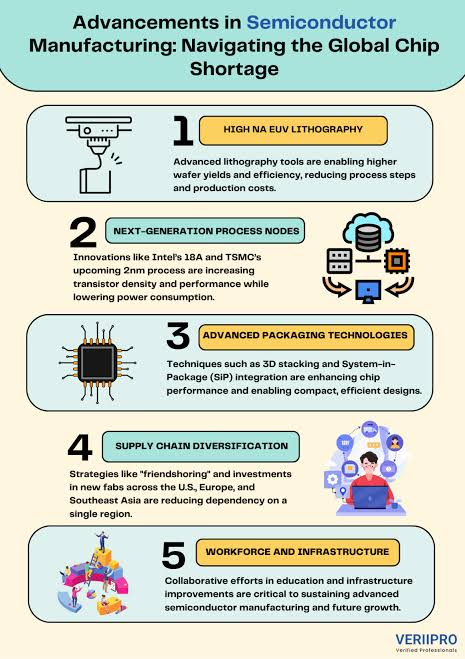
Manufacturers continued developing advanced chip fabrication processes, allowing more transistors to fit onto tiny chips. These improvements deliver:
- Faster computing speeds.
- Lower power consumption.
- Better performance for AI applications.
- Increased battery life in portable devices.
2. AI-Optimized Processors
The rapid growth of artificial intelligence created demand for specialized AI chips capable of handling machine learning tasks more efficiently than traditional processors.
These processors accelerate:
- Image recognition.
- Natural language processing.
- Robotics.
- Scientific research.
- Autonomous vehicles.
3. Advanced Packaging Technologies
Instead of placing all components on one chip, manufacturers increasingly use advanced chip packaging techniques that combine multiple chips into a single high-performance module.
This approach offers:
- Higher performance.
- Lower power consumption.
- Easier scalability.
- Improved manufacturing flexibility.
4. Improved Energy Efficiency
Modern semiconductor designs consume less electricity while delivering greater computing power, helping reduce operational costs and environmental impact.
This is particularly important for data centers, AI servers, and electric vehicles.
5. New Semiconductor Materials
Researchers are exploring materials such as silicon carbide (SiC) and gallium nitride (GaN), which can handle higher voltages, temperatures, and frequencies than traditional silicon.
These materials are especially valuable in:
- Electric vehicles.
- Renewable energy systems.
- Fast chargers.
- Industrial equipment.
- Aerospace technologies.
Applications Across Industries
Artificial Intelligence
AI systems require enormous computing power. Advanced semiconductor chips enable faster AI training and real-time inference.
Consumer Electronics
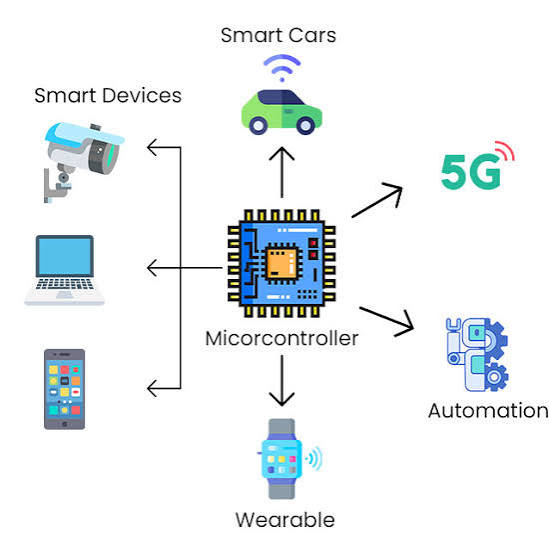
Modern smartphones and laptops offer improved battery life, enhanced graphics, and greater processing speed due to advanced semiconductor technology.
Automotive Industry
Electric vehicles rely on sophisticated chips to manage batteries, power systems, safety features, and autonomous driving technologies.
Healthcare
Medical imaging systems, diagnostic equipment, and wearable health devices use high-performance semiconductors for faster and more accurate results.
Telecommunications
Next-generation communication networks depend on powerful chips to support high-speed data transmission and millions of connected devices.
Challenges Facing the Industry
Although progress has been remarkable, several challenges remain:
- High manufacturing costs.
- Complex global supply chains.
- Growing demand exceeding production capacity.
- Need for skilled engineers and technicians.
- Increasing research and development expenses.
Governments and technology companies are investing billions of dollars to strengthen semiconductor manufacturing and reduce supply chain risks.
The Future of Chip Manufacturing
Future semiconductor innovations may include:
- Sub-2-nanometer manufacturing technologies.
- AI-assisted chip design.
- Quantum computing processors.
- 3D chip architectures.
- More sustainable manufacturing methods.
These advances will support increasingly intelligent devices while improving energy efficiency and performance.
Conclusion
Semiconductor technology continues to power nearly every aspect of the modern digital economy. Breakthroughs in chip manufacturing, AI processors, advanced packaging, and new semiconductor materials are enabling faster, smarter, and more energy-efficient technologies. As innovation accelerates, semiconductors will remain at the heart of future developments in artificial intelligence, healthcare, transportation, communications, and scientific research.