Introduction
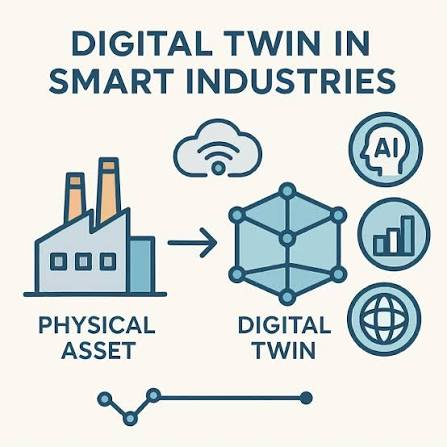
Digital Twin technology is becoming one of the most significant innovations of the modern industrial era. A digital twin is a virtual replica of a physical object, machine, system, or process that continuously receives real-time data from sensors. This technology enables organizations to monitor performance, predict failures, improve efficiency, and optimize operations without disrupting real-world activities.
How Digital Twins Work
Digital twins combine:
- Internet of Things (IoT) sensors
- Artificial Intelligence
- Cloud Computing
- Big Data Analytics
- Machine Learning
Sensors collect real-time information from physical assets, while AI analyzes the data and updates the digital model continuously.
Applications Across Industries
Manufacturing
Factories use digital twins to monitor equipment, predict maintenance needs, and reduce downtime, increasing productivity and lowering costs.
Healthcare
Hospitals create digital twins of medical equipment and even patient organs to simulate treatments and improve surgical planning.
Automotive
Car manufacturers test vehicle performance, fuel efficiency, and safety features using digital twins before producing physical prototypes.
Smart Cities
Governments use digital twins to simulate traffic flow, energy consumption, public transportation, and emergency planning.
Aerospace
Aircraft manufacturers monitor engine performance and predict maintenance requirements, improving safety and reducing operational costs.
Energy
Power plants and renewable energy facilities optimize electricity generation, monitor equipment health, and improve sustainability using digital twins.
Benefits
- Real-time monitoring
- Predictive maintenance
- Lower operational costs
- Faster innovation
- Improved product quality
- Better decision-making
- Increased sustainability
- Enhanced safety
Challenges
Organizations adopting digital twins face challenges such as:
- High initial investment
- Cybersecurity risks
- Data integration complexity
- Skilled workforce requirements
- Privacy concerns
Despite these obstacles, technological advancements are making digital twins increasingly accessible.
Future Outlook
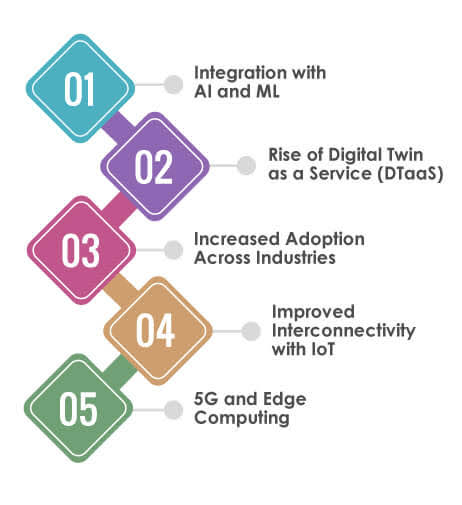
As AI, IoT, and cloud computing continue to advance, digital twins will become more intelligent and widespread. Businesses will increasingly rely on virtual simulations to improve efficiency, reduce waste, and accelerate innovation. Experts expect digital twins to play a major role in Industry 4.0 and the development of smart factories, connected infrastructure, and intelligent healthcare systems.