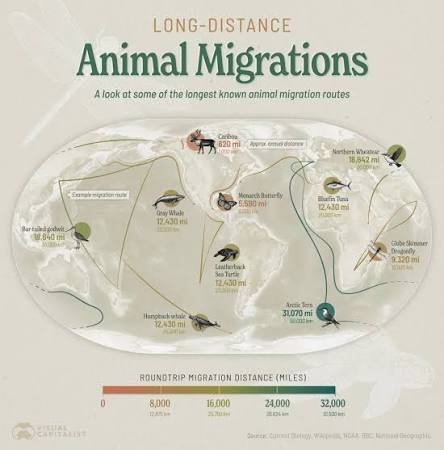
Every year, millions of wild animals embark on extraordinary journeys across land, sea, and sky. These migrations are among nature’s most remarkable phenomena, driven by the need to find food, suitable breeding grounds, favorable weather, or safer habitats. Some animals travel thousands of miles, overcoming harsh climates, dangerous predators, and physical exhaustion. Their incredible instincts and resilience continue to amaze scientists and nature enthusiasts alike.
What Is Animal Migration?
Animal migration is the regular movement of animals from one region to another, usually following seasonal patterns. Unlike random wandering, migration is a purposeful journey that helps animals survive changing environmental conditions. Many species migrate annually, returning to the same locations year after year with astonishing accuracy.
Why Do Animals Migrate?
Animals migrate for several important reasons:
- Finding Food: Seasonal changes often affect the availability of food. Migration allows animals to reach areas with abundant resources.
- Breeding and Reproduction: Many species travel to specific locations where conditions are ideal for raising their young.
- Avoiding Extreme Weather: Cold winters, droughts, or excessive heat encourage animals to move to more suitable environments.
- Seeking Safety: Migration can help animals avoid predators or crowded habitats.
Incredible Animal Migration Stories
Monarch Butterflies
Monarch butterflies complete one of the longest migrations of any insect. Every year, they travel up to 3,000 miles between North America and central Mexico. Remarkably, the butterflies that complete the journey are not the same individuals that started it. Several generations work together to complete this incredible cycle.
Arctic Terns
The Arctic tern holds the record for the longest migration of any bird. It flies nearly 25,000 miles each year between the Arctic and Antarctica, experiencing two summers annually. This allows the bird to enjoy more daylight than almost any other creature on Earth.
Wildebeest
In Africa, over one million wildebeest participate in the Great Migration across the Serengeti and Maasai Mara ecosystems. They travel in search of fresh grass and water while facing dangerous river crossings filled with crocodiles and threats from lions and other predators. This spectacular event is considered one of the greatest wildlife spectacles in the world.
Humpback Whales
Humpback whales migrate thousands of miles between cold feeding grounds and warm tropical waters where they breed and give birth. These giant marine mammals rely on their stored body fat to survive during long journeys when food is scarce.
Salmon
Salmon undertake one of nature’s most challenging migrations. They hatch in freshwater rivers, spend several years in the ocean, and then return to the exact river where they were born to reproduce. Their remarkable sense of smell helps them navigate back home with incredible precision.
How Animals Navigate
Scientists have discovered that migrating animals use a variety of navigation methods, including:
- The position of the sun and stars
- Earth’s magnetic field
- Landmarks such as rivers and mountains
- Ocean currents and wind patterns
- Sense of smell and memory
Many species combine several of these methods to complete their journeys successfully.
