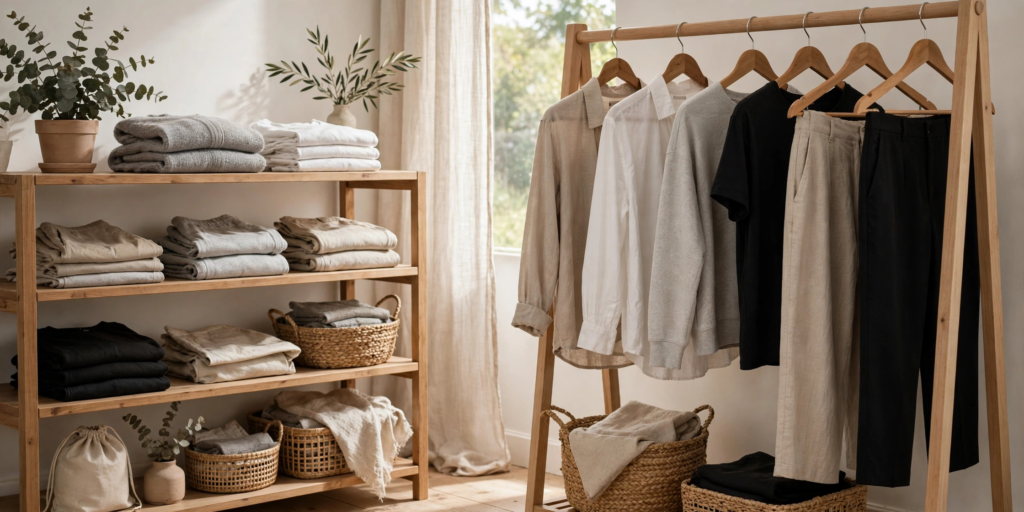
The average person wears each garment far fewer times than previous generations did, and the fashion industry is one of the world's most polluting sectors. Enter the capsule wardrobe: a small, intentional collection of versatile pieces that work together — less clutter in your closet, less waste in the world, and mornings that finally feel simple.
What Is a Capsule Wardrobe?
The concept was popularized by London boutique owner Susie Faux in the 1970s and later refined by designer Donna Karan's "Seven Easy Pieces" collection. The idea: instead of owning dozens of outfits you rarely wear, you keep a limited set of high-quality, mix-and-match essentials — typically 25 to 50 pieces, including shoes and outerwear — and refresh a few items seasonally.
Every piece should coordinate with most of the others, so 30 items can create hundreds of outfits. The constraint is the point: it forces intentionality.
Why It Matters for Sustainability
The fashion industry accounts for roughly 8–10% of global carbon emissions, according to the UN Environment Programme, and textile dyeing is one of the largest polluters of clean water globally. Meanwhile, the Ellen MacArthur Foundation has reported that the equivalent of a truckload of textiles is landfilled or burned every second.
Fast fashion thrives on volume: cheap clothes worn a handful of times, then discarded. A capsule wardrobe flips that logic. By buying fewer, better pieces and wearing them longer, you directly reduce demand for disposable clothing. Keeping a garment in use for just nine extra months can cut its carbon, water, and waste footprint by around 30%, per research cited by WRAP (the Waste and Resources Action Programme).
How to Build Yours: A Step-by-Step Guide
1. Audit what you own. Pull everything out. Sort into love, maybe, and donate/sell. Be honest about what you actually wear — data from your own closet beats aspirational shopping.
2. Define your palette. Choose 2–3 neutrals (black, white, navy, grey, beige) plus 1–2 accent colors you love. A cohesive palette is what makes everything mix and match.
3. Identify your lifestyle ratio. How do you actually spend your days? A 70/30 split of casual-to-formal pieces might suit a remote worker; a teacher or office worker may need more structured items.
4. List your essentials. A typical starter capsule might include:
- 3–4 tops (a white tee, a striped top, a blouse, a knit)
- 2–3 bottoms (dark jeans, tailored trousers, a skirt)
- 1–2 dresses or jumpsuits
- 2 layers (a blazer, a cardigan or denim jacket)
- 1 coat suited to your climate
- 2–3 pairs of shoes (sneakers, flats or boots, one dressier pair)
5. Fill gaps thoughtfully. Buy secondhand first — thrift stores, resale apps, and clothing swaps keep garments in circulation. When buying new, look for natural or recycled fibers, transparent supply chains, and brands with repair programs.
6. Set a seasonal rhythm. Review your capsule each season. Replace only what's worn out or no longer fits, and donate or resell what leaves the collection.
Making It Work Long-Term
- The 30-wear test: Before buying anything new, ask whether you'll wear it at least 30 times. If not, skip it.
- Learn basic repairs: A loose button or small tear shouldn't end a garment's life. Ten minutes with a needle saves a trip to landfill.
- Care for clothes properly: Washing in cold water, air-drying, and avoiding the dryer extends fabric life dramatically.
- Resist trend cycles: A capsule wardrobe is anti-trend by design. Classic cuts outlast micro-trends every time.
The Unexpected Benefits
Beyond the environmental wins, capsule wardrobes reduce decision fatigue — fewer choices, less morning stress. They also tend to save money: buying ten $15 shirts that fall apart costs more over time than three $50 shirts that last years. And there's a quiet confidence in knowing everything you own fits, flatters, and goes together.
Sustainable fashion doesn't require a total lifestyle overhaul. It starts with a smaller closet, chosen on purpose.
References
- UN Environment Programme (UNEP) — "Sustainability and Circularity in the Textile Value Chain" (unep.org)
- Ellen MacArthur Foundation — "A New Textiles Economy" report (ellenmacarthurfoundation.org)
- WRAP — research on extending clothing lifetimes (wrap.org.uk)
- Susie Faux / Donna Karan — historical origins of the capsule wardrobe concept
#SustainableFashion #CapsuleWardrobe #SlowFashion #MinimalistStyle #EcoFriendly
