# Benefits of Swimming: A Full-Body Workout for Every Age
Swimming is often called the perfect exercise — and for good reason. It works nearly every muscle in your body, raises your heart rate, torches calories, and does it all without pounding your joints. Whether you’re six or sixty-six, the water welcomes you.
Why Swimming Is a True Full-Body Workout
Most exercises favor one area: running builds legs, weightlifting builds specific muscles. Swimming is different. Every stroke engages your arms, shoulders, chest, core, back, glutes, and legs simultaneously. The water’s resistance means your muscles work through the entire range of motion on every single pull and kick.
The result is balanced, functional strength — the kind that supports real-life movement, not just gym performance.
Top 12 Benefits of Swimming
1. Builds Strength Without Stressing Joints
Water supports up to 90% of your body weight, which means swimming delivers serious resistance training while your joints get a break. This makes it one of the best exercises for people with arthritis, joint pain, or injuries — a point highlighted by health authorities including the Mayo Clinic.
2. Improves Cardiovascular Health
Swimming is an excellent aerobic workout. The rhythmic breathing and continuous movement strengthen your heart and lungs, improve circulation, and can help lower resting blood pressure over time. The CDC counts swimming among recommended moderate-intensity aerobic activities for adults.
3. Burns Calories Efficiently
A solid swim session burns calories at a rate comparable to running or cycling. Because you’re using your whole body against water’s resistance, your energy expenditure stays high throughout — great news for anyone managing weight.
4. Tones Muscles Head to Toe
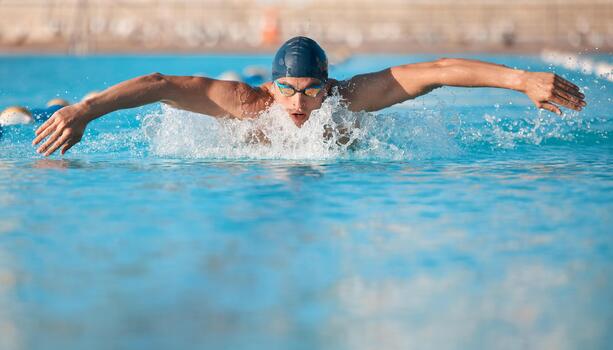
Each stroke targets different muscle groups: freestyle and backstroke light up your shoulders and lats; breaststroke powers your chest, inner thighs, and glutes; butterfly torches your core and upper body. Mix strokes for total-body conditioning.
5. Boosts Flexibility and Range of Motion
The wide, sweeping movements of swimming stretch and lengthen muscles with every stroke. Regular swimmers often report better shoulder mobility, hip flexibility, and spinal rotation — mobility that pays off in daily life.
6. Strengthens Your Lungs
Swimming demands controlled, rhythmic breathing, which trains your respiratory muscles and improves lung capacity. The American Lung Association notes that swimming is frequently recommended for people with breathing conditions because the humid pool air is gentle on airways.
7. Reduces Stress and Improves Mood
There’s something uniquely calming about being in water. The rhythmic strokes, the sound of water, the focus on breathing — it functions like moving meditation. Regular swimmers frequently report lower stress, better sleep, and a brighter mood.
8. Supports Healthy Weight Management
Combining calorie burn with muscle-building makes swimming a smart choice for sustainable weight control. Unlike crash diets, swimming builds habits and muscle that keep your metabolism humming.
9. Improves Balance and Coordination
Because water is unstable, your core works constantly to stabilize your body. This builds the kind of deep core strength and body awareness that improve balance — especially valuable as we age.
10. Helps Manage Chronic Conditions
Swimming is widely recommended for people managing arthritis, diabetes, and heart disease, because it provides cardiovascular and strength benefits without joint impact. The CDC specifically highlights water-based exercise as beneficial for people with arthritis.
11. Aids Better Sleep
Regular aerobic exercise improves sleep quality, and swimming is no exception. The full-body exertion, warm water, and stress relief combine to help many swimmers fall asleep faster and sleep more deeply.
12. Social and Fun for All Ages
Swimming can be a family activity, a social hobby through swim clubs or water aerobics classes, or peaceful solo time. Enjoyment is the most underrated factor in exercise consistency — and water is genuinely fun.
Swimming for Kids: Early Benefits That Last
Swimming teaches children water safety, builds confidence, develops coordination, and establishes a lifelong exercise habit. The American Academy of Pediatrics supports swim lessons for children, noting that swimming builds both physical skills and a healthy attitude toward activity.
Swimming for Seniors: Gentle but Powerful
For older adults, swimming may be the single best exercise choice. It maintains muscle mass, protects bone density through resistance, improves balance (reducing fall risk), and keeps joints mobile — all with minimal injury risk. Many community pools offer senior swim hours and water aerobics classes.
Swimming vs. Running vs. Cycling
- Impact: Swimming is near-zero impact; running is high impact; cycling is moderate.
- Muscles used: Swimming works the whole body; running emphasizes legs; cycling emphasizes legs and glutes.
- Calorie burn: All three are comparable at vigorous effort.
- Best for: Swimming wins for joint issues, cross-training, and full-body balance; running wins for bone density and convenience; cycling wins for low-impact leg strength.
The smartest approach? Combine them. Swimming is the perfect cross-training partner for runners and cyclists.
How to Get Started With Swimming
1. Check Your Health
If you have a heart condition, uncontrolled asthma, or another medical concern, get clearance from your doctor first — especially before vigorous swimming.
2. Take a Lesson if You’re New
Even confident paddlers benefit from one or two technique lessons. Good form prevents shoulder strain and multiplies the workout’s effectiveness.
3. Start With a Simple Plan
Begin with 20–30 minutes, alternating swimming and resting. Try 2–4 pool lengths followed by a breather, repeating until your time is up. Gradually increase swim intervals as fitness improves.
4. Warm Up and Cool Down
Five minutes of easy swimming or water walking before and after your main set prepares muscles and prevents cramping.
5. Stay Hydrated
You sweat in the pool even if you don’t feel it. Drink water before and after your swim.
6. Protect Your Eyes and Skin
Goggles prevent irritation, and rinsing off after swimming protects your skin and hair from chlorine.
Common Beginner Mistakes
- Holding your breath. Exhale steadily underwater; inhale quickly when your face turns.
- Kicking from the knees. Kick from the hips with relatively straight legs.
- Swimming too hard, too soon. Build endurance gradually to avoid burnout and shoulder injuries.
- Skipping rest days. Your muscles rebuild between sessions — give them a day or two.
A Sample Beginner Swim Routine
- Warm-up: 4 easy lengths (any stroke)
- Main set: 4 x 2 lengths freestyle with 30-second rests
- Technique set: 4 lengths of kicking with a kickboard
- Cool-down: 4 easy lengths backstroke
- Total: about 25–30 minutes
Swimming and Mental Health: The Mind Benefits
The mental health benefits of swimming deserve their own spotlight. The combination of rhythmic movement, controlled breathing, and the sensory calm of water reduces anxiety and lifts mood in ways few other exercises match. Many swimmers describe the pool as their daily reset — a place where work stress and racing thoughts quiet down within a few lengths.
Group swim sessions and water aerobics classes add a social layer that fights isolation, while solo swims offer genuine solitude. Whether you swim for the endorphins or the peace, the mental payoff is one of swimming’s most underrated advantages.
Conclusion
Swimming truly is exercise for every age and every body: it strengthens muscles, conditions your heart and lungs, torches calories, melts stress, and protects your joints — all in one enjoyable session. Whether you’re chasing fitness, managing a condition, or just looking for an activity the whole family loves, the pool is waiting. Dive in.
Hashtags: #Swimming #Fitness #HealthBenefits #Exercise #Cardio #WeightLoss #Wellness
