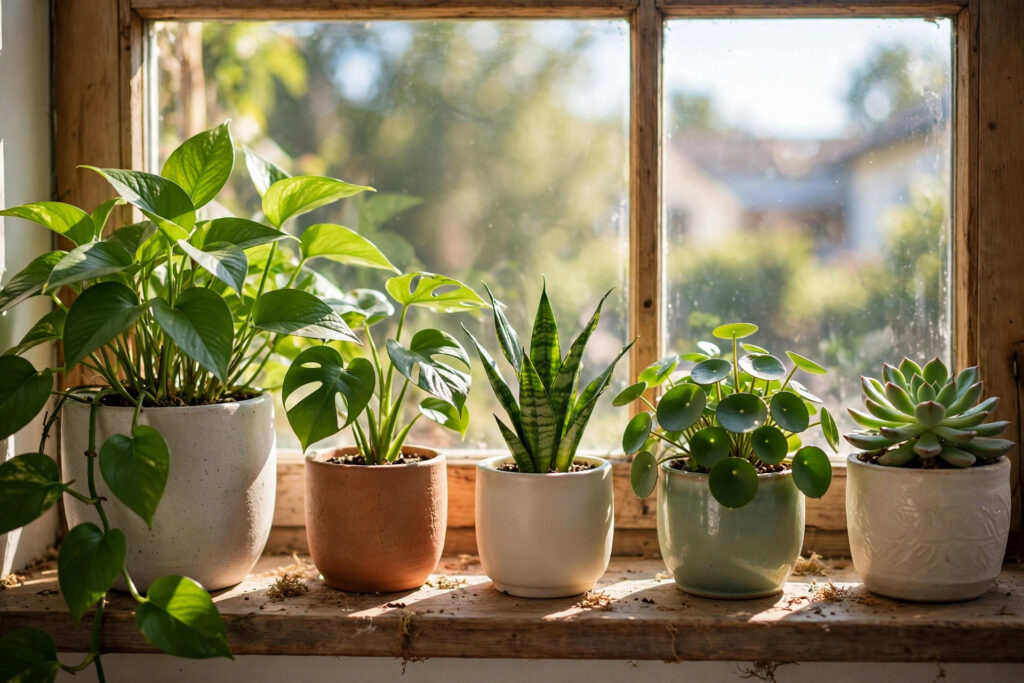
Houseplants do more than decorate a room. They clean the air, lift your mood, and turn any corner into a calmer, greener space. But many beginners bring home a beautiful plant only to watch it droop within weeks. The truth is that taking care of houseplants is not difficult — you just need to understand a few basics about light, water, and soil.
This beginner’s guide to houseplant care walks you through everything you need to keep your indoor plants alive and thriving, even if you have never owned a plant before.
Why Start with Houseplants?
Beyond their beauty, houseplants offer real benefits. Research published by NASA on indoor air quality found that certain plants can help remove common pollutants from indoor air, which is part of why greenery feels so refreshing inside a home. Plants also give you a small daily ritual — checking soil, wiping leaves, watching new growth appear — that many people find genuinely calming.
The key mindset shift is this: plants are living things with simple, predictable needs. Learn those needs and you will succeed.
Tip 1: Match Houseplants to Your Light
Light is the single most important factor in houseplant care. Before buying a plant, notice how much light your home actually gets. A bright south- or west-facing window works for sun-lovers like succulents, while low-light tolerant plants such as pothos and snake plants handle darker corners.
Most houseplants prefer bright, indirect light — near a window, but not in harsh direct sun that can scorch leaves. The Royal Horticultural Society notes that understanding your plant’s light requirements is the foundation of successful indoor gardening. If you are unsure, start with forgiving plants that adapt to a range of conditions.
Tip 2: Water Houseplants the Right Way
Overwatering kills more houseplants than anything else. The golden rule is simple: check the soil before you water. Push your finger about an inch into the soil — if it feels dry, water thoroughly; if it feels damp, wait.
When you water, soak the soil until water drains from the bottom of the pot, then empty the saucer so the roots are not sitting in water. Different plants need different schedules, so ignore rigid “water every Tuesday” advice. Seasons matter too — plants grow slower in winter and need less water.
Tip 3: Choose the Right Soil and Pots
Regular garden soil is too heavy for most houseplants. Use a quality potting mix made for indoor plants, which drains well while holding enough moisture for roots. Succulents and cacti need an even faster-draining mix with sand or perlite added.
Always choose pots with drainage holes. Decorative pots without holes look nice, but they trap water and rot roots. You can place a nursery pot inside a pretty cover pot and remove it for watering — the best of both worlds.
Tip 4: Get Humidity and Temperature Right
Most houseplants are tropical in origin and prefer the same temperatures humans enjoy: roughly 18–27°C (65–80°F). Keep them away from cold drafts, air conditioners blasting directly on them, and radiators.
Dry indoor air, especially in winter, can brown leaf edges. Simple fixes work well: group plants together, place a tray of water and pebbles nearby, or run a small humidifier. Bathrooms with natural light are surprisingly great homes for humidity-loving plants.
Tip 5: Feed Your Houseplants in Growing Season
Plants in pots eventually use up the nutrients in their soil. During spring and summer — the active growing season — feed them with a balanced liquid fertilizer every few weeks, following the package directions. Less is more: over-fertilizing burns roots.
In autumn and winter, most plants rest, so cut back or stop feeding entirely. Fresh potting mix when you repot also gives plants a nutrient boost.
Tip 6: Repot When Your Houseplants Outgrow Their Pots
If roots are circling the bottom, water runs straight through, or growth has stalled, it is time to repot. Choose a pot only slightly larger — one or two inches wider — because too much extra soil stays soggy and invites rot.
Gently loosen the root ball, place the plant at the same depth in the new pot, and fill in with fresh potting mix. Water well afterward. Spring is the ideal repotting season, since plants recover fastest while actively growing.
Tip 7: Watch for Pests and Common Problems
Healthy plants resist pests best, but check leaves regularly for tiny insects, sticky residue, or webbing. Common houseplant pests like spider mites and mealybugs can usually be controlled by wiping leaves and, if needed, using insecticidal soap from a garden center.
Yellow leaves often signal overwatering, while brown crispy edges usually mean too little water or very dry air. Drooping can mean either extreme — check the soil to decide. Learning to read these signals is the core skill of houseplant care, and it comes quickly with practice.
The Easiest Houseplants for Beginners
If you are starting out, choose plants known for forgiveness. Snake plants tolerate neglect and low light. Pothos grows happily almost anywhere and tells you when it is thirsty by drooping slightly. ZZ plants thrive on minimal water, and spider plants bounce back from almost anything. Master one of these, and your confidence will grow with them.
Houseplant Care Through the Seasons
Your care routine should shift with the seasons. In spring and summer, plants grow actively — this is the time to fertilize, repot, and propagate. In autumn, slow down on feeding as growth naturally tapers off. During winter, most houseplants rest: water less often, skip the fertilizer, and keep plants away from cold window glass at night. If your home gets dark in winter, consider moving plants closer to the brightest window until spring returns.
Conclusion
Learning how to take care of houseplants comes down to a handful of habits: give them the right light, water only when the soil is dry, use proper pots and soil, and pay attention to what your plants tell you. Start with one or two easy plants, learn their rhythms, and expand from there. Before long, keeping indoor plants alive will feel like second nature — and your home will look and feel better for it.
#Houseplants #IndoorPlants #PlantCare #GardeningTips #HomeDecor #GreenHome #BeginnerGardener
#Houseplants #IndoorPlants #PlantCare #GardeningTips #HomeDecor #GreenHome #BeginnerGardener
