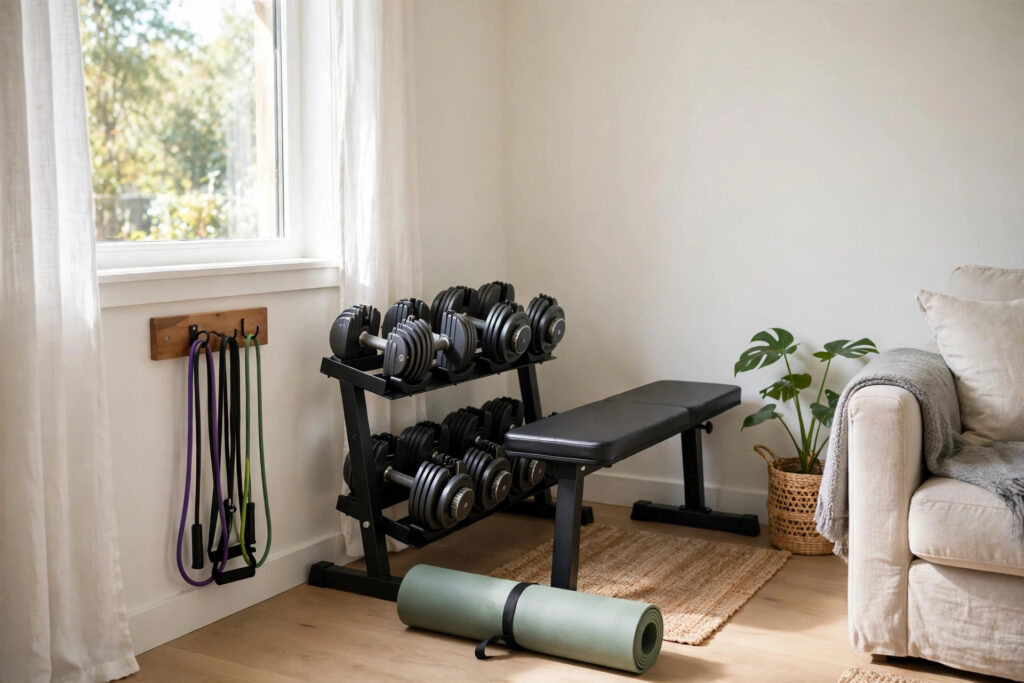
Gym memberships keep getting more expensive, and the commute eats into your workout time. A home gym on a budget solves both problems. You do not need thousands of dollars or a dedicated room to get started. With smart choices, you can build an effective workout space for the cost of a few months of gym fees.
This guide shows you how to build a home gym on a budget in 2026, step by step. You will learn which equipment gives you the most value, what to buy first, and which expensive items you can skip entirely.
Why a Home Gym on a Budget Makes Sense
The average commercial gym membership in the United States costs between $40 and $60 per month, which adds up to $500 to $700 per year before initiation fees. A budget home gym can pay for itself in under a year, and then it keeps saving you money indefinitely.
Beyond the money, a home gym saves time. No commuting, no waiting for equipment, no working around gym hours. You can train at 6 AM or 11 PM without leaving the house. For parents, shift workers, and anyone with an unpredictable schedule, that flexibility is priceless.
Consistency is where home gyms really shine. Research consistently shows that reducing friction is the best way to stick with exercise. When your gym is ten steps from your bedroom, “I do not have time” stops being an excuse.
Start With Your Space, Not Your Equipment
Before buying anything, decide where your home gym will live. A corner of a bedroom, a garage bay, or even a balcony can work. You need enough room to lie down, extend your arms fully, and move through a squat or lunge. For most people, a space about 6 by 8 feet is enough to start.
Protect your floor before you add equipment. Interlocking foam tiles are the cheapest option and cost around $20 to $30 for a pack that covers a small workout area. Rubber horse stall mats from a farm supply store are thicker, more durable, and surprisingly affordable at about $40 to $50 for a 4-by-6-foot mat.
Good ventilation and lighting matter more than you think. If your space has a window, open it during workouts. A small fan and a cheap mirror, which helps you check your form, will improve the experience enormously for very little money.
The Essential Equipment List for a Budget Home Gym
You do not need a room full of machines. A handful of versatile pieces covers nearly every movement pattern. Here is the priority order that gives you the most training value per dollar.
- Adjustable dumbbells. The single best purchase for a home gym on a budget. One pair replaces an entire rack of fixed dumbbells and covers pressing, rowing, curling, and single-leg work. Budget adjustable sets start around $100 to $150.
- Resistance bands. A full set of loop and tube bands costs $20 to $40 and adds variable resistance for warm-ups, assistance work, and exercises that dumbbells cannot replicate. They are also perfect for travel.
- Pull-up bar. A doorway pull-up bar costs $25 to $40 and unlocks the best upper-body pulling exercise there is. Many models install without screws, so renters can use them safely.
- Adjustable bench. A flat or adjustable bench opens up dozens of pressing and rowing variations. Decent budget benches start around $80 to $120. Make sure the weight rating comfortably exceeds your body weight plus the weights you lift.
- Kettlebell. One 35-pound or 53-pound kettlebell adds swings, goblet squats, and carries to your routine. A single quality kettlebell costs $40 to $70 and lasts forever.
That is a complete home gym for roughly $300 to $450 total, depending on brands and sales. It covers pushing, pulling, hinging, squatting, and carrying, which is everything a general fitness program needs.
How to Buy Equipment Without Overspending
Buy used first. Facebook Marketplace, Craigslist, and local buy-and-sell groups are full of barely-used dumbbells, benches, and racks from people whose fitness resolutions faded by February. Used equipment often sells for half the retail price or less, and iron does not expire.
Time your purchases around sales. Black Friday, New Year clearance, and Amazon Prime Day events routinely discount home gym gear by 20 to 40 percent. If you are not in a rush, waiting six weeks for a sale can save you a hundred dollars or more.
Avoid the temptation of cheap all-in-one machines. Budget cable machines and multi-stations often feel flimsy, break within a year, and cannot be repaired. Simple, durable free weights from reputable budget brands will outlast them and train you better.
Smart Upgrades When Your Budget Grows
Once your basics are in place and you are training consistently, add equipment in this order. Each upgrade should solve a specific limitation in your current routine, not just fill space.
- Weight plates and a barbell. A basic Olympic barbell and a pair of 45-pound plates enable real deadlifts and barbell rows. Budget for around $150 to $250 for a starter set.
- Squat rack or stands. Squat stands cost less than a full power rack and fold away when not in use. Expect to pay $100 to $200 for a safe, sturdy pair.
- Jump rope. The cheapest cardio tool ever made. A good speed rope costs under $15 and delivers brutal conditioning in a tiny space.
- Yoga mat and foam roller. A mat makes floor work comfortable and a foam roller helps recovery. Together they cost $25 to $40.
Notice what is missing: treadmills, ellipticals, and fancy machines. Cardio machines are the worst value in home gyms. They are expensive, bulky, hard to resell, and break down. Running, jump rope, and kettlebell circuits cover your cardio needs for almost nothing.
Free Programming and Workout Plans
Equipment is only half the equation. You also need a plan, and the good news is that excellent programming is free. YouTube channels run by certified coaches offer complete follow-along routines for dumbbell-only and bodyweight training. Fitness apps with free tiers provide structured programs with progress tracking.
A simple, effective starter routine uses your dumbbells, bench, pull-up bar, and bands three to four times per week. Alternate upper-body and lower-body days, or do full-body sessions every other day. Keep a training log, even just in your phone notes, and add weight or reps over time. Progressive overload is what builds strength, not expensive equipment.
Conclusion
Building a home gym on a budget in 2026 is one of the best investments you can make in your health. Start with a protected floor space, add adjustable dumbbells, resistance bands, a pull-up bar, a bench, and a kettlebell, and you have a complete training setup for around $300 to $450. Buy used, shop sales, skip the machines, and use free programming. Your future self, fitter and wealthier, will thank you for starting today.
Sources
- https://www.menshealth.com/fitness/a62510423/best-home-gym-equipment/
- https://www.nerdwallet.com/article/finance/home-gym-cost
- https://www.verywellfit.com/best-home-gym-equipment-4165954
- https://www.acefitness.org/resources/pros/expert-articles/
- https://www.garagegymreviews.com/
#HomeGym #Fitness #BudgetFitness #Workout #StrengthTraining #HomeWorkout #Exercise
