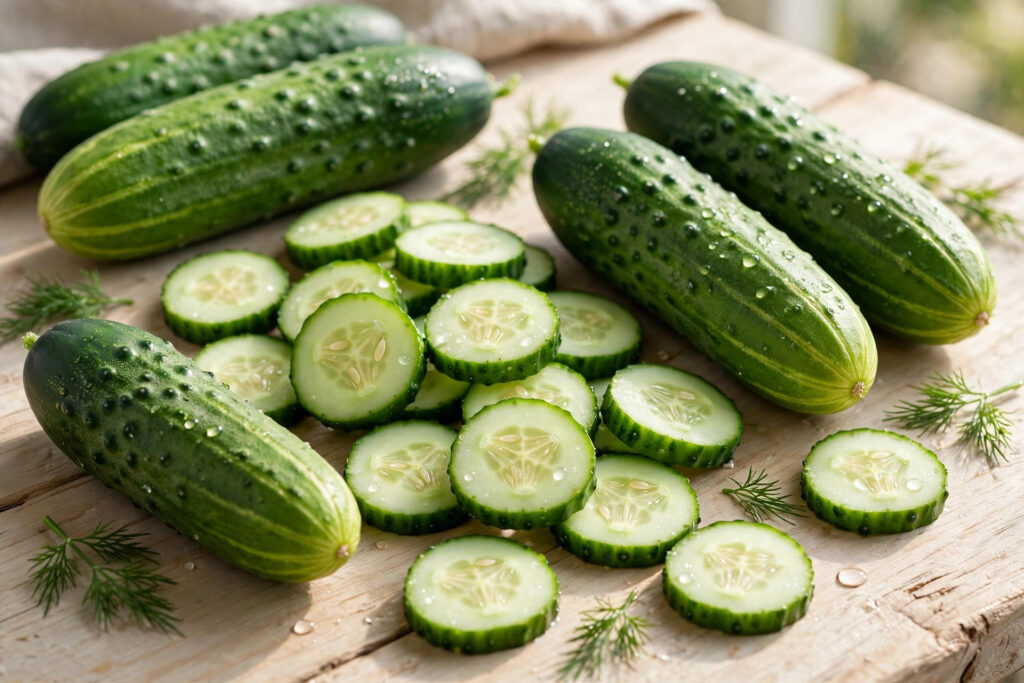
Cucumbers are one of the simplest foods you can add to your daily diet, yet they offer a surprising range of health benefits. Made up of about 96 percent water, this crisp green vegetable is low in calories and rich in vitamins and minerals. Eating cucumber every day is an easy habit that fits almost any meal plan.
From keeping you hydrated to supporting your skin and digestion, the benefits of eating cucumber every day go well beyond its refreshing crunch. In this article, we look at what science says about cucumbers, the nutrients they provide, and how a daily serving can help you feel better.
What Is in a Cucumber?
A single cup of sliced cucumber with the peel contains only about 16 calories, yet it supplies vitamin K, vitamin C, potassium, magnesium, and small amounts of manganese and vitamin A. According to the USDA, cucumbers also contain fiber and plant compounds called cucurbitacins and lignans, which have been studied for their antioxidant effects.
Most of the fiber and many nutrients sit in or just under the peel, so eat cucumbers unpeeled for the most value.
1. Keeps You Hydrated
Staying hydrated is essential for energy, focus, and healthy skin, and food can supply a large share of your daily fluid intake. Because cucumbers are about 96 percent water, eating them every day helps you meet your hydration needs without drinking extra glasses of water.
Research notes that water-rich foods like cucumber contribute to total fluid intake and can be especially helpful in hot weather or after exercise.
2. Supports Healthy Skin
Cucumber has long been used in skin care, and there is a good reason for it. Its high water content helps keep skin hydrated from the inside, while vitamin C supports collagen production, the protein that keeps skin firm and smooth.
The American Academy of Dermatology notes that staying hydrated and eating foods rich in vitamins supports overall skin health.
3. Helps With Weight Management
If you are trying to manage your weight, cucumber is one of the best foods to eat every day. Its very low calorie density means you can eat a large portion without adding many calories, which helps you feel full while keeping your total intake low.
The fiber in cucumber also slows digestion slightly, helping you stay satisfied for longer. Swapping high-calorie snacks for cucumber slices with hummus is a simple change that adds up over time.
4. Good for Digestion
Cucumbers support digestion in two ways. First, their water content helps keep stools soft and supports regular bowel movements. Second, the soluble fiber in cucumber feeds the friendly bacteria in your gut, which play a key role in digestive health.
According to the Mayo Clinic, eating enough fiber and drinking enough water are two of the most effective steps for preventing constipation.
5. May Support Heart Health
Cucumbers contain potassium, a mineral that helps balance sodium in the body and supports healthy blood pressure. They also provide small amounts of magnesium, another mineral linked to heart health.
Some studies suggest that the cucurbitacins in cucumber may help reduce inflammation, a risk factor for heart disease. While cucumber alone will not protect your heart, it is a useful part of a heart-friendly diet.
6. Provides Antioxidants
Antioxidants protect your cells from damage caused by free radicals, unstable molecules linked to aging and chronic disease. Cucumbers contain several antioxidants, including vitamin C, beta-carotene, and flavonoids such as quercetin and apigenin.
Research on these compounds suggests they may help reduce oxidative stress in the body. Eating a variety of colorful vegetables matters most, and cucumber is an easy daily addition.
How to Add Cucumber to Your Diet
Eating cucumber every day is easy because it fits into so many meals. Add slices to salads and sandwiches, blend it into smoothies, or enjoy it as a snack with yogurt dip. Cucumber also works well in chilled soups and infused water.
For the best flavor and nutrition, choose firm cucumbers with dark green skin and store them in the fridge. A cup a day is a good target.
Are There Any Downsides?
Cucumbers are safe for most people, but a few points are worth noting. Some people find that cucumber causes mild bloating, especially if eaten in large amounts. People taking blood-thinning medication should keep vitamin K intake steady, since cucumber peel contains vitamin K.
As with any food, variety matters. Cucumber is a great daily habit, but it works best as part of a balanced diet with many different vegetables.
Conclusion
The benefits of eating cucumber every day are simple but real: better hydration, healthier skin, easier weight management, smoother digestion, and a steady supply of vitamins and antioxidants. It is cheap, widely available, and easy to prepare, which makes it one of the easiest healthy habits to keep.
Start with a cup of sliced cucumber a day and notice how you feel. Small daily choices like this add up to lasting health over time.
#Cucumber #HealthyEating #Hydration #WeightLoss #SkinCare #Nutrition #HealthyHabits #Vegetables
