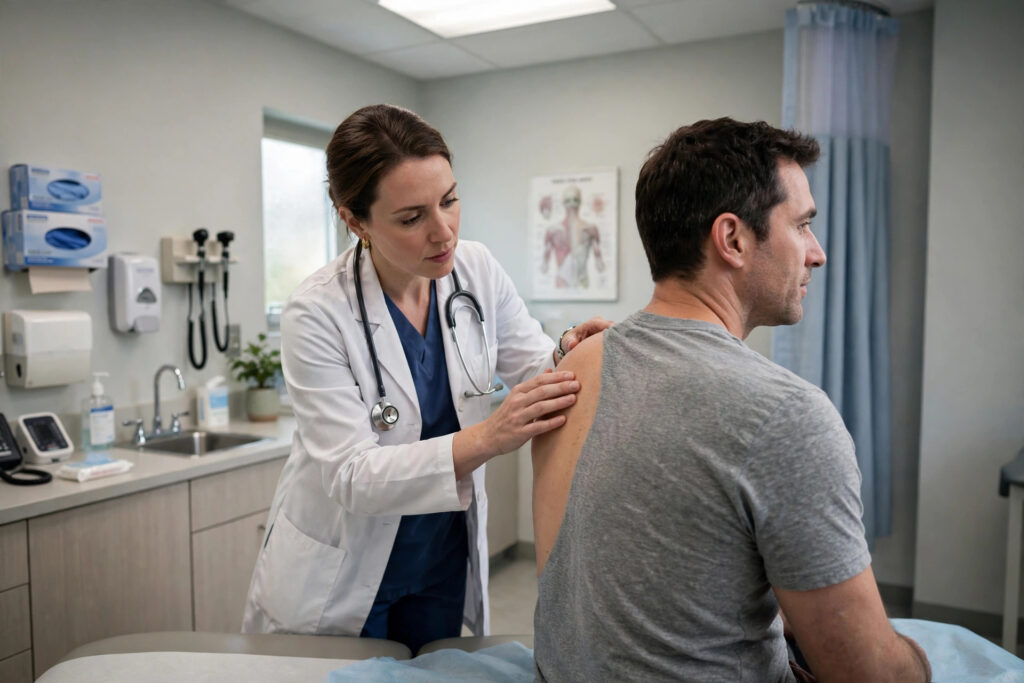
Shingles is a painful skin rash caused by the varicella-zoster virus, the same virus that causes chickenpox. After a chickenpox infection, the virus stays inactive in the body for years. Later in life, it can reactivate and cause shingles, usually in adults over 50 or in people with a weakened immune system.
Understanding what shingles is, how to recognize its signs, and what treatment is available can help you get care early. In this article, we explain the symptoms, causes, and treatment options in clear, simple terms.
What Is Shingles?
Shingles, also called herpes zoster, is a viral infection that causes a painful rash, usually in a band on one side of the body. The rash most often appears on the torso, but it can also affect the face, neck, or eyes.
According to the Centers for Disease Control and Prevention (CDC), about one in three people will develop shingles in their lifetime. It is not contagious in the same way as chickenpox, but a person with shingles can spread the virus to someone who has never had chickenpox.
Early Signs and Symptoms
Shingles often starts with pain, burning, or tingling in one area of the skin, sometimes days before any rash appears. This early pain is one of the most useful warning signs, and it may be mistaken for a muscle ache or heartburn.
Within a few days, red patches appear, followed by fluid-filled blisters. Other symptoms can include fever, headache, fatigue, and sensitivity to touch. The rash usually follows a nerve path, which is why it stays on one side of the body.
What Causes Shingles?
Shingles is caused by the reactivation of the varicella-zoster virus. After chickenpox, the virus remains dormant in nerve cells. As the immune system weakens with age, illness, or stress, the virus can become active again.
Risk factors include being over 50, having a condition that weakens immunity, such as cancer or HIV, and taking medicines that suppress the immune system. Emotional or physical stress may also play a role.
How Is Shingles Diagnosed?
Doctors usually diagnose shingles by looking at the rash and asking about symptoms. The pattern of the rash, a band of blisters on one side of the body, is often enough to confirm it.
In some cases, a doctor may take a sample from a blister to test for the virus. Early diagnosis matters because treatment works best when started within 72 hours of the rash appearing.
Treatment Options
There is no cure for shingles, but antiviral medicines such as acyclovir, valacyclovir, and famciclovir can shorten the illness and reduce its severity. These work best when started early, so see a doctor as soon as you notice symptoms.
Pain relief is also important. Over-the-counter painkillers, cool compresses, and calamine lotion can help with discomfort. In severe cases, doctors may prescribe stronger pain medicine or refer you to a pain specialist.
Possible Complications
The most common complication is postherpetic neuralgia, a long-lasting nerve pain that continues after the rash heals. It affects about one in five people with shingles and is more common in older adults.
Shingles near the eye can cause vision problems, and in rare cases the infection can affect the brain or spinal cord. Prompt treatment lowers the risk of these complications.
Prevention: The Shingles Vaccine
Vaccination is the best way to prevent shingles. The CDC recommends the Shingrix vaccine for adults aged 50 and older and for adults 19 and older with weakened immune systems. The vaccine is given in two doses, two to six months apart.
Studies show that Shingrix is more than 90 percent effective at preventing shingles and postherpetic neuralgia. Even if you have had shingles before, vaccination can help prevent it from returning.
Home Care and Recovery
Most people recover from shingles within two to four weeks. While healing, keep the rash clean and covered, avoid scratching, and wear loose clothing. Rest and good sleep help your immune system fight the virus.
Stay away from people who have never had chickenpox or the chickenpox vaccine, especially pregnant women and newborns, until the blisters have crusted over.
Conclusion
Shingles is a common but painful condition that becomes more likely with age. Recognizing the early signs, getting treatment quickly, and getting vaccinated are the best steps you can take to protect yourself.
If you develop a painful, blistering rash on one side of your body, see a doctor promptly. Early care makes recovery faster and reduces the risk of lasting pain.
#Shingles #Health #Virus #SkinHealth #Vaccination #HealthyAging #Medical #HealthTips
