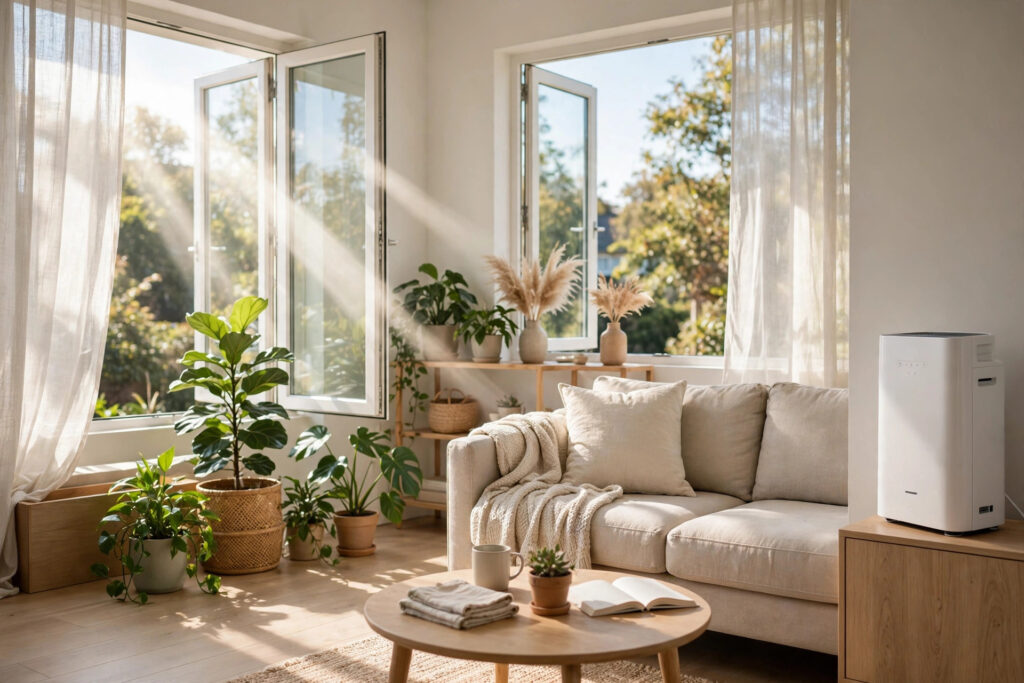
Most people spend about 90 percent of their time indoors, yet indoor air can be two to five times more polluted than outdoor air. Dust, chemicals, mold, and poor ventilation all affect the air you breathe at home, and over time they can trigger allergies, headaches, and breathing problems.
The good news is that improving indoor air quality at home does not require expensive equipment. In this article, we share 10 practical tips that work, based on guidance from health and environmental experts.
Why Indoor Air Quality Matters
According to the U.S. Environmental Protection Agency (EPA), indoor air pollutants include dust mites, pet dander, mold spores, volatile organic compounds from cleaning products and furniture, and smoke. Long-term exposure can worsen asthma and allergies.
Children, older adults, and people with breathing conditions are most affected. Even healthy people may notice better sleep and fewer headaches when indoor air improves.
1. Open Windows Regularly
Fresh air is the simplest way to improve indoor air quality. Open windows for 10 to 15 minutes a day, even in winter, to let stale air out and fresh air in. Cross-ventilation works best: open windows on opposite sides of the home.
If outdoor air is smoky or heavily polluted, ventilate during cleaner hours, such as early morning, and rely on filtration instead.
2. Use an Air Purifier
A good air purifier with a HEPA filter can remove dust, pollen, pet dander, and fine particles from the air. Choose a model sized for your room, and run it in bedrooms and living areas where you spend the most time.
Replace filters on schedule. A clogged filter works poorly and can even release trapped particles back into the room.
3. Control Humidity
Humidity between 30 and 50 percent is ideal for indoor air. Too much moisture encourages mold and dust mites, while very dry air irritates the nose and throat.
Use a dehumidifier in damp rooms and a hygrometer to check levels. Fix leaks quickly, and always run the bathroom fan during and after showers.
4. Vacuum and Dust Often
Dust builds up fast, and it carries allergens. Vacuum carpets and rugs at least twice a week using a vacuum with a HEPA filter, and dust hard surfaces with a damp cloth so dust is trapped rather than spread.
Wash bedding weekly in hot water to reduce dust mites, and consider washable covers for pillows and mattresses.
5. Choose Cleaner Cleaning Products
Many cleaning sprays release volatile organic compounds that irritate the lungs. Switch to fragrance-free or plant-based cleaners, and use simple options like vinegar and baking soda where they work.
Always clean with windows open when possible, and store chemicals in sealed containers away from living areas.
6. Keep Shoes at the Door
Shoes carry dirt, pollen, pesticides, and bacteria from outside. Leaving them at the door keeps much of that pollution out of your home.
Place a shoe rack or tray by the entrance, and wear indoor slippers instead. This one habit noticeably reduces the dust on your floors.
7. Add Indoor Plants
Plants can slightly improve air quality and add moisture to dry rooms, though they are not a replacement for ventilation or filtration. Popular low-maintenance choices include snake plants, pothos, and peace lilies.
Be careful not to overwater plants, as damp soil can grow mold. A few well-kept plants in bright rooms are enough.
8. Avoid Smoking Indoors
Secondhand smoke is one of the worst indoor air pollutants. It contains thousands of chemicals, many of them harmful, and it lingers on furniture and walls long after a cigarette is finished.
The Mayo Clinic notes that there is no safe level of secondhand smoke exposure. Keeping your home smoke-free is one of the most effective steps you can take.
9. Maintain Heating and Cooling Systems
Dirty filters and ducts spread dust and mold through your home. Change HVAC filters every one to three months, and have ducts cleaned if you notice dust buildup or a musty smell.
Clean or replace the filters in window air conditioners too, and check that vents are not blocked by furniture.
10. Reduce Candles and Air Fresheners
Scented candles and plug-in air fresheners release chemicals and fine particles into the air. If you enjoy fragrance, choose beeswax or soy candles and burn them briefly in a ventilated room.
Opening a window and cleaning regularly does more for fresh-smelling air than any spray.
Conclusion
Improving indoor air quality at home is mostly about simple habits: ventilate daily, control humidity, clean regularly, and reduce the chemicals you bring inside. You do not need to do everything at once.
Start with the easiest steps, such as opening windows and leaving shoes at the door, then add an air purifier or better cleaning products. Your lungs will thank you.
#IndoorAirQuality #HealthyHome #AirPurifier #CleanAir #HomeTips #HealthyLiving #Allergies #Wellness
