Introduction
Sleep is a fundamental part of a healthy lifestyle. It is as important as eating nutritious food, drinking enough water, and exercising regularly. During sleep, the body and brain recover from the day’s activities, allowing us to wake up refreshed and ready for new challenges. Despite its importance, many people neglect sleep due to busy schedules, work pressure, or excessive use of electronic devices. Prioritizing quality sleep is essential for maintaining good health and improving overall quality of life.
What Is Sleep?
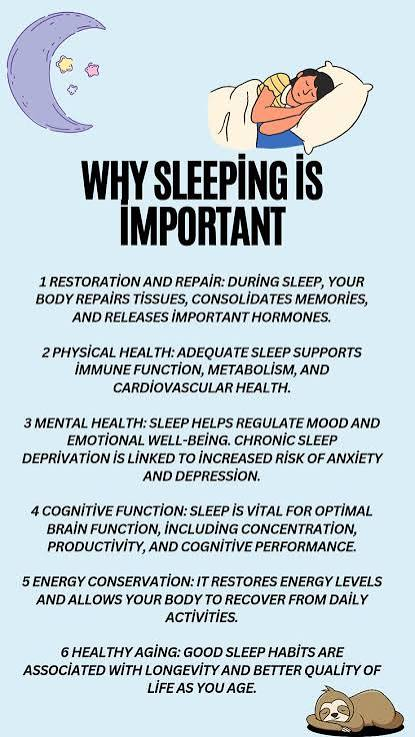
Sleep is a natural state of rest during which the body relaxes and the brain performs essential functions. While we sleep, the body repairs damaged tissues, strengthens the immune system, stores memories, and restores energy. Adults generally need 7 to 9 hours of sleep each night, while children and teenagers require even more to support their growth and development.
Why Sleep Is Important
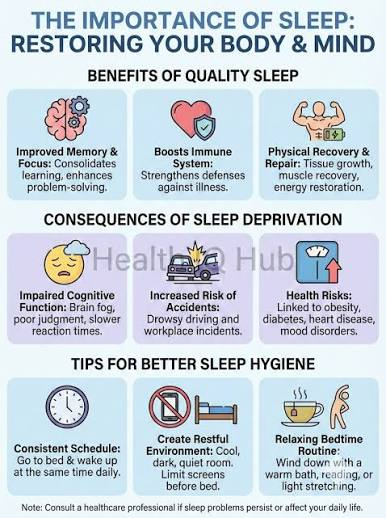
1. Improves Brain Function
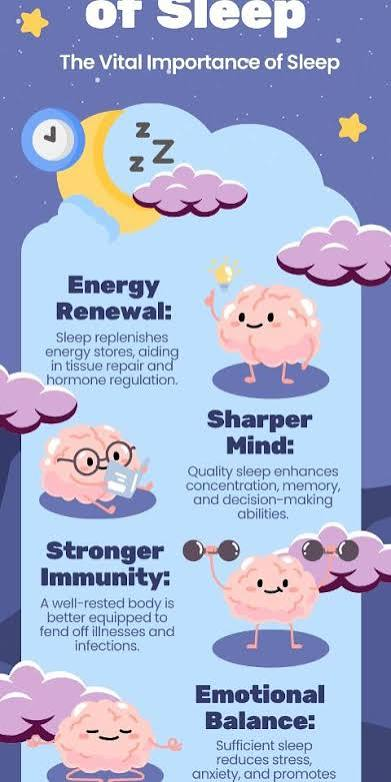
A good night’s sleep enhances memory, concentration, and problem-solving skills. It allows the brain to organize information and improve learning, making sleep especially important for students and professionals.
2. Strengthens the Immune System
During sleep, the body produces proteins and antibodies that help fight infections and illnesses. People who get enough sleep are generally healthier and recover more quickly from sickness.
3. Supports Mental Health
Adequate sleep helps regulate emotions and reduces stress, anxiety, and depression. Well-rested individuals are more likely to feel positive, calm, and emotionally balanced.
4. Boosts Physical Health
Sleep allows muscles, bones, and tissues to repair and grow. It also supports heart health, regulates blood pressure, and helps maintain healthy hormone levels.
5. Increases Energy and Productivity
People who sleep well wake up feeling refreshed and energetic. They are more productive at school, work, and in daily activities because they can focus better and make fewer mistakes.
6. Helps Maintain a Healthy Weight
Lack of sleep affects hormones that control hunger and appetite, increasing cravings for unhealthy foods. Getting enough sleep supports healthy eating habits and weight management.
Effects of Sleep Deprivation
Not getting enough sleep can have serious consequences, including:
- Difficulty concentrating and remembering information.
- Increased stress and irritability.
- Lower academic and work performance.
- Weak immune system.
- Higher risk of obesity, diabetes, heart disease, and high blood pressure.
- Increased chances of accidents due to fatigue.
Tips for Better Sleep
- Go to bed and wake up at the same time every day.
- Avoid using mobile phones or computers before bedtime.
- Limit caffeine and sugary drinks in the evening.
- Create a quiet, dark, and comfortable sleeping environment.
- Exercise regularly but avoid intense workouts before bedtime.
- Practice relaxation techniques such as reading or deep breathing before sleeping.
Conclusion
Sleep is essential for maintaining physical health, mental well-being, and overall performance. It improves memory, strengthens the immune system, boosts energy, and helps prevent many health problems. Making sleep a priority is one of the simplest and most effective ways to live a healthier and happier life. By adopting healthy sleeping habits, we can improve our quality of life and achieve greater success in our daily activities.