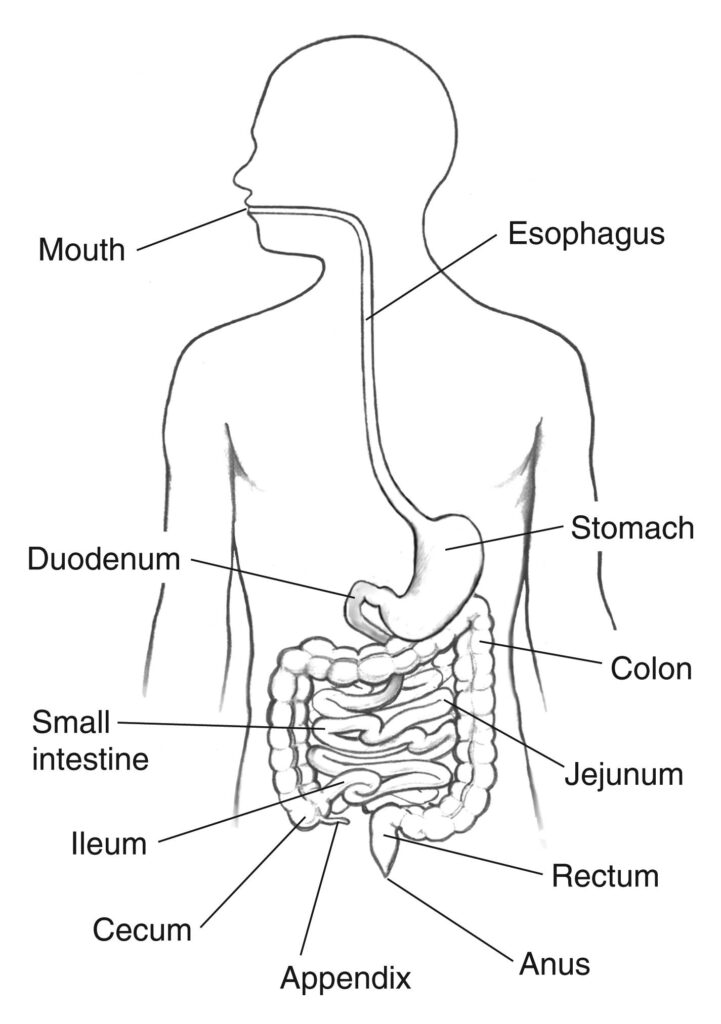
Human Digestive System
The human digestive system is a group of organs that work together to break down food into nutrients that the body can absorb and use for energy, growth, and repair. It also helps remove waste products from the body. The digestive system is essential for maintaining good health and supporting all body functions.
Main Organs of the Digestive System
- Mouth
- Digestion begins in the mouth.
- Teeth chew food into smaller pieces.
- Saliva contains enzymes that start breaking down carbohydrates.
- Esophagus
- A muscular tube that carries food from the mouth to the stomach.
- Food moves through wave-like muscle contractions called peristalsis.
- Stomach
- The stomach mixes food with digestive juices and acids.
- It breaks food down into a semi-liquid substance called chyme.
- Small Intestine
- Most digestion and nutrient absorption occur here.
- Enzymes from the pancreas and bile from the liver help digest food.
- Liver
- Produces bile, which helps digest fats.
- Processes nutrients absorbed from the small intestine.
- Gallbladder
- Stores and concentrates bile produced by the liver.
- Releases bile into the small intestine when needed.
- Pancreas
- Produces digestive enzymes and hormones.
- Helps break down carbohydrates, proteins, and fats.
- Large Intestine (Colon)
- Absorbs water and minerals from undigested food.
- Forms and stores feces.
- Rectum and Anus
- Store and eliminate solid waste from the body.
Functions of the Digestive System
- Digestion of food
- Absorption of nutrients
- Production of energy
- Removal of waste products
- Maintenance of water balance
Importance of the Digestive System
A healthy digestive system ensures that the body receives essential nutrients needed for growth, repair, and daily activities. Poor digestion can lead to malnutrition, fatigue, and various digestive disorders.
Common Digestive Disorders
- Acid reflux
- Gastritis
- Peptic ulcers
- Constipation
- Diarrhea
- Irritable Bowel Syndrome (IBS)
Tips for Maintaining a Healthy Digestive System
- Eat a balanced diet rich in fruits and vegetables.
- Drink plenty of water.
- Exercise regularly.
- Avoid excessive junk food and sugary drinks.
- Maintain proper hygiene and food safety practices
