Introduction
Quantum computing is one of the most exciting technological innovations of the 21st century. Unlike traditional computers, which process information using bits represented as 0s and 1s, quantum computers use quantum bits (qubits) that can exist in multiple states simultaneously. This unique capability enables quantum computers to solve complex problems much faster than even the world’s most powerful supercomputers. Although quantum computing is still in its early stages, it has the potential to revolutionize industries, accelerate scientific discoveries, and transform the future of technology.
What Is Quantum Computing?
Quantum computing is a field of computer science that applies the principles of quantum mechanics to process information. Traditional computers perform calculations one step at a time, while quantum computers can perform many calculations simultaneously through concepts such as:
- Superposition: A qubit can represent both 0 and 1 at the same time.
- Entanglement: Qubits can become connected, allowing them to work together even when separated.
- Quantum Interference: This helps identify the correct solutions while reducing incorrect possibilities.
These principles make quantum computers extremely powerful for solving certain types of problems.
How Quantum Computing Differs from Classical Computing
| Classical Computing | Quantum Computing |
|---|---|
| Uses bits (0 or 1) | Uses qubits (0 and 1 simultaneously) |
| Solves problems sequentially | Solves many possibilities at once |
| Suitable for everyday computing | Best for highly complex calculations |
| Mature and widely available | Still under development |
Potential Applications of Quantum Computing
1. Healthcare and Drug Discovery
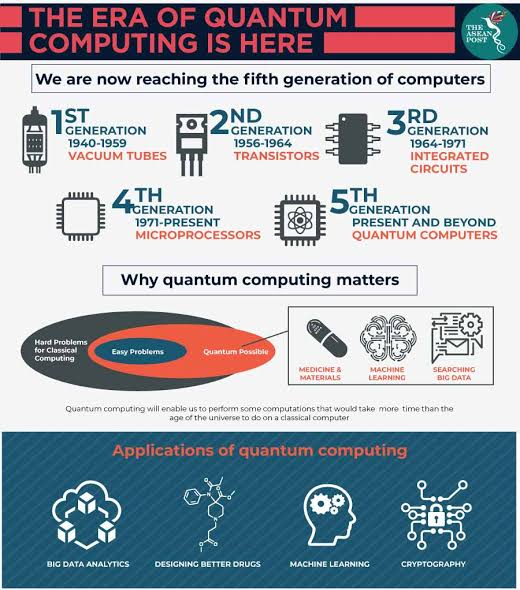
Quantum computers could significantly reduce the time required to develop new medicines by accurately simulating molecular interactions. Researchers may discover treatments for diseases that currently take years to study.
2. Artificial Intelligence
Quantum computing could improve machine learning algorithms, enabling AI systems to analyze massive datasets more efficiently and make faster, more accurate predictions.
3. Financial Services
Banks and financial institutions could use quantum computing for portfolio optimization, fraud detection, market forecasting, and risk management.
4. Cybersecurity
Quantum technology will both strengthen and challenge cybersecurity. While quantum computers could break some current encryption methods, they will also enable quantum-resistant encryption systems that offer stronger protection.
5. Climate and Environmental Research
Scientists can use quantum computers to simulate climate systems, improve weather forecasting, and develop cleaner energy technologies.
6. Logistics and Transportation
Companies can optimize delivery routes, supply chains, and traffic management systems, reducing costs and improving efficiency.
Benefits of Quantum Computing
- Solves highly complex problems faster.
- Accelerates scientific research.
- Improves artificial intelligence.
- Optimizes industrial operations.
- Enhances medical research.
- Supports climate modeling.
- Enables breakthroughs in material science.
Challenges Facing Quantum Computing
Despite its promise, several challenges remain:
High Cost
Building and maintaining quantum computers requires advanced equipment and significant investment.
Error Rates
Qubits are highly sensitive to environmental disturbances, making calculations prone to errors.
Limited Availability
Only a few organizations currently have access to advanced quantum systems.
Need for Skilled Professionals
The field requires experts in physics, mathematics, and computer science.
Industries That Will Be Transformed
- Healthcare
- Banking and Finance
- Artificial Intelligence
- Manufacturing
- Energy
- Telecommunications
- Aerospace
- National Security
The Future Outlook
Experts believe that over the next decade, quantum computing will become increasingly practical. Governments, universities, and technology companies are investing billions of dollars into research. While classical computers will continue to serve everyday needs, quantum computers will tackle problems that are currently impossible to solve.
As hardware improves and quantum software evolves, businesses will gain access to powerful tools capable of transforming innovation across every sector.
Conclusion
Quantum computing represents the next frontier in technological advancement. Although significant technical challenges remain, its ability to solve incredibly complex problems offers enormous potential for improving healthcare, business, scientific research, cybersecurity, and environmental sustainability. As research continues, quantum computing is expected to become one of the defining technologies of the future, opening new possibilities that were once considered impossible.