Introduction
Artificial Intelligence (AI) is transforming nearly every aspect of our lives, and education is one of the fields experiencing the greatest change. AI-powered tools are making learning more personalized, interactive, and accessible than ever before. From intelligent tutoring systems to automated grading and virtual classrooms, AI is helping teachers improve instruction while enabling students to learn more effectively. As technology continues to advance, AI is expected to become an essential part of education around the world.
Personalized Learning Experiences
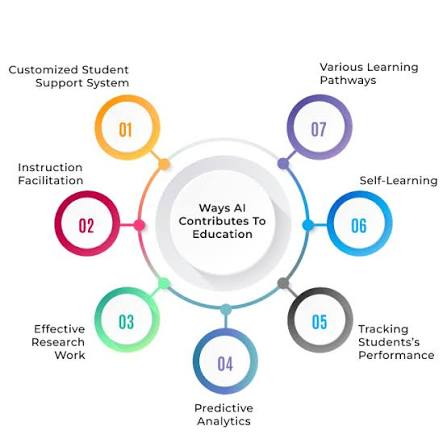
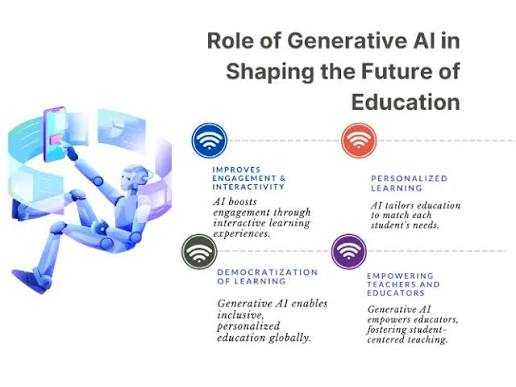
One of the greatest advantages of AI in education is its ability to personalize learning. Every student learns differently, and AI systems can analyze individual strengths, weaknesses, and learning styles. Based on this analysis, AI recommends customized lessons, quizzes, and study materials that match each student’s needs.
This personalized approach allows students to learn at their own pace. Those who need extra support receive additional practice, while advanced learners can move on to more challenging topics without waiting for the rest of the class.
AI-Powered Virtual Tutors
AI-powered virtual tutors are becoming increasingly popular. These digital assistants can answer students’ questions, explain difficult concepts, provide instant feedback, and guide learners through assignments. Unlike traditional tutoring, AI tutors are available 24 hours a day, allowing students to study whenever they need help.
Virtual tutors also reduce the workload on teachers by handling routine questions and allowing educators to focus on more complex teaching tasks.
Smarter Assessment and Grading
AI has made grading faster and more accurate. Automated grading systems can evaluate quizzes, multiple-choice exams, and even some written assignments. Teachers save valuable time that can instead be spent preparing engaging lessons and supporting students individually.
AI also provides detailed reports on student performance, helping educators identify learning gaps early and take corrective action before problems become serious.
Interactive and Engaging Learning
Modern AI technologies make classrooms more engaging through interactive learning experiences. AI-powered educational games, simulations, virtual reality (VR), and augmented reality (AR) help students understand complex concepts by allowing them to experience lessons in realistic environments.
For example, science students can conduct virtual experiments, while history students can explore ancient civilizations through immersive simulations.
Supporting Teachers
AI is not replacing teachers—it is supporting them. Teachers remain responsible for inspiring, mentoring, and developing students’ critical thinking and social skills. AI simply automates repetitive tasks such as attendance tracking, lesson planning assistance, grading, and administrative work.
By reducing routine responsibilities, teachers have more time to focus on meaningful interactions with students.
Improving Accessibility
AI makes education more inclusive for students with disabilities. Speech recognition, text-to-speech software, real-time translation, captioning, and adaptive learning platforms help ensure that all students have equal opportunities to learn.
Students from different language backgrounds can also benefit from AI-powered translation tools that make educational content easier to understand.
Challenges of AI in Education
Despite its many benefits, AI also presents several challenges. Schools must address issues such as data privacy, cybersecurity, unequal access to technology, and the ethical use of AI. Teachers and students also need proper training to use AI tools effectively and responsibly.
Educational institutions should ensure that AI complements human teaching rather than replacing personal interaction.
The Road Ahead
The future of AI in education looks promising. As AI technology continues to improve, classrooms will become smarter, more personalized, and more efficient. Students will benefit from customized learning paths, while teachers will have powerful tools to enhance instruction.
Governments, schools, and technology companies must work together to ensure that AI is implemented ethically and that its benefits are available to learners everywhere.
Conclusion
Artificial Intelligence is reshaping education by making learning more personalized, accessible, and engaging. While challenges remain, AI has the potential to improve educational outcomes for millions of students worldwide. When used responsibly alongside skilled teachers, AI will help build a future where quality education is available to everyone.