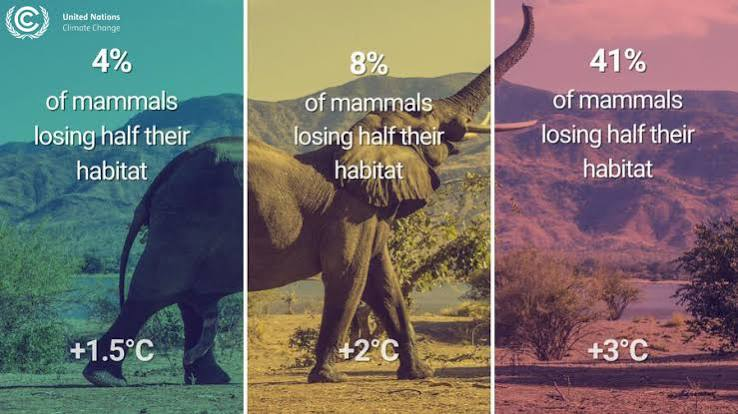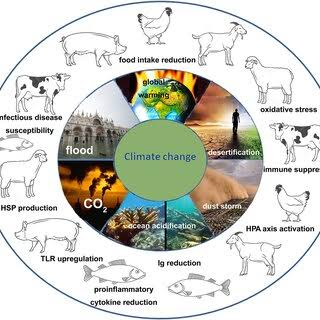
Climate change is causing global temperatures to rise at an unprecedented rate, creating serious challenges for wildlife around the world. From frozen polar regions to tropical rainforests, animals are struggling to adapt to rapidly changing environments. Rising temperatures are affecting food sources, breeding cycles, migration patterns, and overall survival, making climate change one of the greatest threats to biodiversity.
Changing Habitats
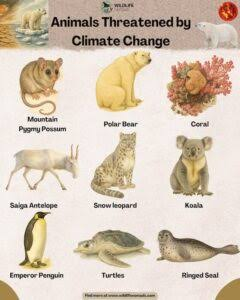
Many animal species depend on specific climates to survive. As temperatures increase, habitats are changing or disappearing entirely. Polar bears, for example, rely on sea ice to hunt seals, but melting ice reduces their hunting grounds and forces them to travel greater distances in search of food. Similarly, mountain-dwelling animals are moving to higher elevations where cooler temperatures still exist, but suitable habitats are becoming increasingly limited.
Food Shortages and Ecosystem Disruption
Higher temperatures affect the availability of food by altering plant growth, insect populations, and aquatic ecosystems. Herbivores may struggle to find enough vegetation during prolonged droughts, while predators face declining prey populations. These disruptions ripple through food chains, threatening the stability of entire ecosystems.
Heat Stress and Health Risks
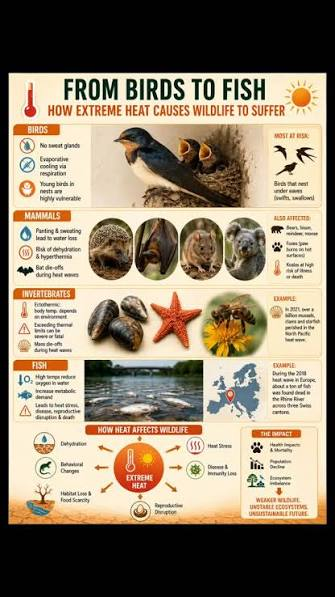
Extreme heat can directly harm animals by causing dehydration, heat exhaustion, and increased mortality. Marine animals also suffer as warmer oceans reduce oxygen levels and contribute to coral bleaching, destroying habitats for countless fish and other sea creatures. In addition, warmer conditions allow diseases and parasites to spread into regions where they were previously uncommon.
Changes in Migration and Breeding
Many animals rely on seasonal cues for migration and reproduction. Rising temperatures can alter these natural patterns, causing birds to migrate too early or too late and affecting breeding success. If young animals hatch when food is scarce, their chances of survival decrease significantly.
Conservation Efforts
Protecting wildlife requires a combination of habitat conservation, sustainable land management, and global action to reduce greenhouse gas emissions. Creating wildlife corridors, restoring ecosystems, and expanding protected areas can help animals adapt to changing conditions. Scientific research and community involvement also play essential roles in safeguarding biodiversity.
Conclusion
Rising temperatures are reshaping the natural world in profound ways. Without meaningful climate action, countless animal species face increasing risks of population decline and extinction. By supporting conservation efforts and reducing our environmental impact, we can help create a future where wildlife continues to thrive alongside healthy ecosystems.