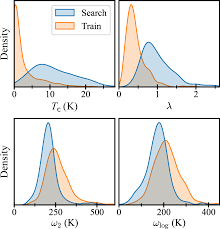
Artificial intelligence (AI) is transforming nearly every field of science, and one of its most exciting achievements in 2026 is helping researchers discover new superconducting materials. Scientists recently announced that AI successfully identified two promising superconductors, dramatically reducing the time required for one of physics’ most challenging research tasks. This breakthrough could bring the world closer to developing room-temperature superconductors—materials that have the potential to revolutionize energy, transportation, medicine, and computing.
What Are Superconductors?
Superconductors are special materials that can conduct electricity with zero electrical resistance when cooled below a certain temperature. In ordinary electrical wires, some energy is always lost as heat while electricity flows. Superconductors eliminate this energy loss entirely.
Today, superconductors are already used in several advanced technologies, including:
- MRI (Magnetic Resonance Imaging) machines
- Particle accelerators
- Maglev (magnetic levitation) trains
- Quantum computers
- Scientific research equipment
However, most superconductors only function at extremely low temperatures, making them expensive and difficult to use on a large scale. Scientists have spent decades searching for materials that could work at or near room temperature.
How Artificial Intelligence Changed the Search
Finding a new superconductor has traditionally involved years of laboratory experiments and countless combinations of chemical elements. Researchers often had to rely on trial and error, making the process slow and costly.
Artificial intelligence has changed this approach dramatically. By analyzing enormous databases of known materials, AI algorithms can identify patterns and predict which new combinations are most likely to exhibit superconducting properties.
Instead of testing millions of possibilities manually, scientists can now focus only on the most promising candidates identified by AI, saving years of research time. The recent discovery of two new superconductors demonstrates how machine learning is becoming an essential tool in modern materials science.
Why Room-Temperature Superconductors Matter
The discovery of a room-temperature superconductor would rank among the greatest scientific achievements of the century. Such a material could transform countless industries.
Some potential benefits include:
More Efficient Power Grids
Electricity currently loses a significant amount of energy during transmission across power lines. Superconducting cables could transport electricity over long distances with almost no energy loss, reducing costs and carbon emissions.
Faster Computers
Superconducting circuits generate almost no heat, allowing computers to become much faster and more energy-efficient.
Better Medical Equipment
MRI machines already depend on superconductors. Improved materials would reduce operating costs and make advanced medical imaging more widely available.
High-Speed Transportation
Magnetic levitation trains could become more affordable and efficient, enabling faster and cleaner transportation systems.
Advances in Quantum Computing
Quantum computers rely heavily on superconducting technology. Better superconductors could accelerate progress toward practical quantum computers capable of solving problems beyond today’s machines.
The Role of AI in Scientific Research
This discovery highlights a growing trend in scientific research: combining human expertise with artificial intelligence.
Rather than replacing scientists, AI serves as a powerful research assistant. It can rapidly analyze huge datasets, recognize hidden patterns, and recommend the most promising research directions.
Researchers believe similar AI systems will soon help discover:
- New battery materials
- Better solar cells
- Stronger construction materials
- Improved medicines
- Advanced semiconductors
As AI continues to evolve, scientific discoveries that once required decades may soon take only months or even weeks.
Challenges Ahead
Although the discovery is exciting, researchers caution that more work remains before these new superconductors can be used commercially.
Scientists must still:
- Verify the materials through laboratory testing.
- Understand their atomic structures.
- Improve manufacturing methods.
- Determine whether they can operate at practical temperatures.
Developing commercially viable superconductors will require collaboration among physicists, chemists, engineers, and AI specialists.
Looking Toward the Future
Artificial intelligence is rapidly becoming one of science’s most valuable research tools. Its ability to analyze enormous amounts of information is helping scientists solve problems that once seemed impossible.
The discovery of new superconductors represents more than a technological achievement—it demonstrates how AI can accelerate innovation across nearly every scientific discipline. As research continues, breakthroughs in energy, medicine, computing, and transportation may arrive much sooner than previously expected.
Conclusion
The AI-assisted discovery of new superconductors marks a significant milestone in modern science. By dramatically speeding up materials research, artificial intelligence is bringing humanity closer to one of physics’ greatest goals: practical room-temperature superconductors. If achieved, this advancement could reshape industries, improve global energy efficiency, and unlock technologies that today exist only in theory. The partnership between human scientists and intelligent algorithms is opening a new era of discovery with enormous potential for the future.