Introduction
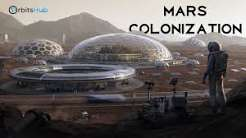
For decades, Mars has captured the imagination of scientists, engineers, and space enthusiasts. Once considered an unreachable destination, the Red Planet is now viewed as the most promising candidate for humanity’s first permanent settlement beyond Earth. Advances in spacecraft technology, artificial intelligence, robotics, and life-support systems are bringing the dream of Mars colonization closer to reality. Although significant challenges remain, the future of Mars colonization has never looked more promising.
Why Mars?
Mars is often considered the best option for human exploration because it shares several characteristics with Earth. It has a 24.6-hour day, polar ice caps, seasons, and evidence that liquid water once flowed across its surface. These similarities make Mars a more practical destination than many other planets in our solar system.
Scientists believe that frozen water beneath the Martian surface could provide drinking water, oxygen, and even fuel for future explorers. This possibility makes long-term human settlement more achievable.
Technologies Making Colonization Possible
The success of a Mars colony depends on groundbreaking technologies. Reusable rockets have already reduced the cost of launching missions into space, while advanced spacecraft are being designed to carry astronauts safely on the months-long journey.
Artificial intelligence will play a crucial role by assisting astronauts with navigation, equipment maintenance, scientific research, and emergency response. Autonomous robots are expected to construct habitats before humans arrive, reducing risks and increasing efficiency.
Another key innovation is 3D printing. Future missions may use Martian soil to print buildings, tools, and replacement parts, minimizing the amount of equipment that must be transported from Earth.
Living on Mars
Building a sustainable settlement on Mars presents enormous challenges. Astronauts will need secure habitats that protect them from harmful radiation, extreme temperatures, and dust storms.
Food production will likely rely on indoor greenhouses using hydroponic or aeroponic farming techniques. Solar panels and compact nuclear reactors could provide reliable energy, while recycling systems will conserve water and air.
Scientists are also studying how the human body adapts to Mars’ lower gravity over extended periods. Understanding these effects will be essential for maintaining the health of future colonists.
Challenges Ahead
Despite rapid progress, Mars colonization faces several obstacles. The journey takes several months, making medical emergencies difficult to manage. Communication delays between Earth and Mars can exceed 20 minutes, requiring astronauts to make many decisions independently.
Radiation exposure, psychological isolation, equipment reliability, and the enormous financial cost of establishing a colony remain major concerns. Overcoming these challenges will require international cooperation and continuous technological innovation.
A Global Effort
Mars exploration is becoming increasingly collaborative. Government space agencies, private aerospace companies, universities, and research institutions are contributing to technologies that could one day support permanent human settlements.
International partnerships will likely play a vital role in sharing expertise, reducing costs, and ensuring the success of future Mars missions.
Conclusion
The vision of humans living on Mars is gradually shifting from science fiction to scientific possibility. While permanent colonies may still be years away, the foundations are being built today through innovation, research, and exploration. If current progress continues, future generations may witness thriving communities on the Red Planet, opening an exciting new chapter in the story of humanity.
