Introduction
Space telescopes have transformed our understanding of the universe by allowing scientists to observe distant galaxies, newborn stars, black holes, and planets beyond our solar system. Positioned above Earth’s atmosphere, these remarkable observatories capture incredibly clear images and detect forms of light that ground-based telescopes cannot. As technology advances, space telescopes continue to reveal the mysteries of the cosmos with unprecedented precision.
Why Space Telescopes Matter
Earth’s atmosphere blocks or distorts many wavelengths of light, limiting what ground-based observatories can see. Space telescopes avoid these obstacles by operating in orbit, providing sharper images and more accurate scientific data.
They enable astronomers to study the origins of galaxies, investigate dark matter and dark energy, observe exploding stars, and search for potentially habitable exoplanets.
James Webb Space Telescope
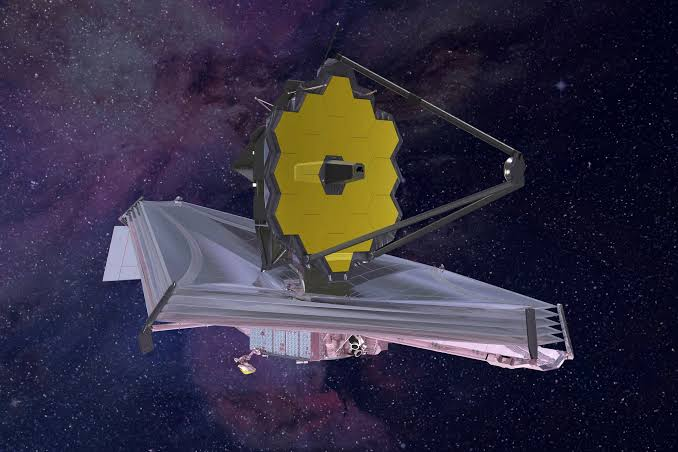
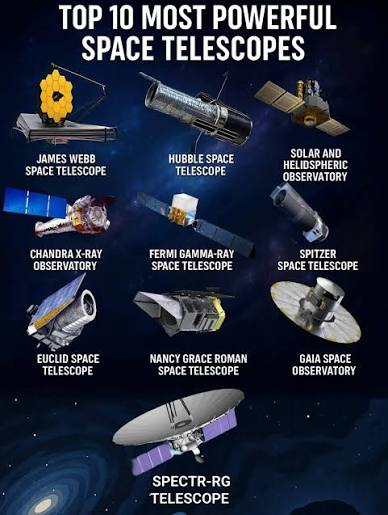
The James Webb Space Telescope is currently the world’s most powerful space observatory. Equipped with a massive segmented mirror and advanced infrared instruments, it can observe some of the earliest galaxies formed after the Big Bang.
Webb has already produced breathtaking images while revealing new details about stellar nurseries, distant galaxies, and the atmospheres of exoplanets. Its discoveries are reshaping our understanding of the universe.
Hubble Space Telescope
Although launched decades ago, the Hubble Space Telescope remains one of the most influential scientific instruments ever built. Its stunning images inspired millions and contributed to countless breakthroughs in astronomy.
Hubble helped scientists estimate the age of the universe, study black holes, and observe galaxies billions of light-years away. Even with newer observatories in operation, it continues to provide valuable scientific observations.
Nancy Grace Roman Space Telescope
Expected to become one of the next major observatories, the Nancy Grace Roman Space Telescope will focus on wide-field imaging and the study of dark energy. It will also search for thousands of exoplanets using advanced observation techniques.
Its ability to survey enormous regions of space will complement the detailed observations made by other telescopes.
Future Space Observatories
Scientists are already designing next-generation telescopes capable of finding Earth-like planets around nearby stars and searching for chemical signs of life in their atmospheres.
These future missions aim to answer some of humanity’s biggest questions: Are we alone in the universe? How did galaxies form? What is the true nature of dark matter and dark energy?
The Impact on Humanity
Every new telescope expands our understanding of the cosmos. Their discoveries inspire scientific research, encourage technological innovation, and motivate young people to pursue careers in science, engineering, and astronomy.
Many technologies developed for space observatories also find practical applications on Earth, improving imaging systems, communications, computing, and materials science.
Conclusion
The world’s most powerful space telescopes are opening windows into regions of the universe that were once beyond human imagination. From the groundbreaking achievements of Hubble to the revolutionary capabilities of the James Webb Space Telescope and the promise of future observatories, these remarkable instruments continue to redefine our place in the cosmos. As exploration advances, space telescopes will remain essential tools for uncovering the universe’s greatest mysteries.