Introduction
Artificial intelligence is becoming a powerful ally in wildlife conservation. By analyzing large amounts of environmental data, recognizing animal behavior, and monitoring ecosystems in real time, AI is helping scientists protect endangered species and combat illegal activities such as poaching and deforestation. These technologies are transforming conservation efforts across the globe.
Monitoring Wildlife
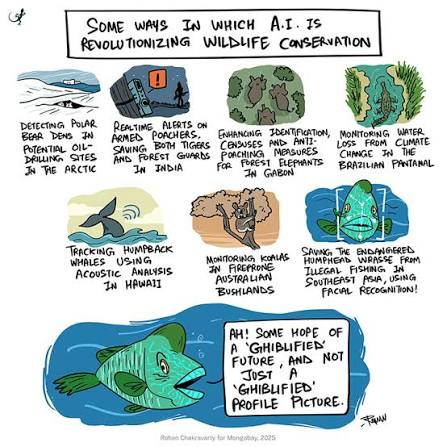
AI-powered cameras and drones can automatically identify animals, count populations, and track migration patterns. Instead of manually reviewing thousands of images, researchers can use AI to quickly analyze data and detect important changes in wildlife populations.
This saves time and improves the accuracy of conservation studies.
Fighting Poaching
Illegal hunting remains one of the greatest threats to many endangered species. AI systems can analyze information from sensors, drones, and satellite images to identify suspicious activities and alert park rangers before poaching incidents occur.
Some conservation areas also use acoustic sensors powered by AI to recognize gunshots or vehicle movements in protected forests.
Protecting Habitats
Satellite imagery combined with AI helps scientists monitor forests, wetlands, coral reefs, and other ecosystems. These systems can detect illegal logging, habitat destruction, and environmental changes more quickly than traditional monitoring methods.
Early detection allows authorities to take action before damage becomes severe.
Predicting Environmental Changes
AI models can forecast droughts, floods, disease outbreaks, and climate-related threats that may affect wildlife. These predictions help conservation organizations prepare effective strategies to reduce risks and protect vulnerable species.
Challenges
While AI offers remarkable benefits, successful conservation still depends on funding, skilled researchers, and strong environmental policies. Technology alone cannot solve every challenge, but it greatly improves the ability to make informed decisions.
Conclusion
Artificial intelligence is revolutionizing wildlife conservation by providing faster, smarter, and more accurate ways to protect animals and ecosystems. As AI technologies continue to improve, they will become even more valuable in preserving biodiversity for future generations.