Introduction
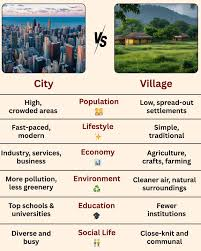
The environment significantly influences people’s health, lifestyle, and overall well-being. Cities and villages have distinct environmental characteristics shaped by population density, economic activities, infrastructure, and land use. Understanding these differences helps us appreciate the advantages and challenges of both living environments.
Air Quality
One of the most noticeable differences between cities and villages is air quality. Cities often experience higher levels of air pollution due to heavy traffic, industrial emissions, and construction activities. Smoke, dust, and harmful gases can negatively affect public health.
In contrast, villages generally enjoy cleaner air because they have fewer vehicles and industries. The presence of trees, agricultural fields, and open spaces contributes to a fresher and healthier atmosphere.
Noise Pollution
Urban areas are known for constant noise from vehicles, businesses, factories, and crowded public spaces. Excessive noise can cause stress, sleep disturbances, and reduced quality of life.
Villages are usually much quieter. Natural sounds such as birds singing, flowing water, and rustling leaves create a peaceful environment that promotes mental well-being.
Green Spaces and Biodiversity
Cities often have limited green spaces due to extensive development. Although parks and gardens exist, they may not be sufficient to support diverse ecosystems.
Villages are rich in natural landscapes, including forests, farms, rivers, and grasslands. These environments support a wide variety of plants and animals, contributing to biodiversity conservation.
Waste Management Challenges
Urban populations generate large amounts of waste daily. Managing garbage, sewage, and industrial waste can be difficult, leading to environmental problems if not handled properly.
Villages produce less waste overall, but they may face challenges related to proper disposal systems and sanitation infrastructure.
Climate and Temperature
Cities often experience the “urban heat island” effect, where buildings, roads, and concrete surfaces absorb and retain heat. This makes cities warmer than surrounding rural areas.
Villages benefit from natural vegetation and open land, which help regulate temperatures and create a cooler climate.
Environmental Sustainability
Both cities and villages must adopt sustainable practices to protect the environment. Cities can invest in green transportation, renewable energy, and urban forests. Villages can promote sustainable farming, water conservation, and responsible waste management.
Conclusion
Cities offer modern infrastructure and economic opportunities but often face environmental challenges such as pollution and overcrowding. Villages provide cleaner air, more green spaces, and a closer connection to nature. By learning from each other and embracing sustainable practices, both urban and rural communities can create healthier environments for future generations.