Introduction
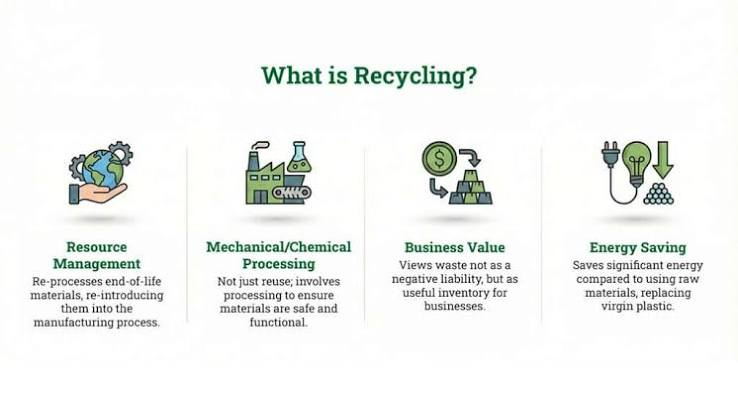
Recycling is one of the most effective ways to protect the environment and conserve natural resources. It involves collecting and processing waste materials, such as paper, plastic, glass, and metal, so they can be reused instead of being discarded. As the world’s population grows and consumption increases, recycling has become more important than ever.
Why Recycling Matters
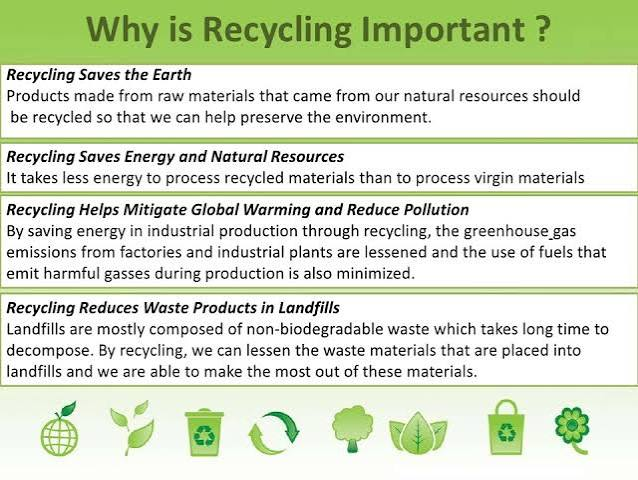
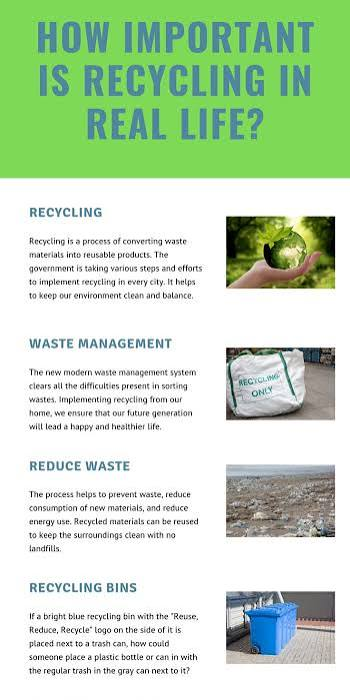
Recycling reduces the amount of waste sent to landfills and incinerators. It helps conserve natural resources by reducing the need to extract raw materials from the earth. This not only protects forests, rivers, and wildlife habitats but also saves energy and reduces pollution.
Environmental Benefits
Recycling lowers greenhouse gas emissions by using less energy than manufacturing products from new materials. It also reduces air and water pollution caused by mining, logging, and industrial production. By recycling, we contribute to a cleaner and healthier environment for future generations.
Economic Benefits
The recycling industry creates jobs in waste collection, processing, manufacturing, and transportation. It also helps businesses reduce production costs by using recycled materials, making industries more sustainable and competitive.
How Individuals Can Help
Everyone can contribute by separating recyclable materials from household waste, reducing the use of single-use plastics, reusing products whenever possible, and supporting companies that use recycled materials in their products.
Conclusion
Recycling is a simple yet powerful action that benefits the environment, the economy, and society. Every bottle recycled, every paper reused, and every can collected contributes to a cleaner planet. Small actions by millions of people can create a significant positive impact.