Introduction
Stress is a natural part of life, but when it becomes overwhelming or long-lasting, it can negatively affect physical health, mental well-being, relationships, and productivity. Students, professionals, and individuals of all ages experience stress due to academic responsibilities, work demands, financial concerns, family obligations, and personal challenges. Learning effective stress management techniques helps people stay calm, improve emotional resilience, and maintain a healthier and more balanced life.
Understanding Stress
Stress is the body’s natural response to challenging situations. Short-term stress can improve focus and motivation, but chronic stress can lead to serious health problems if left unmanaged.
Common causes include:
- Academic pressure
- Work deadlines
- Financial problems
- Family responsibilities
- Health concerns
- Relationship issues
- Major life changes
Effects of Stress
Physical Effects
- Headaches
- Fatigue
- Muscle tension
- High blood pressure
- Sleep disturbances
- Weakened immune system
Emotional Effects
- Anxiety
- Irritability
- Mood swings
- Depression
- Low motivation
Behavioral Effects
- Poor concentration
- Procrastination
- Overeating or loss of appetite
- Social withdrawal
- Reduced productivity
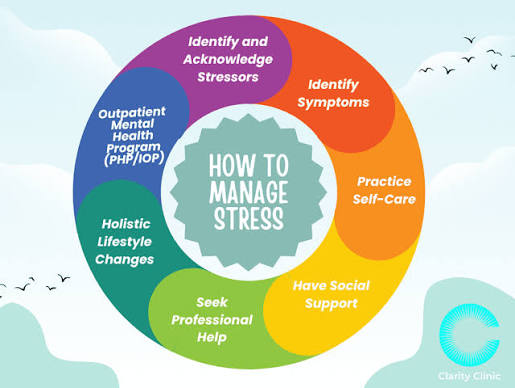
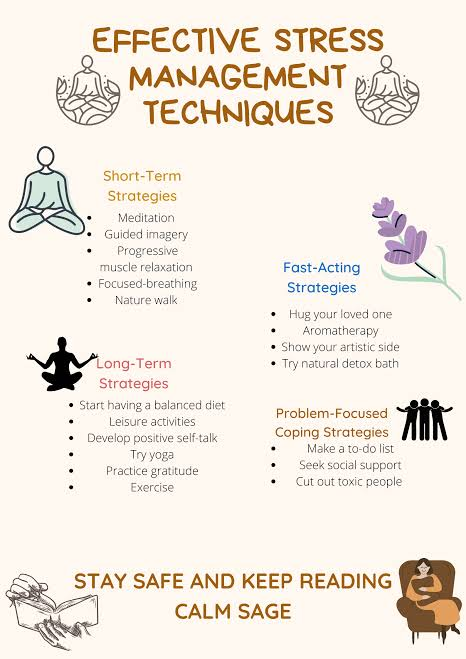
Effective Stress Management Techniques
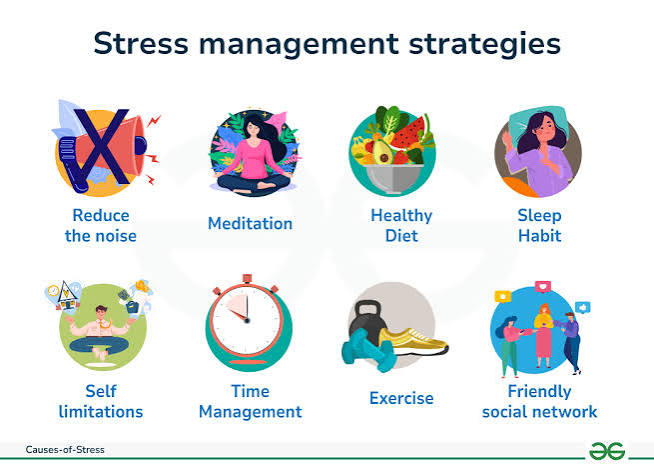
1. Practice Deep Breathing
Slow, controlled breathing helps calm the nervous system and reduce anxiety.
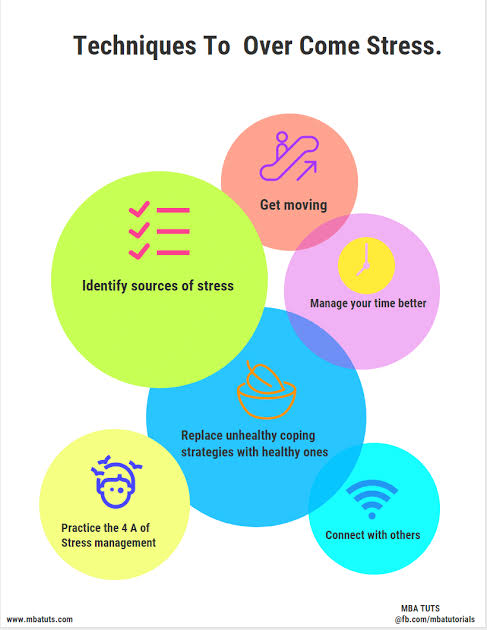
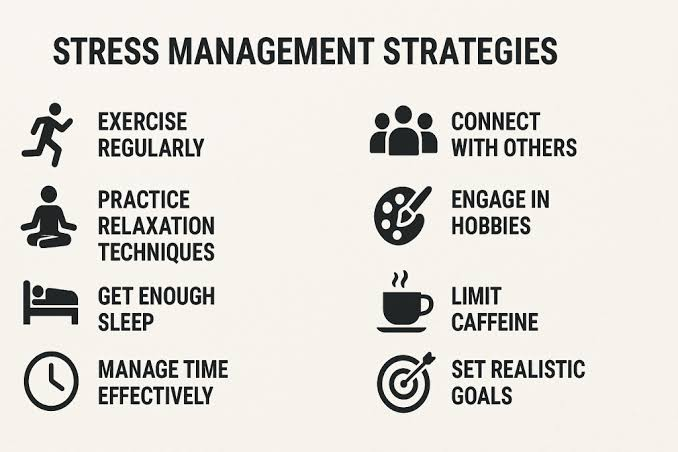
2. Exercise Regularly
Physical activity releases endorphins, improves mood, and reduces stress hormones.
3. Get Enough Sleep
Aim for 7–9 hours of quality sleep each night to support emotional and physical health.
4. Eat a Balanced Diet
Nutritious foods provide the energy and nutrients needed to cope with stress effectively.
5. Manage Your Time
Create schedules, prioritize tasks, and break large projects into smaller steps.
6. Practice Mindfulness
Meditation, mindfulness, and relaxation exercises improve focus and emotional balance.
7. Stay Connected
Talking with family members, friends, teachers, or trusted mentors can provide emotional support.
8. Take Regular Breaks
Short breaks during work or study improve concentration and reduce mental fatigue.
9. Limit Screen Time
Reducing excessive social media use can decrease anxiety and improve sleep quality.
10. Enjoy Hobbies
Reading, painting, gardening, music, or sports help relax the mind and promote happiness.
Stress Management for Students
Students can reduce stress by:
- Studying consistently instead of cramming.
- Preparing early for exams.
- Maintaining a healthy routine.
- Asking teachers for help when needed.
- Balancing study with recreation.
Building Emotional Resilience
Develop resilience by:
- Maintaining a positive mindset.
- Accepting challenges as opportunities to learn.
- Practicing gratitude.
- Setting realistic goals.
- Learning from mistakes.
When to Seek Professional Help
If stress becomes overwhelming or persists for a long time, seeking support from a qualified healthcare or mental health professional is important. Early assistance can help prevent more serious difficulties and provide effective coping strategies.
Conclusion
Stress is an unavoidable part of life, but it does not have to control your well-being. By adopting healthy habits such as regular exercise, balanced nutrition, quality sleep, effective time management, and mindfulness, individuals can successfully manage stress and improve their quality of life. Developing healthy coping strategies today leads to greater resilience, better health, and lasting personal success.