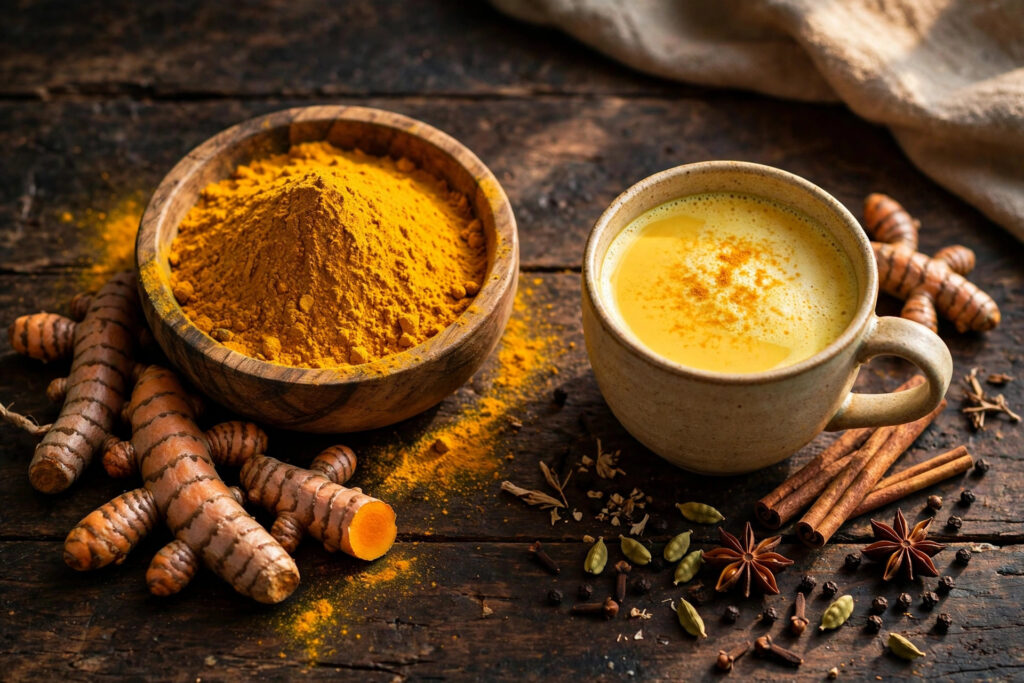
Turmeric has moved from kitchen spice rack to health-food stardom, and the benefits of turmeric are supported by a growing body of research. This golden-yellow spice, ground from the root of the Curcuma longa plant, has been used in traditional Ayurvedic and Chinese medicine for centuries — and modern science is now testing those old claims.
The active compound behind most of the benefits of turmeric is curcumin, a powerful antioxidant with anti-inflammatory properties. Here is what the research actually supports.
Benefits of Turmeric for Inflammation
Chronic low-grade inflammation is linked to many modern health problems, from joint pain to heart disease. Curcumin’s anti-inflammatory effect is one of its most studied properties.
Research suggests curcumin can help the body fight foreign invaders and reduce inflammatory markers. While the evidence is promising rather than conclusive, it is one reason turmeric is popular among people managing inflammatory conditions.
Benefits of Turmeric for Joint Health
People with arthritis are among the most common users of turmeric supplements. Some clinical trials have found that curcumin extract can reduce joint pain and stiffness associated with osteoarthritis.
Important note: studies generally use concentrated curcumin extracts, not the small amounts in cooking. If you are considering a supplement for joint pain, talk to your doctor first, especially since turmeric can interact with blood-thinning medications.
Benefits of Turmeric as an Antioxidant
Antioxidants protect your cells from damage caused by free radicals, unstable molecules linked to aging and disease. Curcumin is a potent antioxidant that can directly neutralize free radicals.
It may also help the body boost its own antioxidant enzymes. This dual action is part of why researchers at institutions including Harvard-affiliated labs have taken an interest in curcumin’s protective effects.
Benefits of Turmeric for Brain Health
Curcumin can cross the blood-brain barrier, which has led researchers to study its effects on brain health. Animal studies suggest it may support levels of brain-derived neurotrophic factor (BDNF), a protein involved in the growth of new brain cells.
Human research in this area is still early, but the direction is interesting: better understanding of curcumin’s brain effects could eventually inform approaches to age-related cognitive decline.
Benefits of Turmeric for Heart Health
Curcumin may benefit heart health in a couple of ways. It appears to support the function of the endothelium — the lining of blood vessels — which plays a central role in regulating blood pressure and clotting.
Combined with its anti-inflammatory and antioxidant effects, this makes turmeric a spice worth including in a heart-friendly diet, alongside the basics the American Heart Association recommends: balanced eating, regular activity, and not smoking.
Benefits of Turmeric for Digestion
Traditional medicine has long used turmeric for digestive complaints, and there is some modern support for this too. Curcumin stimulates bile production, which aids fat digestion.
Some small studies suggest turmeric may help with symptoms of indigestion and bloating. People with gallbladder problems, however, should be cautious and check with a doctor before taking concentrated forms.
How to Get the Benefits of Turmeric
There is a catch: curcumin is poorly absorbed by the body on its own. But absorption improves dramatically when turmeric is consumed in certain ways:
- With black pepper: piperine, the active compound in black pepper, can significantly increase curcumin absorption — which is why many supplements include it.
- With healthy fats: curcumin is fat-soluble, so cooking turmeric with oil or coconut milk helps your body use it. This is exactly what golden milk and curries already do.
- Heated gently: warming turmeric in cooking increases its solubility without destroying its benefits.
A teaspoon in a curry, a mug of golden milk, or turmeric in a smoothie are all easy daily options.
A Word of Caution
Turmeric in food is safe for almost everyone. Concentrated supplements are a different story: high doses can cause stomach upset, and curcumin may interact with blood thinners, diabetes medications, and drugs processed by the liver. Pregnant women and people with gallstones should also check with a healthcare professional before taking turmeric supplements.
The WHO and food safety authorities consider culinary turmeric safe; caution applies mainly to high-dose pills and extracts.
Conclusion
The benefits of turmeric rest on a real foundation: curcumin is a genuine anti-inflammatory and antioxidant with encouraging — though still developing — evidence for joint, heart, brain, and digestive health. The smartest approach is the simplest one: cook with turmeric regularly, pair it with black pepper and healthy fats, and treat supplements as a medical decision to discuss with your doctor, not a shortcut.
Hashtags: #Turmeric #HealthBenefits #GoldenSpice #NaturalHealth #Wellness #HealthyLiving #Nutrition
