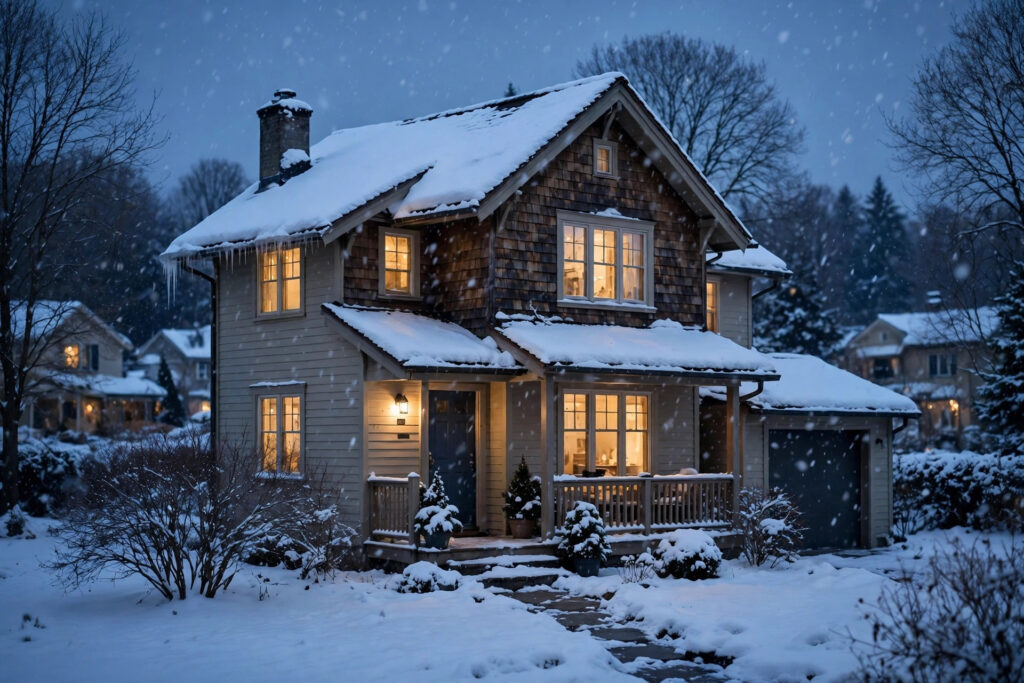
Every winter, heating bills climb while cold drafts sneak through windows and doors. When you winterize your home properly, you seal out the cold, cut energy costs, and stay comfortable all season – and many of the most effective fixes are cheap weekend projects.
This guide walks you through 12 practical tips to winterize your home before the first frost – from sealing air leaks to servicing your furnace. Most cost far less than one month’s inflated heating bill.
Winterize Your Home by Sealing Windows and Doors
Air leaks around windows and doors are the biggest source of winter heat loss. To winterize your home effectively, check for drafts on a windy day by holding a lit candle near window frames and door edges and watching for flicker. Caulk cracks around window frames and replace worn weatherstripping on doors.
For windows you never open in winter, consider shrink-film insulation kits – clear plastic sealed with a hair dryer that creates an insulating air barrier. The U.S. Department of Energy recommends sealing air leaks as one of the fastest-payback home improvements: a few dollars of caulk and weatherstripping can save far more over the season.
Add Door Sweeps and Insulation Strips
The gap under exterior doors is a silent energy thief. Attach door sweeps to all exterior doors – especially doors to garages, basements, and attics – and add foam insulation strips around the frames.
These fixes take minutes and cost very little, yet the difference is immediate. If your doors are old and warped, an insulated replacement door may pay for itself within a few winters.
Winterize Your Home by Servicing the Heating System
Before you need heat, make sure your system is ready. Replace the furnace filter, clean vents and radiators, and schedule a professional inspection for older systems – a dirty filter forces the furnace to work harder, wasting energy and shortening its life.
A well-maintained system runs more efficiently than a neglected one, so this winter home tip saves money and adds safety. Have your chimney cleaned and inspected before the first fire, and test your carbon monoxide detectors – heating equipment is a leading source of CO in homes.
Use a Programmable or Smart Thermostat
Don’t heat an empty house to a cozy 72 degrees. A programmable or smart thermostat lowers the temperature while you sleep or work – even a few degrees of setback cuts heating costs meaningfully over the season.
The U.S. Department of Energy has long advised that setting the thermostat back for 8 hours a day can reduce heating bills noticeably. Smart thermostats go further, learning your schedule automatically – one of the highest-impact energy saving home upgrades for the money.
Winterize Your Home With Extra Insulation
Heat rises – and without good attic insulation, it rises right out of your house. If attic insulation sits level with or below the floor joists, add more: blown-in or batt insulation is one of the most cost-effective winterize home projects.
Don’t forget the water heater: wrapping an older unit in an insulating blanket and insulating the first feet of hot water pipes reduces standby heat loss. The Department of Energy calls water heater blankets a classic low-cost energy saver – a small investment that pays back every month.
Reverse Your Ceiling Fans
Flip your ceiling fan’s switch so blades spin clockwise at low speed – this pushes warm air pooled near the ceiling back down into the room. The reverse setting is usually marked on the housing or remote.
In rooms with high ceilings the comfort difference is dramatic – warm air overhead does nothing for anyone below. It’s free, takes seconds, and works all winter.
Prepare Pipes Against Freezing
Frozen pipes are one of winter’s most expensive disasters. Insulate exposed pipes in unheated areas – basements, crawl spaces, garages, exterior walls – with foam sleeves. Disconnect and drain outdoor hoses, and shut off exterior faucets from the inside valve if you have one.
During extreme cold, let faucets on exterior walls drip slightly – moving water rarely freezes. Know where your main shut-off valve is before an emergency: a burst pipe can flood a home in minutes.
Winterize Your Home’s Gutters and Roof
Clean gutters before winter so melting snow drains properly – clogged gutters trap water that refreezes into ice dams, pushing moisture under shingles and into your home. Trim overhanging branches that could snap under snow.
Check your roof for missing or damaged shingles and repair them before winter makes the job harder. This home maintenance prevents slow water damage that costs thousands to fix in spring.
Stock an Emergency Winter Kit
Even a well-prepared home can lose power. Assemble an emergency kit now: flashlights and batteries, blankets, a battery radio, bottled water, non-perishable food, a first-aid kit, and a charged power bank – plus a manual can opener.
If you own a portable generator, review the safety rules now – never run one indoors or in an attached garage, because of carbon monoxide risk. Good cold weather prep brings real peace of mind when the forecast turns ugly.
Winterize Your Home by Checking Detectors and Fire Safety
Winter means more heating equipment, fireplaces, and space heaters running – and higher fire and carbon monoxide risk. Test every smoke and CO detector, replace batteries as needed, keep space heaters three feet from anything flammable, and never leave them unattended.
Clean lint from your dryer vent too – clogged vents are a fire hazard. The National Fire Protection Association consistently lists heating equipment among the leading causes of home fires, so this tip protects more than your wallet.
Save on Heating by Letting the Sun In
Use the sun as free heating: open curtains on south-facing windows by day to warm rooms naturally, and close heavy curtains at night to insulate cold glass.
This passive solar approach costs nothing. In sunny climates it noticeably reduces daytime heating demand, and small habits like this add up to real energy saving home results across a winter.
Do a Final Winter Walk-Through of Your Home
Finish your home winter prep with one thorough walk-through: storm windows closed and latched, outdoor furniture and grills covered or stored, lawn equipment drained and put away, salt or sand stocked for icy walkways, hoses drained and stored, outdoor faucets covered.
Note the date you finished so you can repeat the routine next fall. An annual winterize home checklist turns this from a scramble into a calm ritual – your home, wallet, and family will thank you every cold morning.
The Bottom Line
To winterize your home, you need a weekend and a checklist, not a contractor. Seal windows and doors, service your heating system, add insulation where it counts, protect your pipes, and let a smart thermostat cut waste. Together, these 12 tips turn a drafty, expensive house into a warm, efficient one – and your heating bill will show the difference.
#WinterizeHome #HomeWinterPrep #SaveOnHeating #WinterHomeTips #EnergySavingHome #ColdWeatherPrep #HomeMaintenance
