Introduction
Tourism is one of the world’s largest industries, contributing significantly to economic growth, cultural exchange, and employment opportunities. However, rapid tourism development can also place pressure on natural environments, wildlife, and local communities. Sustainable tourism aims to balance the benefits of travel with the responsibility of protecting the environment and preserving cultural heritage. By making thoughtful choices, travelers, businesses, and governments can ensure that tourism supports both people and the planet.
What Is Sustainable Tourism?
Sustainable tourism is a form of travel that minimizes negative environmental and social impacts while maximizing benefits for local communities. It encourages responsible use of natural resources, respect for local cultures, and support for local economies. Sustainable tourism seeks to preserve destinations so that future generations can enjoy them as well.
This approach involves reducing waste, conserving water and energy, protecting wildlife, and promoting environmentally friendly transportation and accommodation.
Benefits of Sustainable Tourism
One of the greatest benefits of sustainable tourism is environmental conservation. Responsible travel helps protect forests, beaches, mountains, coral reefs, and wildlife habitats from pollution and overdevelopment.
Sustainable tourism also supports local communities by creating jobs, promoting local businesses, and preserving traditional crafts and cultural practices. Visitors who purchase locally made products and stay in locally owned accommodations contribute directly to the local economy.
In addition, sustainable tourism raises environmental awareness. Travelers often become more conscious of conservation efforts and adopt eco-friendly habits that continue after their trips.
Responsible Travel Practices
Travelers can make a positive impact by choosing eco-friendly hotels, reducing plastic use, carrying reusable water bottles, and properly disposing of waste. Respecting local customs, protecting historical sites, and avoiding activities that harm wildlife are also important aspects of responsible tourism.
Using public transportation, cycling, or walking instead of private vehicles helps reduce carbon emissions. Supporting tour operators that follow sustainable practices further encourages environmental responsibility within the tourism industry.
Challenges and the Future
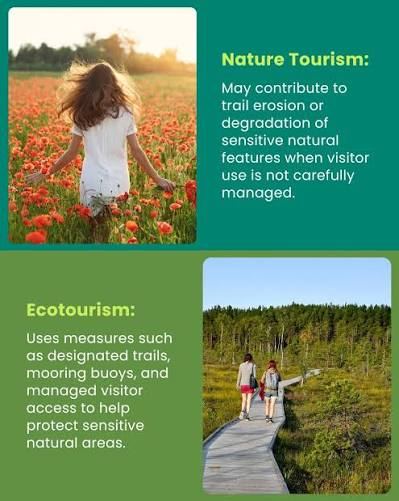
Despite growing awareness, sustainable tourism still faces challenges such as overtourism, pollution, habitat destruction, and climate change. Governments, tourism businesses, and travelers must work together to promote responsible policies and sustainable infrastructure.
Future tourism will increasingly rely on renewable energy, green hotels, digital technology for visitor management, and stronger conservation initiatives to protect natural and cultural resources.
Conclusion
Sustainable tourism allows people to explore the world while protecting the environment and supporting local communities. By making responsible travel choices, individuals can help preserve nature, safeguard cultural heritage, and contribute to a more sustainable future. Every journey becomes more meaningful when it respects the people.