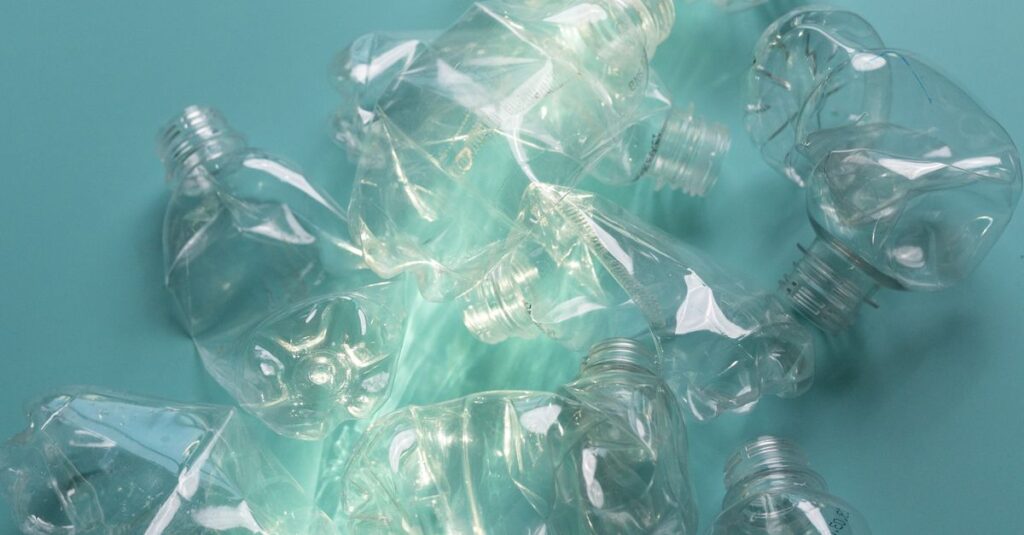
Almost everything you own — your phone, your clothes, the plastic bottle in your hand — was made on a one-way journey: resources are extracted, turned into products, used briefly, and thrown away. Economists call this the linear economy, or “take-make-waste.” The circular economy proposes a different system: one where waste is designed out, products and materials are kept in use, and natural systems are regenerated.
The Three Principles
The Ellen MacArthur Foundation, the world’s leading charity promoting this model, defines the circular economy around three principles, all driven by design:
- Eliminate waste and pollution — design products so that waste never gets created in the first place.
- Circulate products and materials — keep them in use at their highest value, through reuse, repair, refurbishment and recycling.
- Regenerate nature — shift toward renewable energy and materials, and give ecosystems room to recover.
It is a systems-level rethink, not just “recycling more.” Recycling alone cannot solve waste: less than 9 percent of the world’s plastic is actually recycled after losses. A circular approach looks at the full life cycle — how things are designed, produced and distributed.
Why It Matters Now
The numbers make the case urgent. The UN Environment Programme (UNEP) reports that more than 70 countries have already adopted circular economy policies, with tens of millions of new jobs predicted by 2030. On waste alone, UNEP’s Global Waste Management Outlook warns that global municipal waste could reach 3.8 billion tonnes by 2050 without circular action — while a fully circular scenario could cut landfill waste by more than 40 percent and eradicate uncontrolled dumping.
On plastics, UNEP estimates that a circular approach could cut plastic pollution by 80 percent by 2040, save around $1.27 trillion, and create a net increase of 700,000 jobs — all with technologies that already exist.
What the Circular Economy Looks Like in Practice
1. Design for durability and repair
Products are built to last, be repaired and be upgraded — think modular phones, repairable appliances, and clothing designed for resale. Buying a refurbished laptop instead of a new one is a circular choice most students can make today.
2. Business models that rent, share and resell
From second-hand marketplaces to clothing-rental and refill stations, “product-as-a-service” models keep goods circulating. Tapestry, the company behind Coach, has joined the Ellen MacArthur Foundation’s network to apply circular thinking to fashion, where fast fashion’s waste is among the worst of any industry.
3. Closing industrial loops
Cement producer Cemex, another foundation partner, recovered over 9 million tonnes of construction and demolition waste in 2023 — turning rubble into raw material for new concrete instead of sending it to landfill.
4. Regenerative food systems
Food waste and farming are huge polluters. Circular food systems redesign supply chains around local sourcing, composting and regenerative agriculture that restores soil rather than depleting it.
What Students Can Do
You do not need a policy degree to participate. Repair instead of replace. Buy second-hand first. Learn a repair skill — fixing electronics, sewing, or refurbishing furniture — which doubles as an income opportunity. And if you are choosing a career, circular economy skills are in demand: UNEP notes tens of millions of associated jobs by 2030, from sustainability auditing to circular product design. The circular economy is ultimately about one habit of mind: seeing every discarded object as material for the next thing.
References
- Bupa — What is the circular economy?
- UN Environment Programme — Circularity
- World Economic Forum — 4 charts to show why adopting a circular economy matters
#CircularEconomy #Sustainability #Recycling #Environment #ZeroWaste
