Introduction
The FIFA World Cup trophy is one of the most prestigious symbols in international sports. Every four years, the world’s best football teams compete for the honor of lifting this iconic trophy. Over the years, the FIFA World Cup trophy has evolved in design, meaning, and symbolism, reflecting the growth of football into the world’s most popular sport.
The First FIFA World Cup Trophy
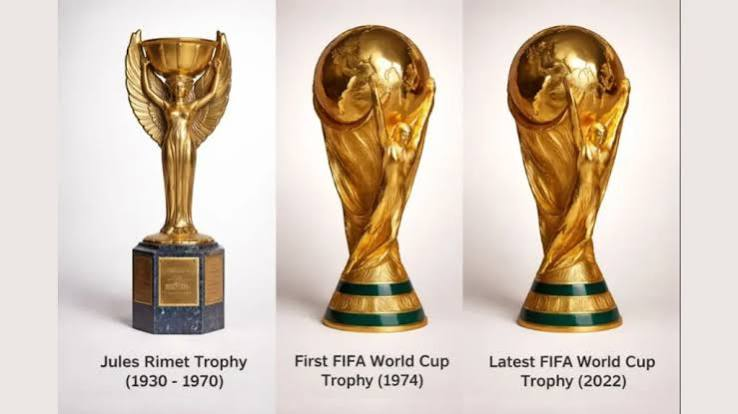
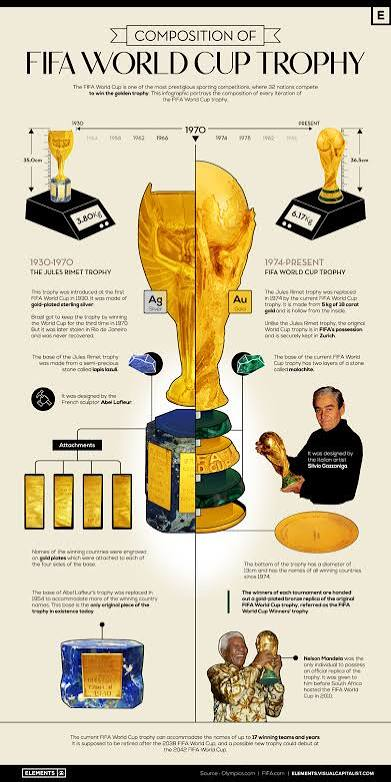
The original FIFA World Cup trophy was known as the Jules Rimet Trophy, named after the former FIFA president who played a major role in establishing the tournament. Introduced in 1930, the trophy featured the Greek goddess of victory holding a golden cup.
The Jules Rimet Trophy was awarded from 1930 to 1970. According to FIFA’s rules at the time, any nation that won the tournament three times would keep the trophy permanently.
Brazil’s Historic Achievement
Brazil became the first nation to win the FIFA World Cup three times—in 1958, 1962, and 1970. As a result, Brazil was awarded the Jules Rimet Trophy permanently, marking one of the greatest achievements in football history.
The Modern FIFA World Cup Trophy
After 1970, FIFA introduced a new trophy that is still used today. Designed by Italian artist Silvio Gazzaniga, the trophy was unveiled in 1974. It depicts two human figures holding up the Earth, symbolizing unity, victory, and the global spirit of football.
The current trophy:
- Is made of 18-carat gold.
- Stands about 36.5 centimeters tall.
- Weighs approximately 6.1 kilograms.
- Features a base decorated with green malachite.
Unlike the Jules Rimet Trophy, the modern trophy remains FIFA’s property. Winning teams receive the trophy during the celebration and later receive an official gold-plated replica.
Symbolism of the Trophy
The FIFA World Cup trophy represents:
Unity
Football brings together people from different cultures, languages, and nations.
Excellence
Winning the trophy is the highest achievement in international football.
Inspiration
The trophy motivates millions of young players to pursue their dreams and represent their countries.
Memorable Trophy Lifts
Some unforgettable moments include:
- Brazil lifting the trophy in 1970 after winning their third title.
- Argentina celebrating victory in 1986.
- France winning on home soil in 1998.
- Spain claiming their first World Cup in 2010.
- Argentina lifting the trophy again in 2022 after a thrilling final.
These celebrations remain some of the most iconic moments in football history.
The Trophy’s Global Significance
Today, the FIFA World Cup trophy is recognized around the world as a symbol of determination, teamwork, and sporting excellence. Every footballer dreams of lifting it, and every fan celebrates the unforgettable moments it represents.
Conclusion
The evolution of the FIFA World Cup trophy reflects the remarkable journey of football itself. From the historic Jules Rimet Trophy to today’s magnificent golden trophy, it has become a symbol of unity, passion, and excellence. As future tournaments continue to create history, the FIFA World Cup trophy will remain the ultimate dream for players and fans alike.