Introduction
Time management is one of the most important skills a student can develop. It refers to the ability to plan and organize time effectively in order to complete tasks and achieve goals. In today’s fast-paced world, students face many responsibilities, including attending classes, completing assignments, preparing for examinations, and participating in extracurricular activities. Effective time management helps students balance these responsibilities and make the best use of their time.
Importance of Time Management
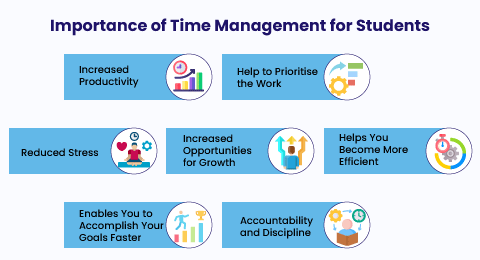
Time management plays a vital role in academic success. Students who manage their time well are more likely to complete assignments on time, prepare adequately for examinations, and achieve better grades. It also helps reduce stress and anxiety by preventing last-minute work and missed deadlines.
Furthermore, effective time management improves productivity. When students plan their daily activities, they can focus on important tasks and avoid wasting time on unnecessary activities. This leads to greater efficiency and better learning outcomes.
Benefits of Time Management
There are several benefits of time management for students:
- Improved Academic Performance: Students can dedicate sufficient time to studying and completing assignments.
- Reduced Stress: Proper planning helps avoid pressure caused by unfinished work.
- Better Decision-Making: Students learn to prioritize important tasks.
- Increased Productivity: More tasks can be completed in less time.
- Work-Life Balance: Students can balance studies, family, recreation, and personal activities.
Techniques for Effective Time Management
Students can improve their time management skills by following these techniques:
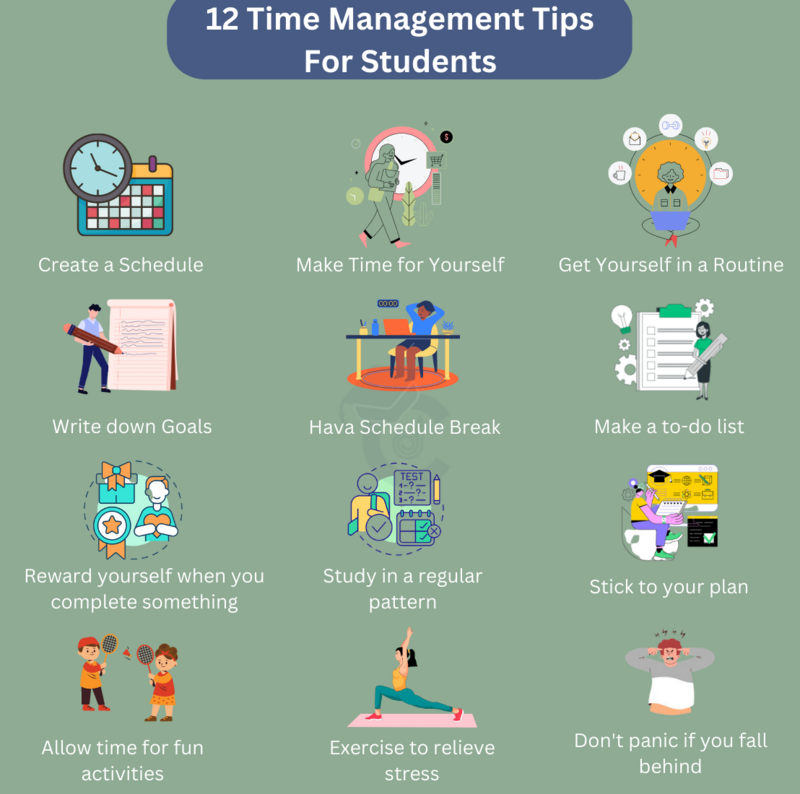
- Create a daily or weekly schedule.
- Set clear and realistic goals.Avoid procrastination and distractions.
- Use planners, calendars, or digital applications to organize tasks.
- Break large assignments into smaller, manageable parts.
- Avoid procrastination and distractions.
- Use planners, calendars, or digital applications to organize tasks.
- Break large assignments into smaller, manageable parts.
- Allocate time for rest, exercise, and recreational activities.
Conclusion
In conclusion, time management is a crucial skill that helps students achieve academic excellence and personal development. It improves productivity, reduces stress, and enables students to maintain a healthy balance between their studies and personal lives. By developing effective time management habits, students can make the most of their opportunities and build a strong foundation for future success.