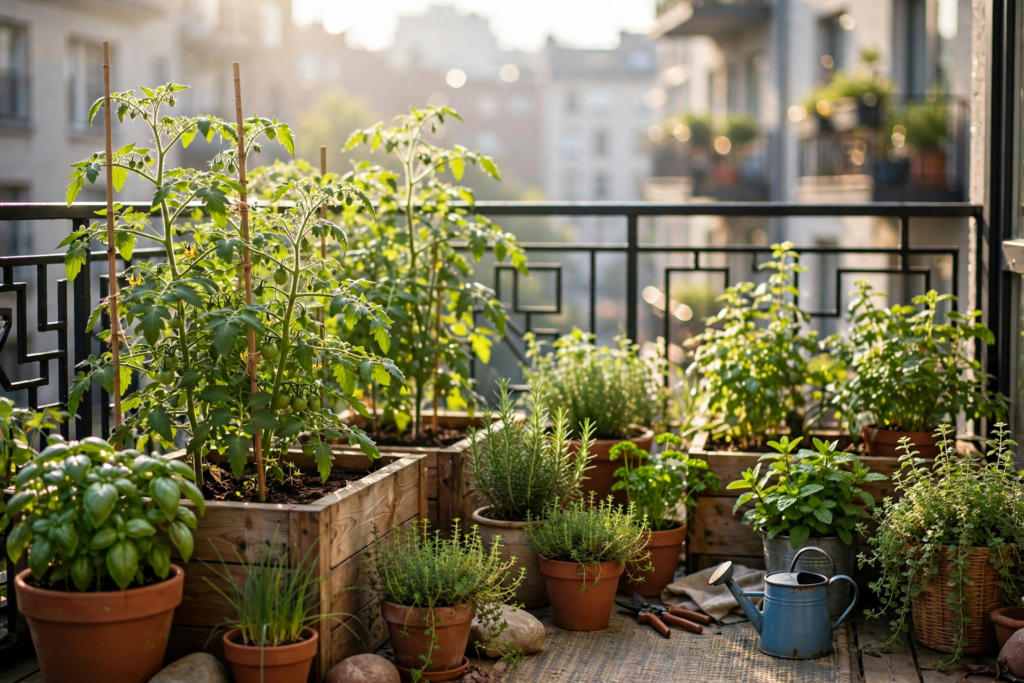
More than half the world's population now lives in cities, and that share keeps climbing, according to the United Nations. Yet in balconies, on rooftops, and in vacant lots, a quiet movement is turning concrete back into farmland. Urban gardening — growing food in small or unconventional spaces — has exploded in popularity, and it's more accessible than most people imagine.
Why Urban Gardening Is Booming
Several forces are converging. Rising food prices make home-grown produce attractive; the COVID-19 pandemic sparked a surge in gardening interest that never fully faded; and growing awareness of food miles and pesticide use pushes people toward local, controlled growing. Community gardens and urban farms have also become social hubs, strengthening neighborhoods along the way.
The Food and Agriculture Organization of the United Nations (FAO) has long highlighted urban and peri-urban agriculture as a tool for food security, noting that it can supply fresh produce, create income, and green cities simultaneously.
Start Small: Containers Are Your Best Friend
You don't need land — you need pots. Almost any vegetable can grow in a container if the pot is big enough and drainage is good:
- Easy wins: herbs (basil, mint, coriander), lettuce, spinach, spring onions, radishes, and cherry tomatoes.
- Medium effort: peppers, cucumbers, and beans in 10–15 liter pots with a trellis or support.
- Ambitious: dwarf fruit trees or potatoes in large grow bags.
Use quality potting mix (not garden soil, which compacts in pots), and make sure every container has drainage holes.
Sunlight Is the One Non-Negotiable
Most fruiting vegetables need at least 6 hours of direct sun. Leafy greens and herbs tolerate 3–4 hours. Before buying a single seed, observe your balcony or windowsill for a day: where does the sun actually fall? Match plants to your real light, not your imagined light, and you'll save yourself a season of disappointment.
Vertical Gardening: When Floor Space Is Zero
If your "garden" is a railing or a wall, think vertically. Options include:
- Hanging planters and railing boxes for herbs and strawberries.
- Wall-mounted pocket planters for lettuce and greens.
- Stacked tower planters, which can hold dozens of plants in under a square meter.
- Simple trellises for climbing beans and cucumbers — they turn one pot's footprint into several square feet of growing area.
Watering Wisdom
Container plants dry out faster than in-ground beds, especially in hot climates. Water deeply when the top 2–3 cm of soil feels dry, and water in the morning so leaves dry by evening (reducing disease). A layer of mulch — straw, dried leaves, or coconut coir — on top of the soil dramatically cuts evaporation. Self-watering planters and simple drip setups can make a small garden nearly hands-off.
Composting in an Apartment
You can't garden sustainably without feeding your soil. Small-space composting is very doable: a bokashi bin ferments kitchen scraps under the sink with no smell, and a compact worm bin (vermicomposting) turns vegetable waste into rich castings in a box the size of a laundry basket. The US Environmental Protection Agency notes that food scraps are one of the largest components of municipal waste — composting shrinks your trash and your fertilizer bill at once.
The Bigger Picture
Urban gardening isn't going to replace farms, and that's not the point. A balcony harvest supplements your diet, cuts your grocery bill, reduces packaging waste, and — perhaps most importantly — reconnects city dwellers with where food comes from. Research on community gardens consistently links participation with better diet quality and stronger neighborhood ties.
Your First Step
This weekend, buy one pot, one bag of potting mix, and a bunch of basil or mint seedlings. Put it where the sun lands, water it when the soil dries, and taste the difference in two weeks. Every urban gardener started with exactly one plant.
References
- United Nations, Department of Economic and Social Affairs — *World Urbanization Prospects* (population.un.org)
- Food and Agriculture Organization of the United Nations (FAO) — urban and peri-urban agriculture resources (fao.org)
- U.S. Environmental Protection Agency (EPA) — composting and food waste guidance (epa.gov)
- USDA National Agricultural Library — urban agriculture resources (nal.usda.gov)
#UrbanGardening #GrowYourOwn #ContainerGardening #SustainableLiving #CityFarming
