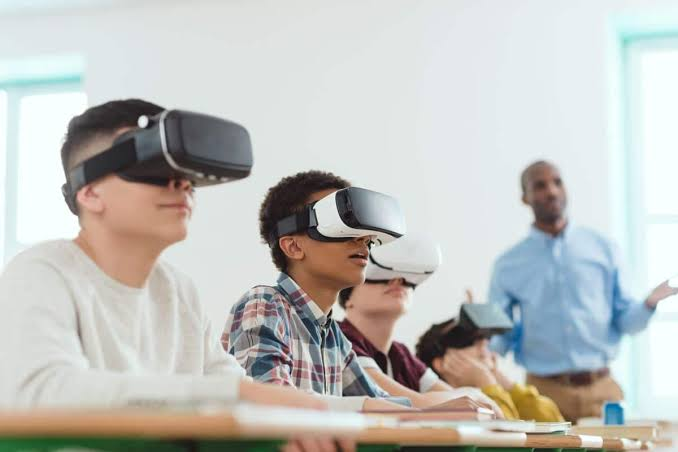
Introduction
Virtual Reality (VR) is changing the way students learn by creating immersive and interactive educational experiences. Instead of simply reading textbooks or watching videos, learners can explore historical sites, conduct virtual science experiments, and practice real-world skills in a safe digital environment. As technology becomes more affordable, VR is emerging as a powerful tool for modern education.
What Is Virtual Reality?
Virtual Reality is a computer-generated environment that users experience through VR headsets and interactive controllers. It creates a three-dimensional world where learners can interact with objects, people, and environments as if they were physically present.
How VR Is Transforming Education
Virtual Reality makes learning more engaging by allowing students to experience concepts firsthand. History students can virtually visit ancient civilizations, biology students can explore the human body in 3D, and engineering students can practice complex procedures without expensive equipment. This hands-on approach improves understanding and long-term knowledge retention.
Benefits of VR in Learning
VR increases student engagement by making lessons interactive and enjoyable. It supports different learning styles, encourages collaboration, and provides practical experiences that are difficult or impossible to recreate in traditional classrooms. Students also gain confidence by practicing skills in a risk-free environment.
Applications Across Subjects
Virtual Reality has applications in nearly every academic field. Medical students can perform simulated surgeries, architecture students can walk through building designs, language learners can practice conversations in virtual environments, and geography students can explore different countries without leaving the classroom.
Challenges of Virtual Reality
Despite its advantages, VR adoption faces challenges such as the cost of equipment, technical requirements, teacher training, and limited access in some schools. However, technological advancements are making VR devices more affordable and easier to use.
The Future of VR in Education
As artificial intelligence, cloud computing, and virtual reality continue to evolve, educational experiences will become even more personalized and interactive. Future classrooms may combine AI tutors with VR environments to create customized learning experiences for every student.
Conclusion
Virtual Reality is redefining education by making learning immersive, practical, and engaging. Although challenges remain, its potential to improve student understanding, motivation, and skill development makes VR one of the most promising educational technologies of the future. Schools that embrace virtual reality will be better prepared to meet the learning needs of the next generation.
Keywords: Virtual Reality, VR Education, Immersive Learning, Educational Technology, Digital Learning, Future Education, Interactive Learning
