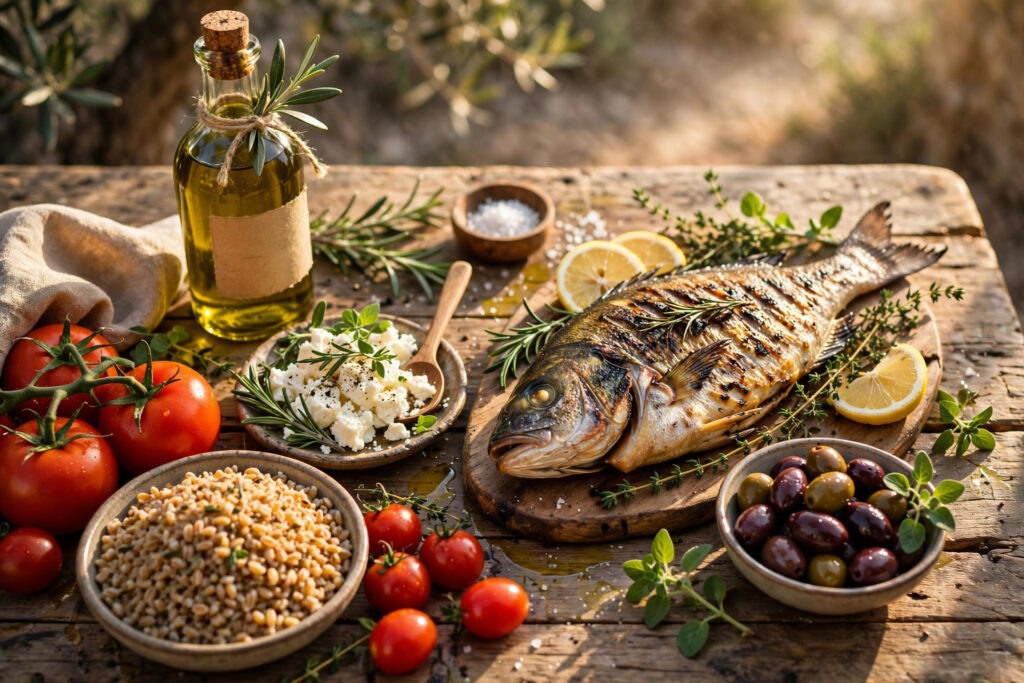
Year after year, the Mediterranean diet tops rankings of the world’s healthiest eating patterns — including U.S. News & World Report’s best-diet lists. But what is the Mediterranean diet, really? It is not a strict meal plan or a short-term fix. It is a flexible, enjoyable way of eating inspired by the traditional cuisines of countries bordering the Mediterranean Sea.
What Is the Mediterranean Diet? The Core Idea
The Mediterranean diet is based on how people in countries like Greece, Italy, and Spain traditionally ate: plenty of plant foods, olive oil as the main fat, moderate fish and poultry, and very little red meat or processed food. There is no calorie counting and no banned food groups — just a pattern that naturally favours whole, minimally processed foods.
Major health organisations, including the American Heart Association, recognise this eating pattern as one of the best-supported for long-term health.
Foods to Eat on the Mediterranean Diet
Eat a wide variety of vegetables and fruits daily — leafy greens, tomatoes, peppers, cucumbers, berries, citrus, and more. Aim to fill half your plate with vegetables at lunch and dinner. Choose whole grains over refined ones: oats, barley, farro, whole-wheat bread and pasta, brown rice, and quinoa.
Extra-virgin olive oil is the cornerstone fat of the Mediterranean diet. Use it for cooking and dressings. Add a handful of nuts — almonds, walnuts, pistachios — and seeds like flax or sesame most days. Eat fish at least twice a week, especially oily fish rich in omega-3 fatty acids such as salmon, sardines, mackerel, and tuna.
Legumes — lentils, chickpeas, and beans — several times a week: cheap, filling, and fibre-rich. Poultry and eggs in moderate amounts; dairy mostly as yoghurt and cheese in modest portions. Garlic, oregano, basil, rosemary, lemon, and black pepper replace heavy salt and sauces.
Foods to Limit on the Mediterranean Diet
- Red and processed meats: Keep red meat to a few times a month; minimise sausages and bacon.
- Refined grains and added sugars: White bread, pastries, sweets, and sugary drinks.
- Butter and processed oils: Olive oil takes their place.
- Highly processed snacks: Chips, ready meals, and fast food.
Nothing is strictly forbidden — the Mediterranean diet works on proportions, not rules.
Health Benefits of the Mediterranean Diet
Large-scale research, including the well-known PREDIMED trial in Spain, has associated the Mediterranean diet with:
- Heart health: Lower risk of heart disease and stroke, supported by the American Heart Association’s dietary guidance.
- Healthy weight: The diet’s fibre and healthy fats promote fullness, aiding weight management.
- Brain health: Observational studies link the pattern to slower cognitive decline.
- Blood sugar control: Whole grains, legumes, and healthy fats help steady blood sugar.
- Longevity: Populations eating this way show some of the longest life expectancies in the world.
A Simple 7-Day Mediterranean Diet Starter Plan
- Breakfast: Greek yoghurt with berries, walnuts, and honey — or oatmeal topped with fruit.
- Lunch: Big salad with chickpeas, olive oil, and lemon; or whole-grain pita with hummus and vegetables.
- Snacks: A handful of almonds, fresh fruit, or vegetable sticks with tzatziki.
- Dinner: Grilled salmon with roasted vegetables; lentil soup with whole-grain bread; or chicken souvlaki with salad.
- Dessert: Fresh fruit — the traditional Mediterranean sweet.
Drink water as your main beverage. If you drink alcohol, the traditional pattern includes only moderate wine with meals — but you should not start drinking for health reasons.
Mediterranean Diet Tips for Beginners
1. Swap, don’t overhaul: Replace butter with olive oil first, then add one more vegetable to dinner. 2. Cook at home more: Home cooking is the backbone of the pattern. 3. Eat socially: Shared, unhurried meals are part of the Mediterranean lifestyle. 4. Keep staples stocked: Olive oil, canned beans, whole grains, frozen vegetables, and tinned fish make easy meals possible. 5. Be patient: It is a lifelong pattern, not a 30-day challenge.
Common Mistakes to Avoid
- Drowning food in olive oil: It is healthy, but still calorie-dense — use measured amounts.
- “Mediterranean” restaurant traps: Creamy pasta and huge cheese portions are not the diet.
- Ignoring portions: Whole foods still add up; eat to comfortable fullness.
Conclusion
So, what is the Mediterranean diet? A delicious, flexible, science-backed way of eating built on vegetables, whole grains, olive oil, fish, and legumes — with room for enjoyment and no rigid rules. Start with small swaps, build the habit over weeks, and you will be eating like some of the healthiest, longest-lived people on earth.
Hashtags: #MediterraneanDiet #HealthyEating #Nutrition #HeartHealth #Wellness #HealthyLifestyle #DietTips
