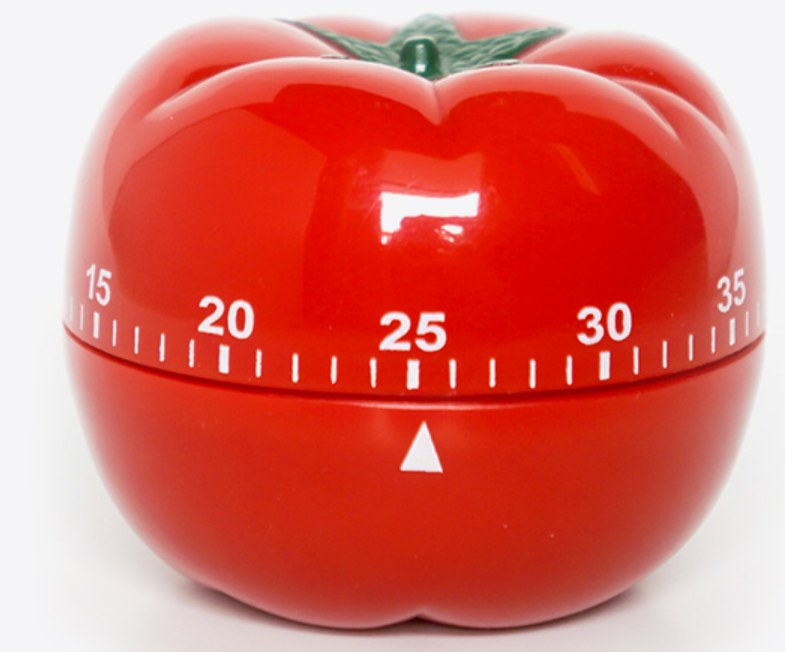
If you have ever wondered what the Pomodoro Technique is, here is the short answer: it is a time-management method that breaks work into 25-minute focused intervals, called “pomodoros,” separated by short breaks. Developed in the 1980s and named after a tomato-shaped kitchen timer, it has become one of the world’s most popular productivity systems — used by students, programmers, writers, and professionals everywhere. This complete beginner’s guide explains how it works, why it works, and how to start today.
1. The Origin Story: A Tomato Timer in the 1980s
The Pomodoro Technique was created by Francesco Cirillo, then a university student in Italy struggling to concentrate on his studies. In a moment of frustration, he grabbed a tomato-shaped kitchen timer (“pomodoro” is Italian for tomato), set it for 25 minutes, and committed to working with total focus until it rang.
Cirillo refined the experiment into a formal method, eventually publishing it as a book. The technique spread through universities and workplaces worldwide, long before productivity apps existed — proof that its power lies in the psychology, not the technology.
2. The Five Steps of the Pomodoro Technique
The classic method is beautifully simple. Here is exactly how one cycle works:
- Choose a task: Pick one specific thing to work on — not five things, one.
- Set a timer for 25 minutes: This is one pomodoro. Commit to working on only that task until the timer rings.
- Work with full focus: No checking your phone, no “quick” emails, no multitasking. If a distracting thought appears, jot it down and return to the task.
- Take a 5-minute break: Step away from the work. Stretch, get water, look out the window — but avoid screens if you can.
- Repeat, then take a longer break: After four pomodoros, take a 15–30 minute break to properly recharge.
That is the entire system. No subscriptions, no complicated setups — just a timer and your attention.
3. Why the Pomodoro Technique Works: The Psychology
The method’s power comes from several well-studied psychological principles working together:
- Timeboxing beats open-ended work: A 25-minute deadline creates gentle urgency. Parkinson’s Law says work expands to fill the time available — the pomodoro shrinks the available time on purpose.
- It lowers the barrier to starting: Anyone can commit to 25 minutes. This defeats the intimidation of a huge project, which research on procrastination identifies as a top cause of avoidance.
- Breaks protect your brain: Studies on vigilance and attention show that performance drops during long unbroken stretches of work. Short breaks restore focus — a phenomenon sometimes called the “spacing effect” applied to attention.
- It makes time visible: Most people have a poor sense of how they spend their hours. Counting pomodoros turns vague “I worked all day” into concrete “I completed six focused sessions.”
4. What to Do During Your Pomodoro Breaks
Breaks are part of the technique, not a reward for it — and how you spend them matters. The goal is genuine mental rest, which means stepping away from the task completely.
Good break activities include standing up and stretching, drinking a glass of water, stepping outside for fresh air, or doing a few minutes of tidying. Avoid scrolling social media or checking email: research on “attention residue” by psychologist Sophie Leroy shows that switching to another cognitively demanding task leaves part of your mind stuck on it, which sabotages your next pomodoro. True breaks are boring on purpose.
5. Handling Interruptions Without Breaking Focus
Interruptions are the technique’s natural enemy, so it has a built-in strategy: the “inform, negotiate, schedule, call back” approach. When someone interrupts you, briefly inform them you are in the middle of something, negotiate a time to talk, schedule it, and return to your pomodoro.
For internal interruptions — the sudden urge to check something — keep a notepad beside you. Write the thought down (“email the client,” “buy milk”) and immediately return to work. Externalising the thought tells your brain it is handled, so it stops nagging you. If an interruption is truly urgent, end the pomodoro, deal with it, and start a fresh one later.
6. The Best Tools for Pomodoro Beginners
You can start with any kitchen timer or phone timer, but dedicated tools add helpful structure:
- Physical timers: A simple kitchen timer keeps the ritual tactile and keeps your phone out of reach.
- Phone apps: Apps like Focus Keeper, Forest, and Tide add pomodoro timers with statistics and gentle alarms.
- Browser extensions: Extensions such as Marinara Timer run in a browser tab for desk workers.
- Website timers: Free web-based pomodoro timers work on any device with no installation.
The tool matters far less than the habit. Pick whatever you will actually use, and resist the urge to spend more time choosing apps than doing pomodoros.
7. Common Pomodoro Mistakes to Avoid
Beginners often stumble in predictable ways. Watch out for these:
- Skipping breaks: Working through breaks seems productive but destroys the rhythm — fatigue accumulates and focus collapses by the afternoon.
- Treating pomodoros as rigid law: If you are in deep flow when the timer rings, it is fine to finish the thought. The technique serves you, not the reverse.
- Counting partial pomodoros: A pomodoro interrupted beyond repair does not count. This strictness trains you to protect your focus fiercely.
- Using it for the wrong tasks: Creative brainstorming and collaborative meetings do not always fit 25-minute boxes. Use pomodoros for focused solo work.
- Forgetting the long break: After four pomodoros, the 15–30 minute break is mandatory. It is what makes the system sustainable all day.
8. Popular Pomodoro Variations Worth Trying
The classic 25/5 split is a starting point, not a law. Once you understand the rhythm, experiment:
- The 52/17 method: A study by the time-tracking company DeskTime found their most productive users worked about 52 minutes followed by 17-minute breaks. Try it if 25 minutes feels too short.
- The 90/20 method: Based on ultradian rhythm research on natural energy cycles, some people prefer 90-minute deep-work blocks with 20-minute breaks.
- The 15-minute starter: On days when starting feels impossible, set the timer for just 15 minutes. Beginning is the hardest part; momentum usually carries you further.
- Task-batched pomodoros: Dedicate each pomodoro to one category (emails, writing, admin) instead of one task, which suits fragmented workdays.
Track which variation leaves you most energised at day’s end, and make that your default.
9. Using the Pomodoro Technique for Studying
Students are among the technique’s biggest beneficiaries. Instead of “studying for six hours” — which usually means three hours of work and three of distraction — plan a set number of pomodoros per subject. Four pomodoros of chemistry, then four of history, with real breaks between.
Pair pomodoros with active recall: during each 25-minute block, test yourself with flashcards or practice questions rather than re-reading notes. Educational research consistently shows that retrieval practice beats passive review, and the pomodoro’s structure makes it easy to schedule. Many students report that pomodoro-based study sessions feel shorter yet produce better exam results.
10. Tracking Your Pomodoros to Build Momentum
What gets measured gets managed. Keep a simple daily log: date, task, and number of completed pomodoros. Over weeks, patterns emerge — you will learn how many focused sessions you can realistically do per day (most people top out at 10–14) and which times of day are your most productive.
This data is also motivating. Watching your daily pomodoro count climb turns productivity into a gentle game, and reviewing a week of completed sessions provides concrete proof of progress on long projects. Some people use an “X” on a paper calendar per pomodoro — low-tech, but remarkably satisfying.
Conclusion
So, what is the Pomodoro Technique? It is proof that working less frantically can mean accomplishing more: 25 minutes of true focus, a real break, and repeat. Start today with a single pomodoro on your most important task. Within a week, you will have a clearer picture of where your time goes and a practical tool for taking it back, one tomato at a time.
#Pomodoro #Productivity #TimeManagement #FocusTips #StudyTips #WorkSmarter #DeepWork
