Introduction
In today’s interconnected world, communication happens almost instantly across continents. Whether making an international phone call, watching live sporting events, browsing the internet, or participating in a video conference, communication satellites play a vital role in making global connectivity possible.
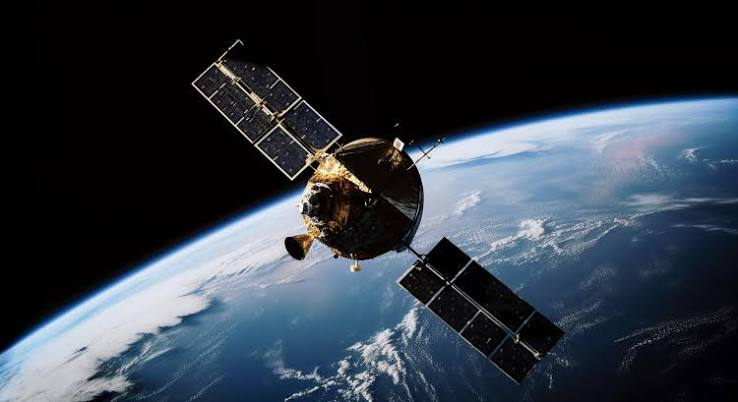
Orbiting high above Earth, these satellites receive, amplify, and transmit signals between distant locations. They have transformed telecommunications, broadcasting, navigation, emergency response, and internet access, enabling billions of people to stay connected regardless of geographical barriers.
What Are Communication Satellites?
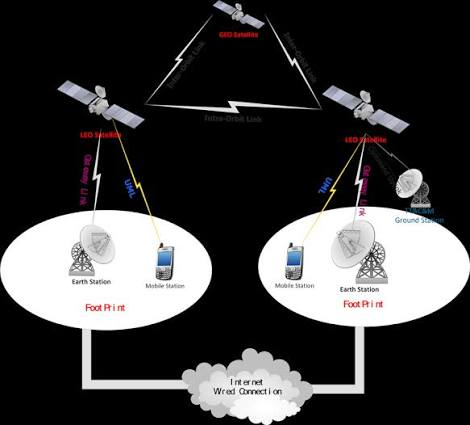
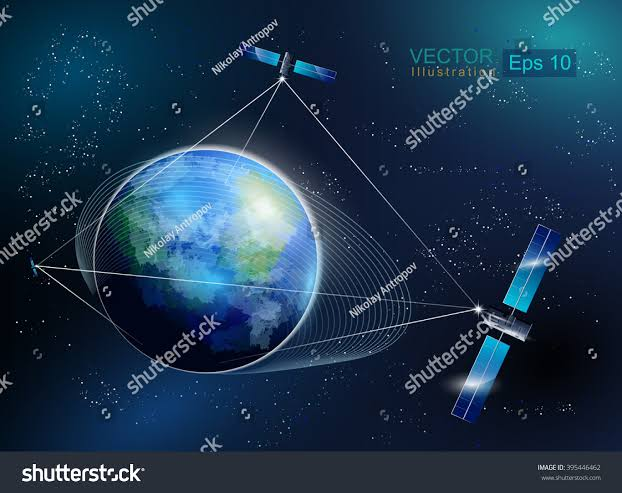
Communication satellites are artificial satellites designed to relay radio, television, telephone, and internet signals between different parts of the world. They act as space-based relay stations, receiving signals from one ground station and transmitting them to another.
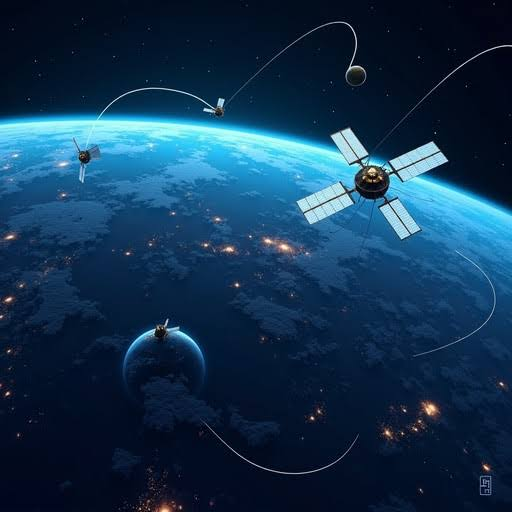
Most communication satellites operate in geostationary orbit approximately 35,786 kilometers above Earth’s equator, allowing them to remain fixed over the same location. Others operate in medium-Earth or low-Earth orbits to provide specialized services, including global broadband internet.
How Communication Satellites Work
The operation of a communication satellite involves three basic steps:
- A ground station sends a signal to the satellite (uplink).
- The satellite receives, strengthens, and processes the signal.
- The satellite retransmits the signal back to another location on Earth (downlink).
This process occurs within fractions of a second, enabling real-time communication across vast distances.
Supporting Global Telecommunications
Communication satellites have revolutionized international telecommunications. They make long-distance phone calls, video conferencing, and digital communication possible even between countries separated by oceans and mountains.
Businesses rely on satellite communication to coordinate international operations, while governments use secure satellite networks for diplomacy, defense, and disaster response.
Delivering Television and Radio Broadcasting
Millions of households receive television and radio broadcasts directly from communication satellites. Live coverage of global sporting events, breaking news, educational programming, and entertainment can be transmitted simultaneously to audiences around the world.
Satellite broadcasting has expanded access to information, education, and cultural exchange, particularly in remote regions with limited terrestrial infrastructure.
Expanding Internet Access
One of the fastest-growing applications of communication satellites is broadband internet. Modern satellite constellations provide high-speed internet to rural communities, islands, ships at sea, aircraft, and disaster-affected regions where traditional fiber-optic networks are unavailable.
This expanding connectivity helps bridge the digital divide by bringing online education, healthcare, banking, and business opportunities to underserved populations.
Supporting Emergency Communications
During natural disasters such as earthquakes, floods, hurricanes, and wildfires, ground communication networks may become damaged or overloaded. Communication satellites continue operating independently, providing reliable links for emergency responders, governments, and humanitarian organizations.
Satellite communication enables rescue coordination, emergency medical assistance, and rapid delivery of critical information when conventional systems fail.
Enabling Maritime and Aviation Safety
Ships and aircraft rely heavily on satellite communication for navigation, weather updates, emergency alerts, and operational coordination. Pilots and ship captains receive real-time information that improves safety and efficiency during long-distance travel.
Satellite systems also support search-and-rescue missions by helping locate distressed vessels and aircraft.
Challenges Facing Communication Satellites
Despite their many advantages, communication satellites face several challenges. Space debris threatens operational satellites, while increasing numbers of spacecraft create congestion in Earth’s orbit. Cybersecurity is another growing concern, requiring strong protection against unauthorized access and interference.
In addition, maintaining satellite networks requires significant investment in launch services, infrastructure, and ongoing operations.
The Future of Satellite Communication
The future of communication satellites is highly promising. Advances in reusable rockets, miniaturized satellites, artificial intelligence, laser-based communications, and next-generation satellite constellations are making global connectivity faster, more reliable, and more affordable.
These innovations will support emerging technologies such as smart cities, autonomous transportation, telemedicine, and the Internet of Things (IoT), creating an even more connected world.
Conclusion
Communication satellites have fundamentally transformed the way people connect, share information, and conduct business across the globe. They support everything from international broadcasting and internet access to disaster response and aviation safety.