Introduction
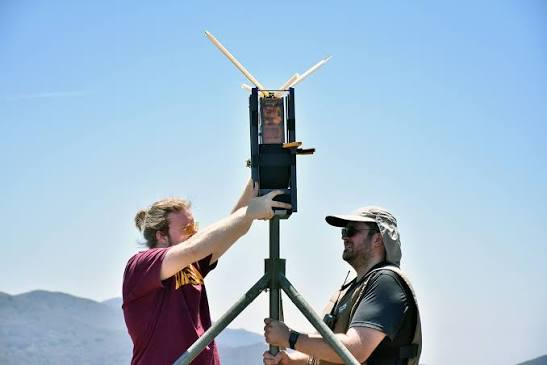
Space exploration is no longer limited to national space agencies and large aerospace companies. Around the world, students are designing, building, and launching satellites that contribute to real scientific research while providing hands-on learning experiences. These student-built satellites are inspiring a new generation of engineers, scientists, programmers, and innovators who will shape the future of space exploration.
Advances in technology have made satellite development more affordable and accessible than ever before. Universities, colleges, and even some high schools now participate in satellite projects that allow students to apply classroom knowledge to real-world challenges. These missions are helping young people develop technical skills, creativity, teamwork, and problem-solving abilities while contributing to global scientific research.
What Are Student-Built Satellites?
Student-built satellites are spacecraft designed, assembled, tested, and sometimes operated by students under the guidance of professors, engineers, and space industry professionals. Many of these satellites belong to a category known as CubeSats—small, lightweight satellites that are less expensive to develop and launch than traditional satellites.
Despite their compact size, student-built satellites can carry cameras, communication systems, environmental sensors, and scientific instruments capable of performing valuable experiments in space.
Why Universities Are Investing in Satellite Programs
Universities recognize that practical experience is essential for preparing students for careers in science and engineering. Satellite projects combine multiple disciplines, including aerospace engineering, electronics, computer science, physics, mathematics, and telecommunications.
Students involved in satellite missions gain experience in:
- Spacecraft design
- Programming onboard computers
- Building communication systems
- Testing electronic components
- Data analysis
- Mission planning
- Team collaboration
- Project management
These experiences prepare graduates for careers in the rapidly expanding global space industry.
CubeSats: Small Satellites with Big Potential
CubeSats have transformed space education because they are affordable and relatively simple to build compared to traditional satellites. Most CubeSats measure just 10 × 10 × 10 centimeters per unit, but multiple units can be combined to carry larger scientific payloads.
Student CubeSats are used for:
- Earth observation
- Weather monitoring
- Environmental research
- Technology demonstrations
- Amateur radio communication
- Space weather studies
- Biological experiments
- Testing new satellite technologies
Many successful CubeSat missions have demonstrated