Introduction
Reliable internet access has become an essential part of modern life. It supports education, healthcare, business, communication, and entertainment. However, billions of people around the world still live in areas where high-speed internet is unavailable or unreliable. To address this challenge, companies and governments are launching large groups of satellites known as satellite constellations to provide global broadband coverage.
Unlike traditional communication satellites that operate individually, satellite constellations consist of hundreds or even thousands of interconnected satellites working together. These networks aim to deliver fast, low-latency internet services to homes, schools, businesses, ships, aircraft, and remote communities across the globe.
What Are Satellite Constellations?
A satellite constellation is a coordinated network of satellites placed in carefully planned orbits. Instead of relying on one large satellite, multiple smaller satellites continuously communicate with ground stations and user terminals to provide uninterrupted internet coverage.
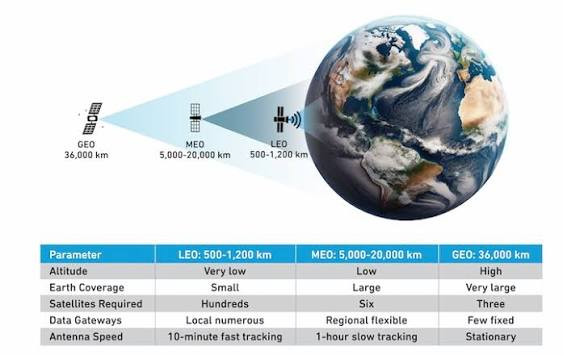
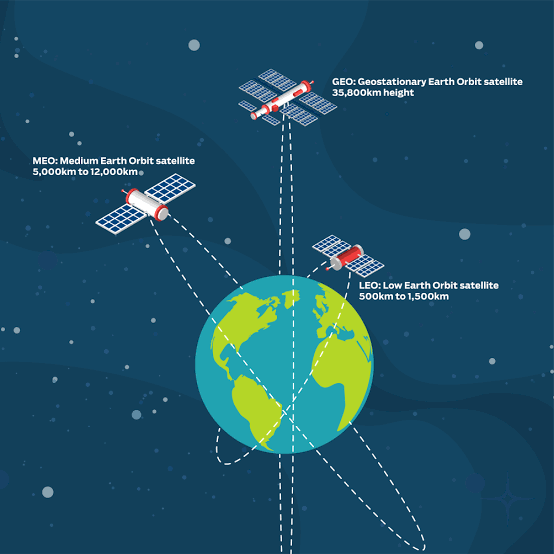
Most modern broadband constellations operate in low Earth orbit (LEO), where satellites are much closer to Earth than traditional geostationary satellites. This shorter distance significantly reduces signal delay and improves internet performance.
Why Global Internet Coverage Matters
Access to reliable internet has become a necessity rather than a luxury. High-speed connectivity allows people to:
- Attend online classes
- Access telemedicine services
- Operate digital businesses
- Communicate with family and colleagues
- Receive emergency information
- Participate in the global digital economy
Satellite constellations can reach regions where installing fiber-optic cables or mobile networks is expensive or geographically difficult.
How Satellite Constellations Work
Each satellite in the constellation communicates with nearby satellites and ground stations. User terminals on Earth send and receive signals that are routed through the network before connecting to the wider internet.
As satellites move across the sky, another satellite seamlessly takes over the connection, ensuring continuous service without noticeable interruptions.
Advanced software manages satellite positions, traffic routing, and network performance in real time.
Benefits of Satellite Internet
Satellite constellations offer several important advantages:
Expanding Digital Inclusion
Remote villages, islands, deserts, mountains, and polar regions can gain access to high-speed internet, reducing the digital divide.
Supporting Disaster Recovery
When earthquakes, floods, or hurricanes damage ground infrastructure, satellite internet can quickly restore communications for emergency responders and affected communities.
Improving Maritime and Aviation Connectivity
Ships and aircraft traveling across oceans can maintain reliable internet connections, improving navigation, passenger services, and operational efficiency.
Encouraging Economic Development
Reliable internet enables online education, e-commerce, remote work, digital banking, and entrepreneurship in underserved regions.
Technological Innovations
Modern satellite constellations rely on several advanced technologies, including:
- Reusable launch rockets
- Miniaturized satellites
- Laser communication links between satellites
- Artificial intelligence for network optimization
- Automated collision avoidance systems
- High-capacity ground stations
These innovations have significantly reduced launch costs while improving network performance and reliability.
Challenges Facing Satellite Constellations
Despite their potential, satellite constellations face several challenges.
Space Debris
Launching thousands of satellites increases congestion in Earth’s orbit. Operators must carefully manage satellite movements to reduce the risk of collisions and space debris.
Astronomical Observations
Large satellite constellations can appear as bright streaks in telescope images, making it more difficult for astronomers to observe distant galaxies and stars.
Regulatory Issues
International coordination is necessary to allocate radio frequencies, manage orbital positions, and ensure fair access to space resources.
Environmental Considerations
Frequent launches and satellite replacements raise questions about sustainability and the long-term management of orbital environments.
The Future of Global Connectivity
The number of operational satellites is expected to continue growing over the next decade. Improvements in satellite technology, reusable rockets, and communication systems will make broadband internet faster, more affordable, and more widely available.
Future networks may integrate with 5G and upcoming 6G technologies, supporting smart cities, autonomous vehicles, precision agriculture, and the Internet of Things (IoT). These developments could transform how people live, work, and communicate worldwide.
Conclusion
Satellite constellations are reshaping global internet access by extending reliable, high-speed connectivity to regions that have long been underserved. Through innovative engineering and international collaboration, these networks are helping bridge the digital divide while supporting education, healthcare, business, and emergency communications.
As technology advances and more satellites enter orbit, satellite constellations will become an increasingly important part of the world’s digital infrastructure, connecting people and opportunities across every corner of the planet.