Space has become an essential part of modern life. Thousands of satellites orbit Earth every day, supporting communication, navigation, weather forecasting, scientific research, national security, and global internet services. As more countries and private companies launch satellites into orbit, space is becoming increasingly crowded. While this rapid growth has brought remarkable technological progress, it has also created a serious challenge: space debris.
Space debris, often called “space junk,” consists of abandoned satellites, spent rocket stages, broken spacecraft, and tiny fragments created by collisions or explosions in orbit. Although these objects no longer serve any useful purpose, they continue traveling around Earth at extremely high speeds. Even a small piece of debris can severely damage or destroy an operational satellite, putting critical services and future space missions at risk.
Protecting satellites from space debris has become one of the most important priorities for the global space community.
What Is Space Debris?
Space debris refers to any human-made object in space that no longer performs a useful function. These objects remain in orbit because there is little atmospheric resistance to slow them down, especially in higher orbits.
Examples of space debris include:
- Defunct communication satellites
- Retired scientific satellites
- Spent rocket boosters
- Fragments from satellite collisions
- Pieces produced during spacecraft explosions
- Lost tools and equipment from space missions
- Tiny paint flakes and metal fragments
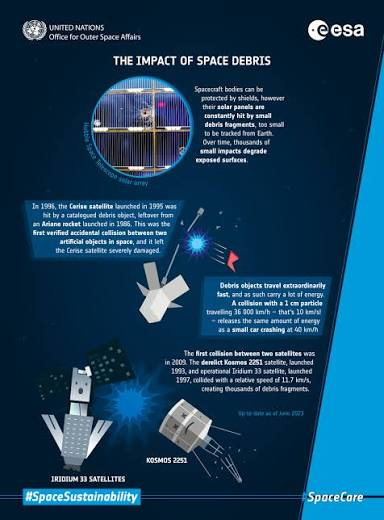
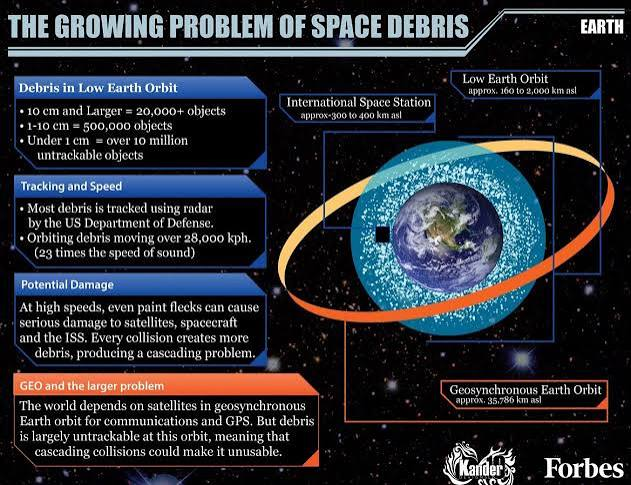
Today, millions of pieces of debris are believed to orbit Earth. While only a fraction of them are large enough to be tracked from the ground, even debris just a few millimeters wide can be dangerous because of the tremendous speeds involved.
How Space Debris Is Created
The amount of orbital debris has increased steadily over the past several decades due to growing space activity.
Major sources include:
Satellite Collisions
When two satellites collide, they can shatter into thousands of smaller fragments that continue orbiting Earth. Each fragment becomes another potential hazard for other spacecraft.
Rocket Launches
Rocket stages used to place satellites into orbit are often left in space after completing their missions. Without proper disposal, they become long-term debris.
Explosions in Orbit
Old satellites and rocket bodies sometimes explode due to leftover fuel or battery failures, scattering countless fragments into surrounding orbits.
Increasing Commercial Space Activity
Private companies are launching thousands of satellites to provide global internet coverage and other services. While these constellations offer many benefits, they also increase orbital congestion and require careful traffic management.
Why Space Debris Is Dangerous
Objects in low Earth orbit travel at speeds of approximately 28,000 kilometers per hour (about 17,500 miles per hour). At these speeds, even a tiny fragment carries enormous kinetic energy.
A collision with space debris can:
- Damage satellite solar panels
- Destroy communication equipment
- Interrupt navigation services
- Create additional debris through secondary collisions
- Endanger astronauts aboard crewed spacecraft
- Shorten the operational life of satellites
Because satellites support many everyday services, damage to even a few spacecraft can have widespread consequences.
The Importance of Satellite Safety
Satellites provide services that billions of people rely on every day.
These include:
Communication
Television broadcasts, telephone calls, internet connectivity, and international communications depend heavily on satellites.
Navigation
Global Navigation Satellite Systems (GNSS), including GPS, enable accurate navigation for smartphones, aircraft, ships, and emergency services.
Weather Forecasting
Meteorological satellites continuously monitor storms, hurricanes, cloud formations, and climate patterns, helping scientists predict severe weather and issue early warnings.
Earth Observation
Observation satellites monitor forests, glaciers, oceans, agriculture, air pollution, and natural disasters, supporting environmental protection and scientific research.
Protecting these satellites ensures the continued availability of these essential services.
The Kessler Syndrome
One of the greatest concerns among space scientists is the possibility of the Kessler Syndrome. This theory suggests that as the amount of debris increases, collisions become more frequent. Each collision creates thousands of new fragments, leading to even more collisions in a chain reaction.
If this scenario were to occur, some orbital regions could become so crowded with debris that launching and operating satellites safely would become extremely difficult for many years.
Preventing this outcome is a major focus of international space agencies.
Tracking Space Debris
Space agencies use powerful radar systems, optical telescopes, and computer models to monitor large objects orbiting Earth.
Organizations track tens of thousands of objects and calculate their future positions. If a potential collision is detected, satellite operators can perform avoidance maneuvers by slightly adjusting a satellite’s orbit.
As more satellites are launched, tracking systems continue to improve through artificial intelligence and advanced computing technologies.
Technologies for Removing Space Debris
Scientists and engineers are developing innovative methods to clean Earth’s orbit.
Some proposed solutions include:
Robotic Capture Systems
Special spacecraft could capture inactive satellites using robotic arms and safely guide them back into Earth’s atmosphere.
Nets and Harpoons
Experimental missions have tested nets and harpoons designed to capture large pieces of debris before removing them from orbit.
Magnetic Docking
Future servicing spacecraft may attach to old satellites using magnetic devices and move them into disposal orbits.
Laser Technology
Researchers are studying whether ground-based or space-based lasers could slightly alter the paths of small debris, reducing collision risks without destroying the objects.
Although many of these technologies are still under development, they represent important steps toward maintaining a cleaner orbital environment.
International Cooperation
Space debris is a global challenge that cannot be solved by one country alone. International cooperation is essential for developing common standards and responsible space practices.
Space agencies and governments encourage satellite operators to:
- Design satellites that can safely re-enter Earth’s atmosphere after their missions.
- Reduce the release of unnecessary debris during launches.
- Passivate retired spacecraft by removing stored energy that could cause explosions.
- Share orbital tracking information to prevent collisions.
- Follow international guidelines for sustainable space operations.
Collaboration between governments, private companies, and scientific organizations will be crucial as space activity continues to expand.
The Future of Sustainable Space Exploration
The future of space exploration depends on maintaining a safe and sustainable orbital environment. Engineers are designing satellites with improved collision-avoidance systems, longer operational lifetimes, and responsible end-of-life disposal plans.
Artificial intelligence is also helping operators predict potential collisions more accurately and automate satellite maneuvers. Meanwhile, reusable rockets and advances in spacecraft servicing may reduce the amount of waste left in orbit.
These innovations will help ensure that future generations can continue exploring and benefiting from space without increasing the risks posed by orbital debris.
Conclusion
Space debris has become one of the greatest challenges facing modern space exploration. Millions of pieces of orbital junk threaten satellites that provide communication, navigation, weather forecasting, scientific research, and many other essential services. As the number of satellites continues to grow, protecting space from debris is more important than ever.
Through advanced tracking systems, innovative debris-removal technologies, responsible satellite design, and international cooperation, the global space community is working to preserve Earth’s orbital environment. Ensuring satellite safety today will help secure the future of space exploration, scientific discovery, and the technologies that connect and support life on Earth.