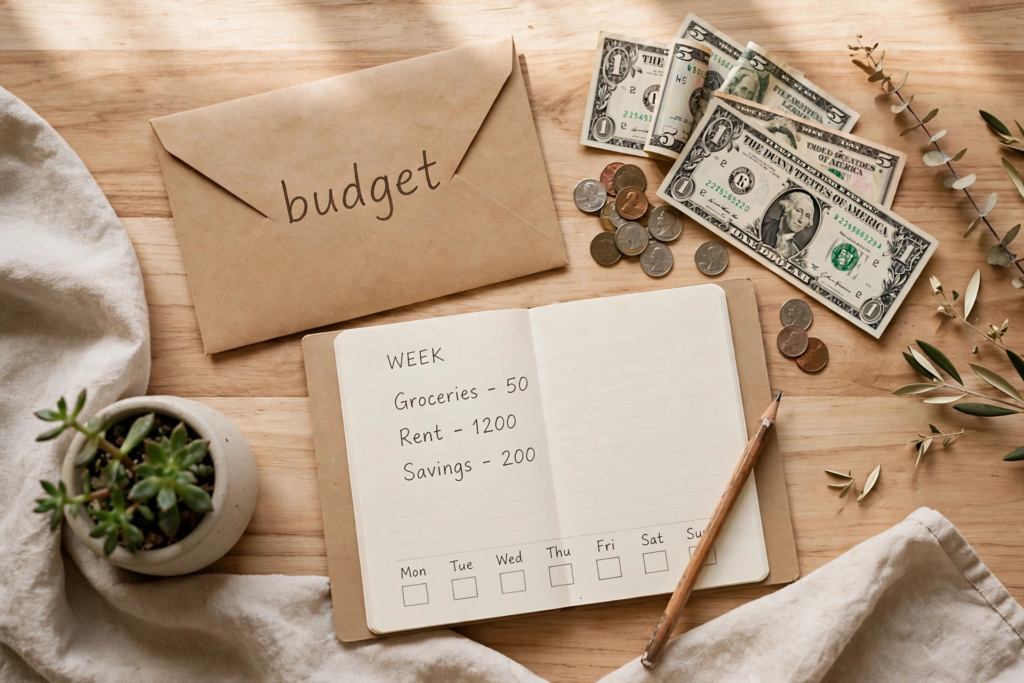
The word "budget" makes many people reach for a spreadsheet — and then abandon it within two weeks. Formulas, tabs, and conditional formatting are tools, not the plan itself. The truth is you can run a perfectly effective budget with nothing more than a notebook, a few envelopes, or the notes app on your phone. Here's how to start.
Step 1: Know Your Numbers (It Takes 20 Minutes)
Grab your last month of bank or mobile-wallet statements. Write down three things:
1. Total income — your take-home pay plus any side income. 2. Fixed expenses — rent, bills, transport passes, subscriptions, loan payments. 3. Everything else — groceries, eating out, shopping, entertainment.
Don't judge the numbers yet. Awareness comes before optimization, and this snapshot is your baseline.
Step 2: The 50/30/20 Rule — Budgeting's Simplest Framework
Popularized by Senator Elizabeth Warren in her book All Your Worth, the 50/30/20 rule divides after-tax income into three buckets:
- 50% for needs: housing, utilities, groceries, transport, insurance, minimum debt payments.
- 30% for wants: dining out, hobbies, streaming, shopping.
- 20% for savings and debt repayment.
It's a guideline, not gospel — if you live somewhere with high rent, your percentages will differ. The value is in the categories: it forces you to name what counts as a "need" versus a "want," which is where most budgets succeed or fail.
Step 3: Pay Yourself First
Before you spend a single rupee or dollar, move your savings out of reach. Most budgeting experts, including the Consumer Financial Protection Bureau (CFPB), recommend automating this: set up an automatic transfer to a savings account on payday. Even 5% is a win when you're starting. Money you never see is money you never miss, and this single habit beats any spreadsheet formula.
Step 4: Try the Envelope Method (Paper or Digital)
The envelope method, a classic popularized by personal-finance educator Dave Ramsey, is beautifully spreadsheet-free. You assign a fixed amount of cash (or a balance in your notes app) to each spending category — groceries, transport, fun money — and when an envelope is empty, spending in that category stops until next month.
Why does it work? Studies on payment methods show that physically parting with cash activates "pain of paying," which curbs overspending in a way that tapping a card never will. Use real paper envelopes for a month and watch your awareness skyrocket.
Step 5: Do a Weekly 10-Minute Check-In
A budget fails when it's written once and forgotten. Pick one evening a week — Sunday works for most people — and spend ten minutes:
- Glance at what you spent that week.
- Note which category is running hot.
- Adjust next week's spending, not the past.
That's it. Ten minutes a week beats an hour-long spreadsheet session once a month.
Step 6: Build a Tiny Emergency Fund
The CFPB and most financial planners agree: an emergency fund is the foundation of financial stability. You don't need six months of expenses on day one. Start with a mini-goal — enough to cover one month's rent or one unexpected bill. Keep it in a separate account so it's not tempting to raid, and add to it gradually.
Common Beginner Traps to Avoid
- Budgeting to zero flexibility: if every rupee is spoken for, one surprise breaks the whole plan. Leave a small buffer.
- Tracking instead of budgeting: recording spending after the fact is accounting, not budgeting. Decide the limits first.
- Quitting after one bad month: overspending once doesn't mean budgeting "doesn't work for you." Adjust the categories and continue.
The Bottom Line
Budgeting is simply telling your money where to go instead of wondering where it went. You don't need software, formulas, or financial jargon — just your real numbers, three buckets, a weekly check-in, and the discipline to pay yourself first. Start today with Step 1; the rest builds on it.
References
- Consumer Financial Protection Bureau (CFPB) — "An Essential Guide to Building an Emergency Fund" (consumerfinance.gov)
- Warren E. & Warren Tyagi A., *All Your Worth: The Ultimate Lifetime Money Plan*, Free Press, 2005 (origin of the 50/30/20 rule)
- Ramsey Solutions — guidance on the envelope system and zero-based budgeting (ramseysolutions.com)
- Soman D., "The Effect of Payment Transparency on Consumption," *Journal of Consumer Research*
#Budgeting #PersonalFinance #MoneyTips #FinancialFreedom #BeginnerFinance
