Introduction
Critical thinking is one of the most valuable skills students can develop in today’s rapidly changing world. It involves analyzing information objectively, evaluating evidence, solving problems logically, and making informed decisions. Rather than simply memorizing facts, critical thinkers question assumptions, explore different perspectives, and reach conclusions based on reason and evidence. As education evolves, critical thinking has become an essential skill for academic achievement, career success, and responsible citizenship.
What Is Critical Thinking?
Critical thinking is the ability to think clearly, rationally, and independently. It enables students to understand complex issues, identify reliable information, recognize bias, and develop well-supported opinions. Students who think critically become active learners instead of passive recipients of information.
Why Critical Thinking Is Important
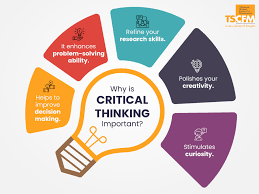
Critical thinking helps students:
- Solve complex problems effectively.
- Make informed decisions.
- Improve academic performance.
- Enhance creativity and innovation.
- Communicate ideas clearly.
- Adapt to changing situations.
- Become responsible and informed citizens.
Key Components of Critical Thinking
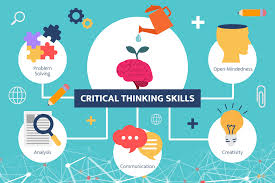
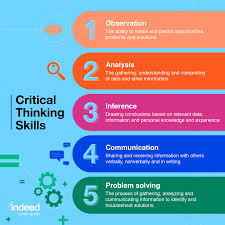
1. Observation
Students should carefully observe situations, gather relevant information, and identify important details before making judgments.
2. Analysis
Analyzing information involves breaking complex topics into smaller parts to better understand relationships, causes, and consequences.
3. Evaluation
Critical thinkers evaluate the credibility of sources, distinguish facts from opinions, and assess the strength of evidence before accepting information.
4. Logical Reasoning
Students should use logic to connect ideas, recognize patterns, and avoid faulty conclusions or assumptions.
5. Problem-Solving
Effective problem-solving requires identifying challenges, considering multiple solutions, and selecting the most appropriate course of action.
6. Reflection
Reflecting on one’s own thinking helps students identify mistakes, improve understanding, and become lifelong learners.
How Students Can Develop Critical Thinking Skills
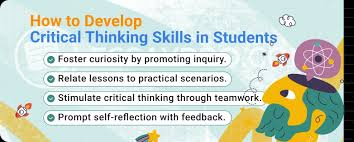
Ask Meaningful Questions
Students should develop curiosity by asking “why,” “how,” and “what if” questions instead of accepting information without examination.
Read Widely
Reading books, research articles, and reliable news sources exposes students to diverse viewpoints and strengthens analytical thinking.
Participate in Discussions
Classroom debates and group discussions encourage students to express ideas, defend arguments, and respect different opinions.
Solve Real-World Problems
Project-based learning and case studies help students apply classroom knowledge to practical situations.
Practice Independent Research
Research teaches students how to collect information, evaluate sources, and draw evidence-based conclusions.
Learn from Mistakes
Viewing mistakes as learning opportunities encourages growth, resilience, and continuous improvement.
The Role of Teachers and Parents
Teachers can encourage critical thinking by creating interactive classrooms, asking open-ended questions, promoting inquiry-based learning, and giving constructive feedback. Parents can support this development by encouraging curiosity, discussing current events, reading together, and allowing children to make age-appropriate decisions.
Benefits Beyond the Classroom
Critical thinking prepares students for higher education, professional careers, entrepreneurship, and everyday decision-making. Employers value individuals who can analyze information, solve problems creatively, and adapt to new challenges.
Challenges to Developing Critical Thinking
Some barriers include excessive reliance on memorization, misinformation on the internet, limited classroom interaction, and fear of making mistakes. Overcoming these challenges requires supportive learning environments that encourage curiosity and independent thought.
Conclusion
Critical thinking is an essential life skill that empowers students to become confident learners, effective problem-solvers, and responsible citizens. By asking thoughtful questions, evaluating information carefully, and approaching challenges with logic and creativity, students can succeed academically and prepare for the demands of the modern world. Developing critical thinking is an investment that benefits individuals and society for years to come.