Introduction
Generative artificial intelligence has become one of the most influential technological breakthroughs of the decade. Unlike traditional AI systems that analyze data, generative AI creates new content, including text, images, music, videos, computer code, and designs. Its rapid adoption is transforming industries, improving productivity, and opening new opportunities for innovation while also raising important ethical and social concerns.
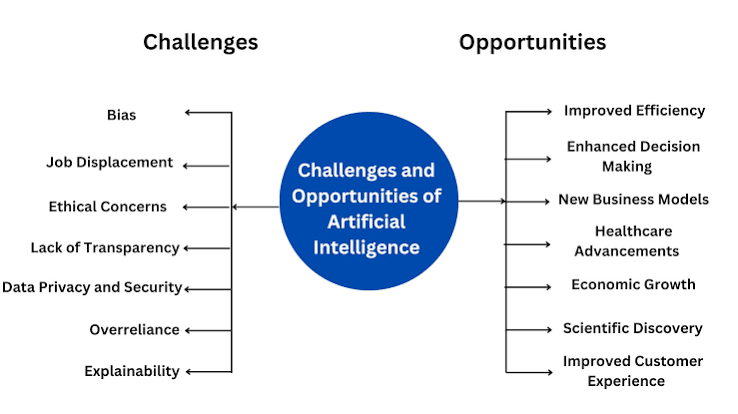
Opportunities Created by Generative AI
Generative AI is helping businesses automate repetitive tasks, create high-quality content, and improve customer experiences. Writers, designers, software developers, marketers, and educators are using AI tools to generate ideas, accelerate workflows, and enhance creativity.
In healthcare, generative AI assists researchers by analyzing medical information, supporting drug discovery, and improving documentation. In education, it provides personalized learning materials and interactive tutoring experiences.
Driving Innovation
Companies are integrating generative AI into products and services to develop smarter applications. AI-powered assistants can summarize documents, translate languages, generate software code, and create marketing campaigns within minutes.
These capabilities enable organizations to innovate faster while reducing development costs.
Challenges and Risks
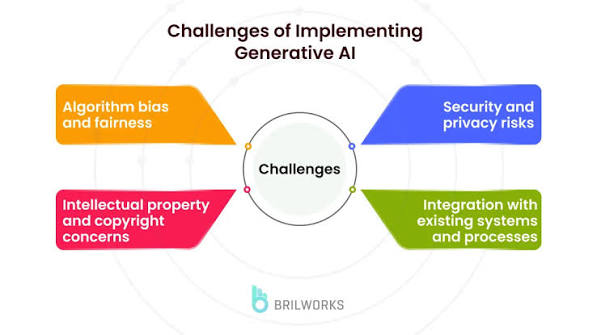
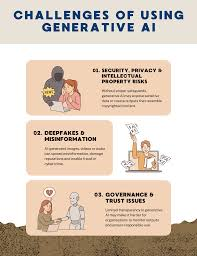
Despite its benefits, generative AI presents significant challenges. AI-generated misinformation, deepfakes, copyright concerns, and biased outputs require careful management.
Organizations must also address privacy issues, ensuring sensitive information is protected when AI systems process user data.
Workforce Transformation
Generative AI is changing the nature of work rather than simply replacing jobs. While some routine tasks may become automated, new careers are emerging in AI development, prompt engineering, governance, cybersecurity, and human-AI collaboration.
Continuous learning and digital skills will become increasingly important in the future workforce.
Responsible AI Development
To maximize benefits and reduce risks, governments, businesses, researchers, and educators must establish ethical guidelines for AI development. Transparency, accountability, fairness, and human oversight should remain central principles as generative AI continues to evolve.
Conclusion
Generative AI is reshaping the way people create, communicate, and solve problems. Its opportunities are enormous, from improving productivity to accelerating scientific discoveries. At the same time, addressing ethical, legal, and social challenges will be essential to ensuring that generative AI benefits society responsibly. With thoughtful governance and ongoing innovation, generative AI is poised to become one of the defining technologies of the future.