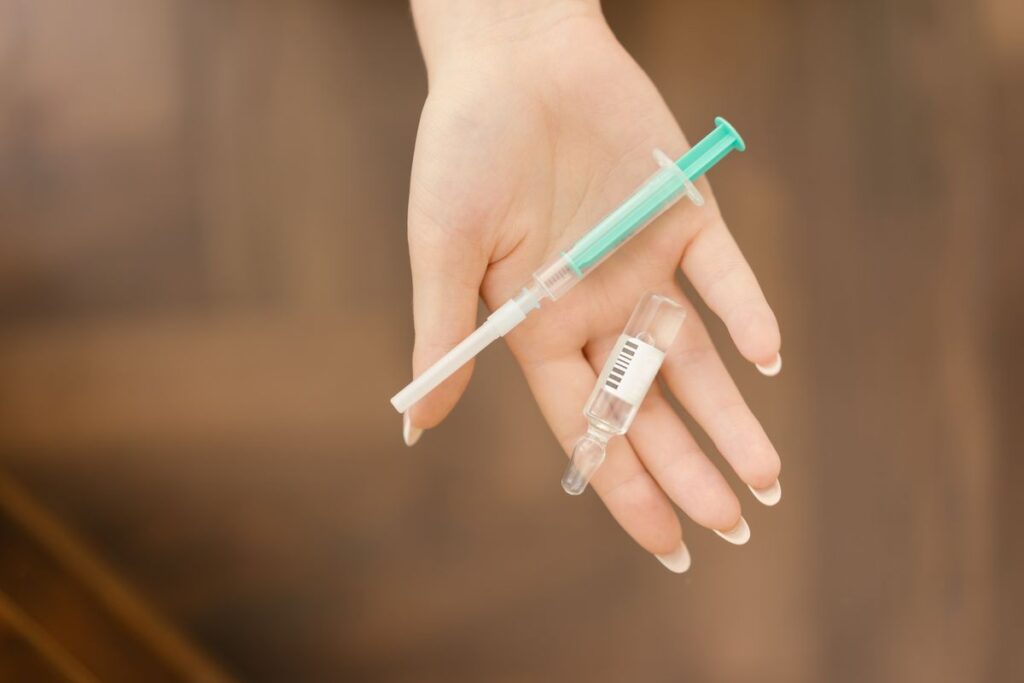
Almost everyone has been vaccinated — as a baby, before school, or ahead of a trip. But few people stop to ask how a quick jab trains the body to defeat diseases it has never met. The answer is one of the most elegant stories in science: vaccines do not fight germs for you; they teach your immune system to recognize and destroy them before the real attack ever happens.
Your immune system has a memory
Think of your immune system as a security team. When a new intruder — a virus or bacterium — breaks in for the first time, the team has never seen it, so it takes days or weeks to figure out how to stop it. During that delay, you feel sick, and in serious cases the intruder can do real damage. But once the threat is defeated, the team files away a “wanted poster” so it can spot the same enemy instantly next time. That wanted poster is the key idea behind every vaccine.
The poster comes in two forms: antibodies, Y-shaped proteins that latch onto germs and mark them for destruction, and memory cells, specialized white blood cells that linger for years, ready to multiply into an army when the same germ returns. A natural infection builds this memory too — but at the cost of the illness itself, which can be severe.
What is inside a vaccine?
The active ingredient in every vaccine is an antigen — a harmless stand-in for the real germ that triggers the immune system to practice. Antigens come in different forms, which is why there are several vaccine types.
Live-attenuated vaccines
These contain a weakened version of the germ that cannot cause serious illness in healthy people, yet still provokes a strong, long-lasting response. The MMR (measles, mumps, rubella) and chickenpox vaccines work this way. They are highly effective but generally not given to people with weakened immune systems.
Inactivated and subunit vaccines
Inactivated vaccines use killed germs that cannot replicate — the flu and polio shots are examples. Subunit vaccines include only a fragment of the germ, such as a surface protein; the hepatitis B vaccine uses a single protein to train the immune system.
mRNA vaccines
Instead of delivering the germ or its pieces, mRNA vaccines deliver instructions. Your cells read them and briefly manufacture a harmless piece of the germ — such as the coronavirus spike protein — which the immune system then learns to recognize. The mRNA breaks down quickly and never enters the nucleus where your DNA is kept, so it cannot alter your genes.
Why do we need booster shots?
Immune memory is powerful but not always permanent — memory cells can decline over time, a process called waning immunity. A booster is a reminder session: it re-exposes the body to the antigen, prompting memory cells to multiply and antibody levels to rise again. Tetanus boosters every ten years and updated flu and COVID shots work on exactly this principle. A booster does not mean the first dose failed; it means protection was designed to be topped up.
Herd immunity: protection as a team sport
When a large enough share of a population is immune, a germ struggles to find new hosts, and outbreaks fizzle out before reaching people who cannot be vaccinated — such as newborns or patients with certain conditions. This indirect protection is herd immunity. For highly contagious diseases like measles, roughly 95% of the population needs immunization to keep the shield intact. Every vaccination is therefore both a personal and a public decision.
Common myths, answered with facts
“Natural infection gives stronger immunity.” It can — but at the cost of the full disease, with its risk of complications, hospitalization, or death. Vaccines deliver the training without the dangerous illness.
“Vaccines overwhelm the immune system.” A vaccine contains a tiny number of antigens compared to the thousands of germs your body handles daily in food, water, and air. Even combination vaccines are a fraction of that workload.
“Vaccines can cause the disease.” Inactivated, subunit, and mRNA vaccines physically cannot, because they contain no live germ.
“I am young and healthy, so I don’t need them.” Healthy young people can still catch and spread disease to vulnerable family members — and illnesses like meningitis hit teenagers and young adults hardest.
What this means for you as a student
Universities and hostels are perfect mixing grounds for infections: shared rooms, crowded lecture halls, constant close contact. Most universities require proof of immunization for measles, meningitis, and hepatitis, and travel vaccines (typhoid, hepatitis A, yellow fever for some destinations) are worth checking before any trip abroad. Keep a photo of your vaccination record on your phone — it takes thirty seconds and saves hours of paperwork at a clinic or border.
References
- CDC – Explaining How Vaccines Work – antigens, antibodies and how vaccines imitate infection
- CDC – How COVID-19 Vaccines Work – plain-language mRNA vaccine explanation
- WHO – Herd Immunity Q&A – how population immunity protects the unvaccinated
#Vaccines #Immunology #Science #Health #Explained
