Introduction
Education has evolved significantly over the past decade, with technology transforming how students learn and access knowledge. Online education has become increasingly popular, offering flexibility and convenience, while traditional classroom learning continues to provide structured environments and face-to-face interaction. Both methods have unique strengths and challenges, making it important for students to choose the approach that best suits their learning style, goals, and circumstances.
What Is Online Education?
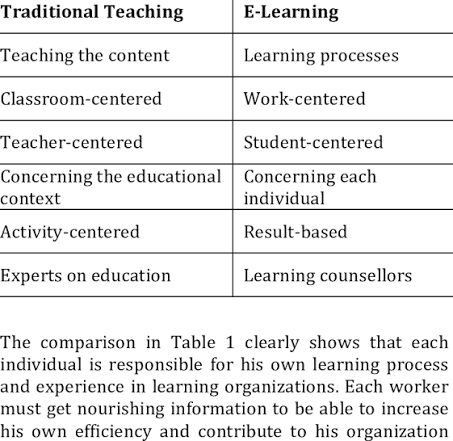
Online education is a method of learning where courses are delivered through the internet. Students can attend virtual classes, watch recorded lectures, submit assignments online, and interact with instructors and classmates using digital platforms. This mode of learning has gained popularity due to its accessibility and flexibility.
Benefits of Online Education
1. Flexible Learning Schedule
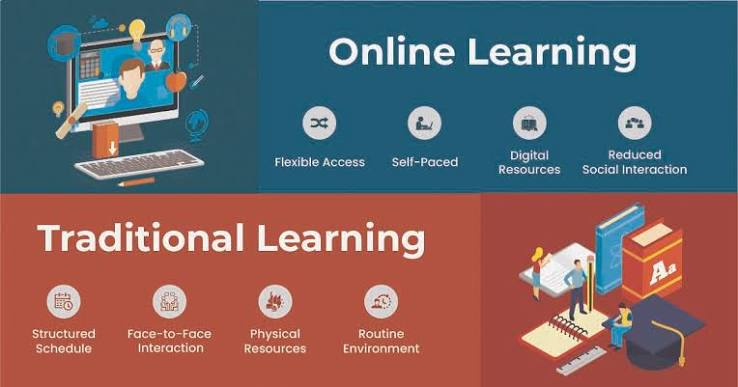
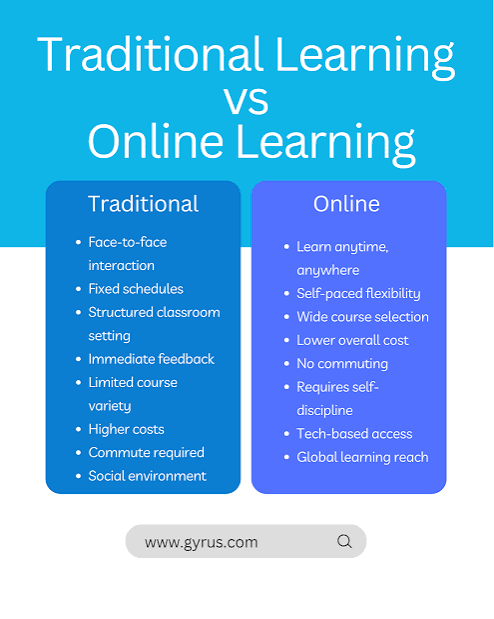
Students can study at their own pace and choose when to attend classes or complete assignments, making it ideal for working professionals and individuals with busy schedules.
2. Learning from Anywhere
Online education removes geographical barriers, allowing students to access quality education from universities and institutions around the world without relocating.
3. Cost-Effective
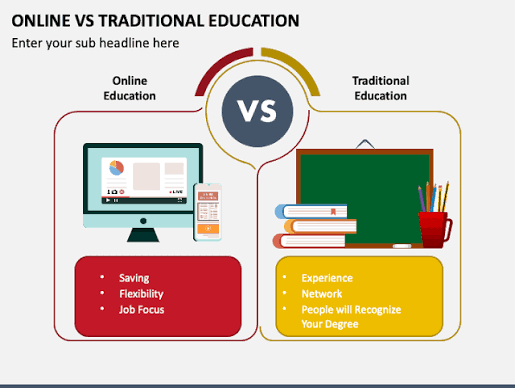
Many online programs are more affordable than traditional education because they reduce transportation, accommodation, and campus-related expenses.
4. Wide Range of Courses
Students have access to thousands of courses in various fields, enabling them to develop specialized skills and explore new interests.
5. Technology Skills
Online learning naturally improves digital literacy, communication through virtual platforms, and the use of educational technologies.
What Is Traditional Learning?
Traditional learning takes place in physical classrooms where teachers and students interact face-to-face. It follows a structured schedule with lectures, discussions, laboratory work, and classroom activities.
Benefits of Traditional Learning
1. Direct Teacher Interaction
Students can ask questions immediately, receive instant feedback, and benefit from personal guidance.
2. Better Social Development
Classroom learning encourages teamwork, friendships, communication skills, and collaboration through group activities and discussions.
3. Structured Environment
A fixed timetable helps students stay disciplined, organized, and focused on their studies.
4. Hands-On Experience
Practical subjects such as science, engineering, medicine, and art often require laboratories, workshops, or studios that are more effective in physical settings.
5. Campus Life
Traditional education provides extracurricular activities, sports, networking opportunities, and cultural events that contribute to personal development.
Challenges of Online Education
- Requires reliable internet access and digital devices.
- Students may struggle with self-discipline and motivation.
- Limited face-to-face interaction can reduce social engagement.
- Practical courses may be difficult to deliver entirely online.
- Technical issues can interrupt learning.
Challenges of Traditional Learning
- Higher tuition and living costs.
- Less flexibility in scheduling.
- Time spent commuting to campus.
- Limited course availability in some regions.
- Fixed classroom schedules may not suit everyone.
Which Learning Method Is Better?
There is no single answer because both methods serve different needs.
Online education is ideal for:
- Working professionals
- Remote learners
- Self-motivated students
- Individuals seeking flexible schedules
Traditional education is ideal for:
- Students who enjoy classroom interaction
- Practical and laboratory-based courses
- Learners who benefit from structured environments
- Those seeking a full campus experience
Many educational institutions now combine both approaches through blended learning, which offers the flexibility of online education along with the personal interaction of classroom learning.
The Future of Education
As technology continues to advance, online learning will become more interactive through artificial intelligence, virtual reality, and personalized learning systems. Traditional education will also adopt more digital tools to enhance classroom experiences. The future is likely to focus on hybrid education, combining the strengths of both methods to provide students with the best possible learning experience.
Conclusion
Online education and traditional learning each offer valuable opportunities for personal and academic growth. The best choice depends on a student’s goals, learning preferences, financial situation, and career aspirations. Rather than viewing them as competitors, they should be seen as complementary approaches that together can create a more inclusive, flexible, and effective education system for the future.