Introduction
Community service is the voluntary act of helping individuals, groups, or organizations to improve the well-being of society. It brings people together to address local challenges, support vulnerable populations, and create stronger, healthier communities. Whether through environmental projects, educational programs, healthcare initiatives, or charity work, community service promotes responsibility, compassion, and unity.
What Is Community Service?
Community service involves contributing time, effort, and skills to benefit others without expecting payment. It can be organized through schools, universities, businesses, religious institutions, non-profit organizations, or local community groups. Everyone, regardless of age or profession, can participate in community service.
Importance of Community Service
1. Strengthens Communities
Community service encourages people to work together toward common goals. It creates safer neighborhoods, cleaner environments, and stronger relationships among community members.
2. Helps Those in Need
Many people face challenges such as poverty, illness, disability, or lack of educational opportunities. Community service provides essential support that improves their quality of life.
3. Encourages Civic Responsibility
Participating in community service teaches individuals the importance of being responsible citizens. It inspires people to contribute positively to society and become active members of their communities.
4. Promotes Personal Growth
Community service helps individuals develop empathy, patience, leadership, communication, and teamwork skills. These qualities contribute to both personal and professional success.
5. Supports Education
Students who participate in community service gain practical experience, build confidence, and learn valuable life lessons that cannot always be taught in classrooms.
6. Protects the Environment
Many community service projects focus on environmental conservation through tree planting, recycling campaigns, waste management, and public awareness programs that help preserve natural resources.
Examples of Community Service
- Organizing neighborhood clean-up drives
- Donating food, clothing, or school supplies
- Tutoring children and supporting literacy programs
- Visiting hospitals and elderly care homes
- Participating in blood donation campaigns
- Planting trees and protecting wildlife
- Supporting disaster relief operations
- Raising awareness about health and education
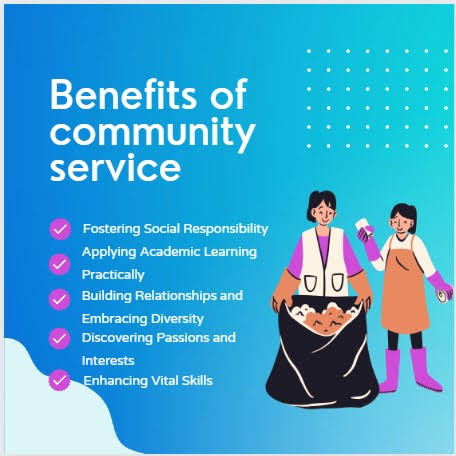
Benefits for Individuals
Community service benefits volunteers by:
- Building confidence
- Improving communication skills
- Expanding social and professional networks
- Enhancing leadership abilities
- Increasing problem-solving skills
- Creating a sense of purpose and achievement
How Everyone Can Contribute
Community service does not always require large donations or significant amounts of time. Individuals can contribute by:
- Volunteering a few hours each month.
- Sharing professional skills with community organizations.
- Donating useful items.
- Supporting local charities.
- Encouraging family and friends to participate in service activities.
Conclusion
Community service is a powerful force that brings people together to create positive social change. It strengthens communities, supports those in need, promotes personal development, and encourages responsible citizenship. Every contribution, whether large or small, helps build a more compassionate, inclusive, and resilient society. By serving others, individuals become agents of positive change and inspire future generations to continue the tradition of helping their communities.